Material handling systems — conveyors, racking, pallet trucks, hoppers, chutes and trolleys — are only as good as the precision of the metal parts that go into them. That’s why more fabricators and OEMs across India are switching to CNC laser cutting machines for material handling system components, replacing manual and semi-automated cutting methods that struggle to keep pace with tight tolerances, faster delivery timelines and rising material costs. This guide covers everything a manufacturer needs to know: applications, materials, machine selection criteria, cost impact and how to choose the right CNC laser cutting partner.
What Is a Material Handling System, and Why Does Cutting Precision Matter?
A material handling system is the combination of equipment conveyors, storage racks, automated guided vehicles, hoppers, cranes, pallet trucks and chutes — that moves, stores, controls and protects materials through a warehouse, production line or distribution centre. Every one of these systems is built from dozens, sometimes hundreds, of sheet metal and structural steel parts: brackets, side plates, gussets, mounting frames, guide rails and enclosures.
Because these parts are assembled into moving mechanical systems, even small dimensional errors compound quickly. A conveyor bracket that’s off by half a millimetre can throw off roller alignment across an entire line. A racking upright with an inconsistent slot pitch can compromise load safety. This is exactly the kind of tolerance and repeatability problem that CNC laser cutting machines for material handling system fabrication were built to solve.
Why Manufacturers Are Switching to CNC Laser Cutting for Material Handling Fabrication
1. Unmatched Precision and Repeatability
CNC laser cutting holds tolerances as tight as ±0.05 mm, and — unlike manual or plasma cutting — the 500th part comes out identical to the first. For material handling components like roller brackets, slotted rack uprights and conveyor side frames, this consistency removes the rework and manual fitting that traditionally ate into fabrication schedules.
2. Faster Production Cycles
A CNC laser cutting machine reads a CAD/DXF file directly and nests multiple parts on a single sheet, cutting cycle times dramatically compared to manual marking, punching or plasma cutting. For OEMs building conveyor systems or racking at scale, this translates directly into shorter lead times and the ability to take on larger, more time-bound orders.
3. Reduced Material Wastage
Automatic nesting software packs parts tightly onto standard sheet sizes, cutting scrap generation significantly versus manual layout. On high-volume material handling programmes — where the same bracket or plate might be cut in the thousands — this material saving alone can offset a large part of the machine investment over a year.
4. Complex Geometries Made Simple
Material handling components frequently need slots, cutouts, chamfers and curved profiles for cable routing, ventilation, weight reduction or bolt-pattern standardisation. A CNC laser cutting machine handles these geometries in the same cutting pass as the outer profile, with no additional tooling, drilling or secondary operations required.
Material Handling Components Best Suited to CNC Laser Cutting
Almost every structural and enclosure part in a material handling system can be laser cut. The most common applications include:
- Conveyor frames, side plates, roller brackets and idler mounts
- Pallet racking uprights, beams, load plates and safety clips
- Hoppers, chutes and silo panels requiring precise fold lines
- Trolleys, hand-pallet-truck frames and material cart bodies
- Cable trays, junction boxes and control panel enclosures
- Forklift attachments, guards and mounting brackets
- Automated Guided Vehicle (AGV) chassis and sensor mounting plates
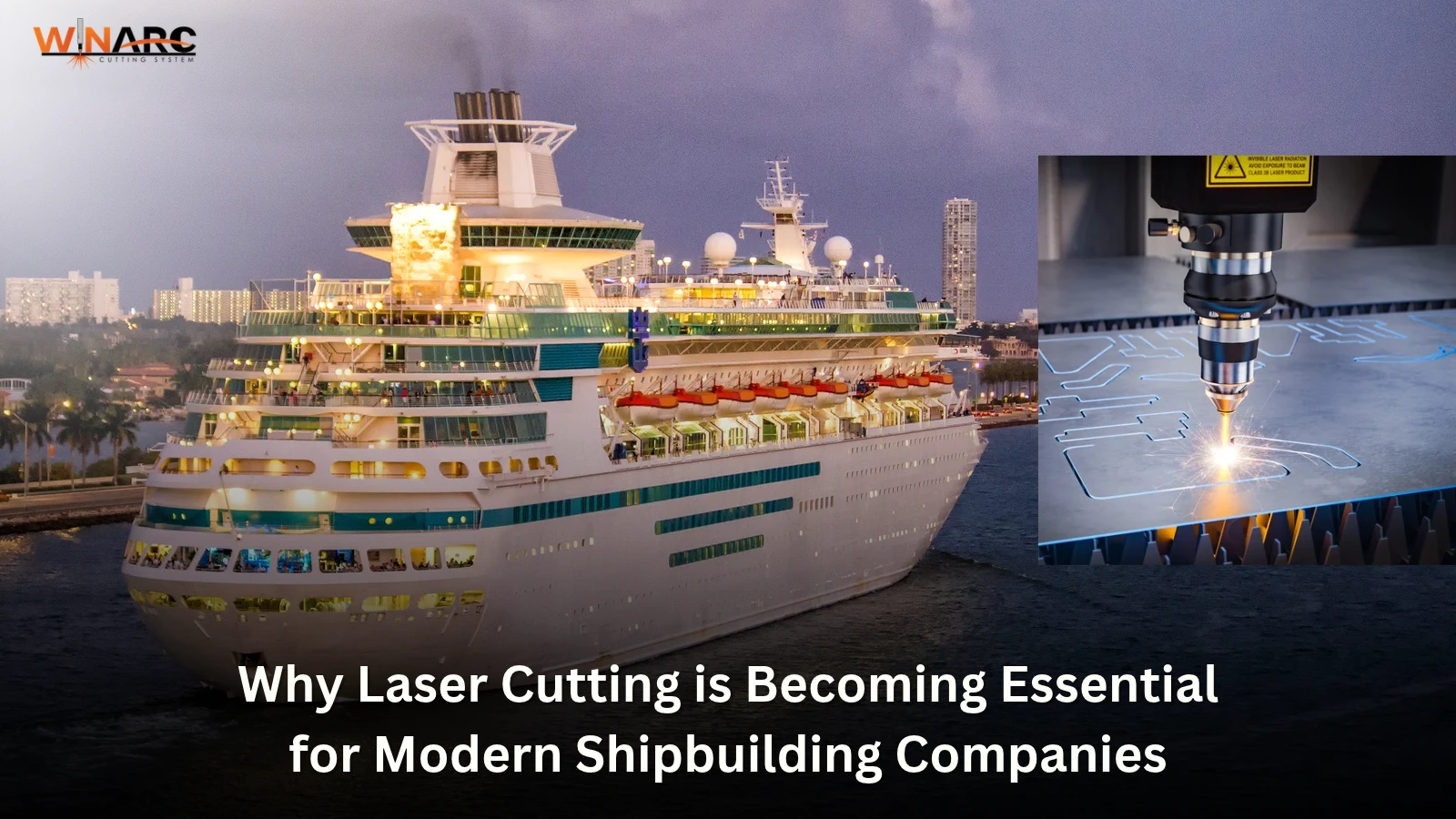
Because fiber laser cutting machines process a wide range of sheet thicknesses with a clean, dross-free edge, many of these parts go straight to welding or powder coating without secondary deburring — a meaningful time saving across a full material handling assembly line.
Materials Commonly Processed
CNC laser cutting machines for material handling system fabrication typically process:
- Mild Steel (MS) — structural frames, brackets, gussets (up to 25 mm+ on high-power fiber systems)
- Stainless Steel (SS) — food-grade conveyors, pharma and hygienic material handling equipment
- Aluminium — lightweight trolleys, AGV bodies, weight-sensitive assemblies
- Galvanised / coated sheet — enclosures and outdoor material handling structures
Fiber laser technology in particular has become the default choice for this application because it cuts reflective and thin-to-medium gauge material faster and with lower operating cost than CO2 laser or plasma systems.
Fiber Laser vs CO2 Laser vs Plasma: Which Is Right for Material Handling Fabrication?
| Factor | Fiber Laser | CO2 Laser | Plasma |
| Best for | Thin–medium MS, SS, Aluminium, reflective metals | Non-metals, acrylics, thicker mild steel | Thick structural steel, fast rough cuts |
| Edge quality | Very high, minimal dross | High | Moderate, needs finishing |
| Cutting speed (thin sheet) | Fastest | Moderate | Fast but less precise |
| Running cost | Lowest (no gas laser resonator) | Higher (gas + optics upkeep) | Lowest capital cost |
| Ideal material handling use | Brackets, racking, conveyor plates, enclosures | Lighter-gauge decorative panels | Heavy chassis, thick structural members |
For most material handling OEMs — where the bulk of parts are MS or SS sheet in the 1–16 mm range — a fiber laser cutting machine offers the best combination of speed, edge quality and running cost. Plasma remains relevant for thicker structural chassis members where laser cutting becomes cost-inefficient.
The Business Case: Cost, Lead Time and ROI
India’s material handling equipment market was valued at roughly USD 11.4 billion in 2025 and is projected to grow at a CAGR of 7.83% through 2034, driven by expanding manufacturing output, e-commerce logistics and government initiatives such as the Production-Linked Incentive (PLI) scheme (IMARC Group, 2025). That growth is pulling more fabrication volume toward manufacturers who can deliver precision parts faster and at lower per-part cost — which is exactly the advantage CNC laser cutting provides over manual and semi-automated methods.
For a fabricator, the ROI case typically comes from three levers working together: fewer man-hours per part, lower scrap rates from nested cutting, and fewer rejections at the welding and assembly stage because parts already meet tolerance. Over a year of continuous production, these savings compound quickly — often paying back the machine investment well inside the typical 3–5 year equipment life.
What to Look for When Buying a CNC Laser Cutting Machine for This Application
- Laser source power matched to your typical material thickness range, not just your thickest job
- Bed size that matches standard sheet sizes used for racking, conveyor and enclosure parts
- Nesting and CAD/CAM software that reduces scrap on repeat-part production runs
- Cutting speed and axis acceleration — directly affects throughput on high-volume bracket and plate orders
- Local service, spares availability and application support — uptime matters more than peak spec on a busy shop floor
- Total cost of ownership: power consumption, consumables and maintenance, not just machine price
Winarc’s CNC Laser Cutting Machines for Material Handling Manufacturers
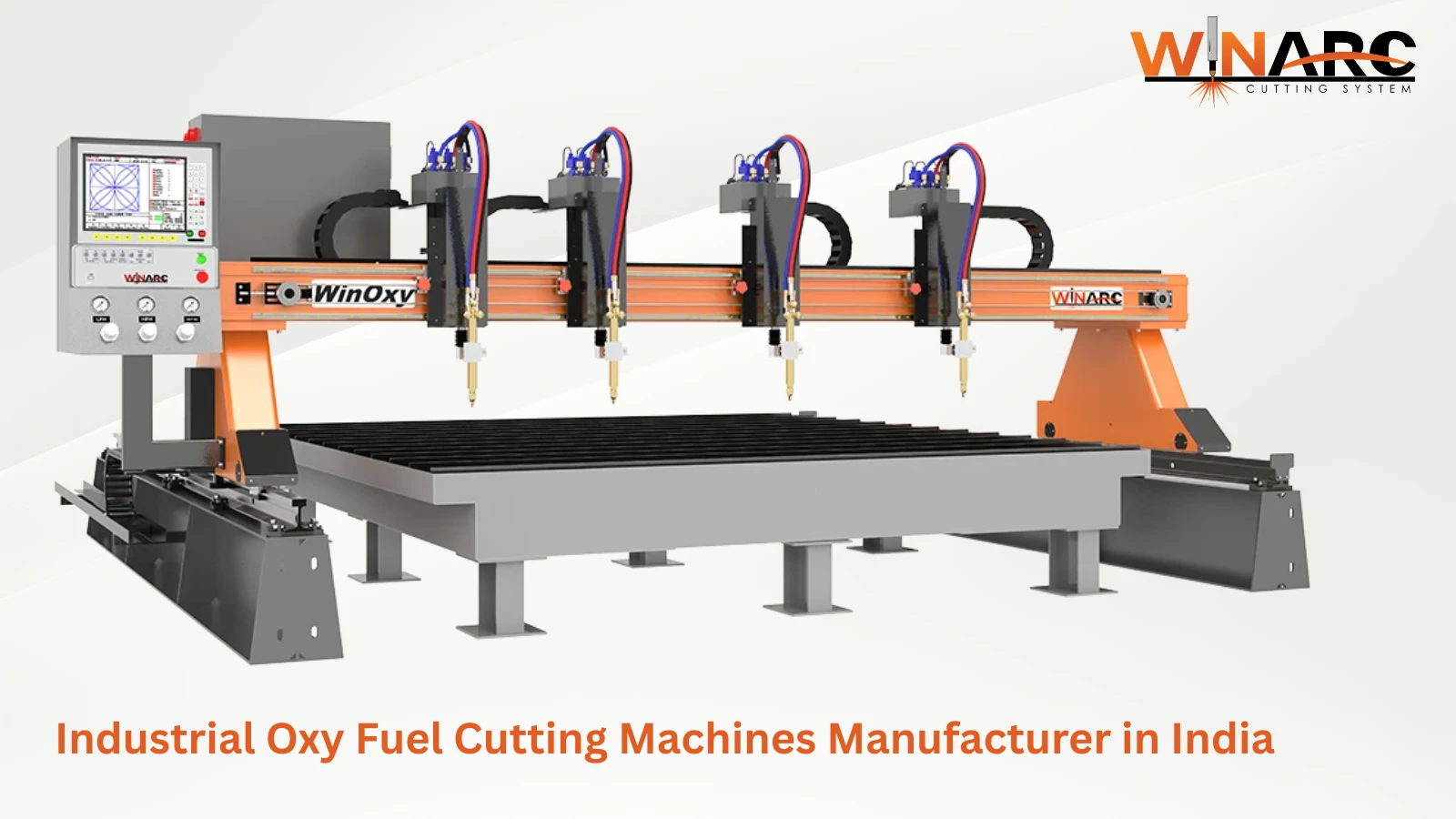
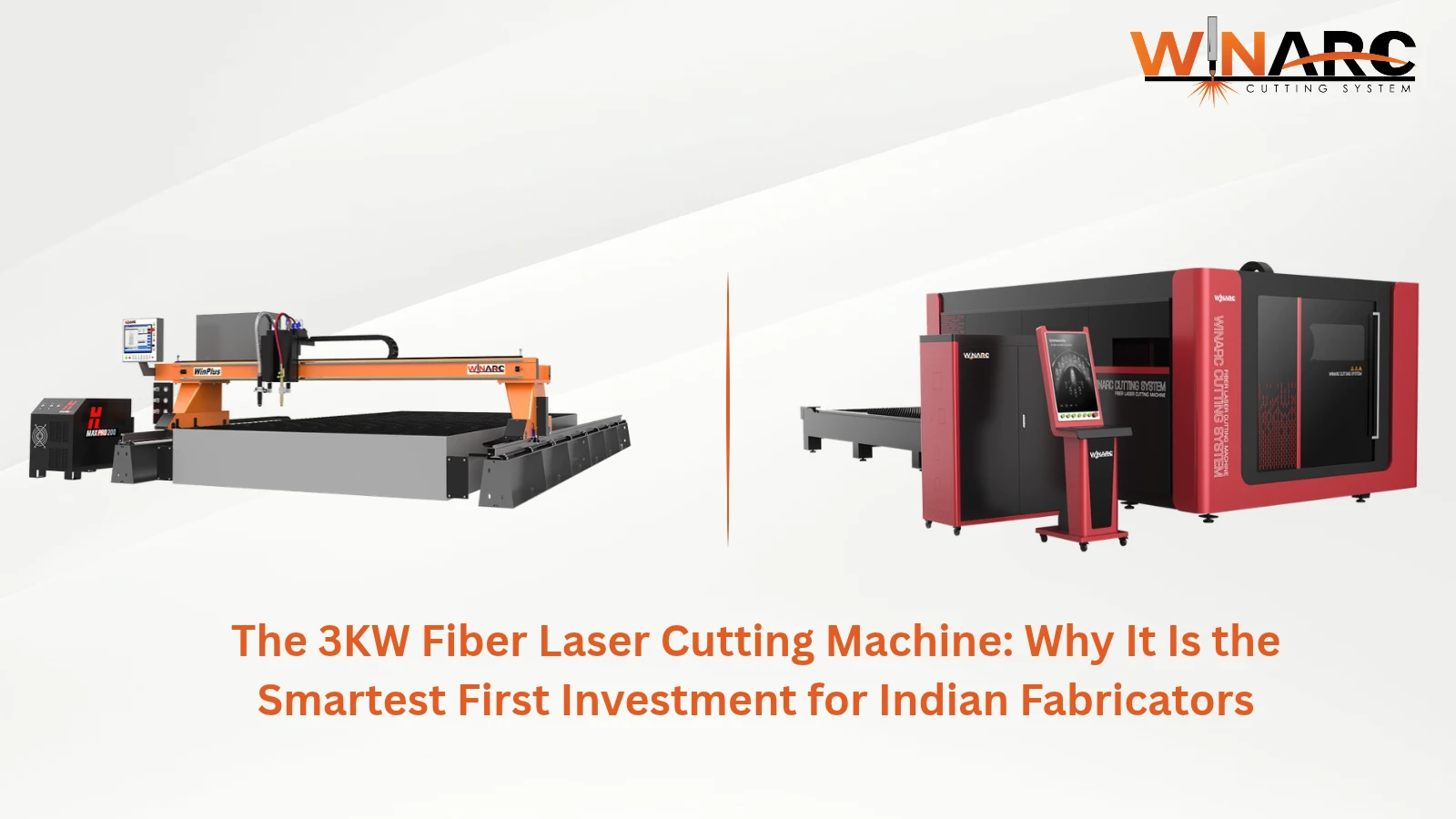
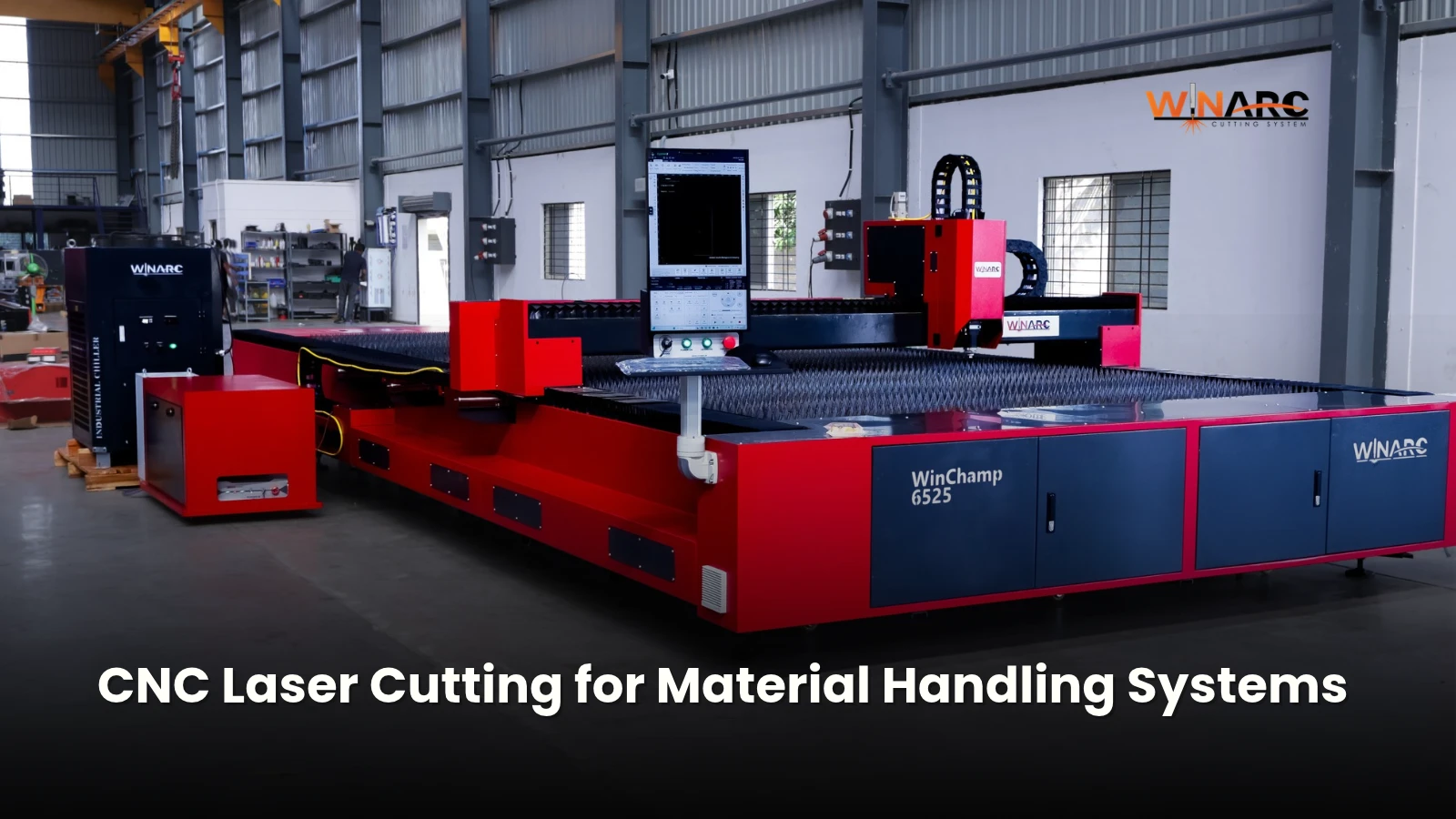
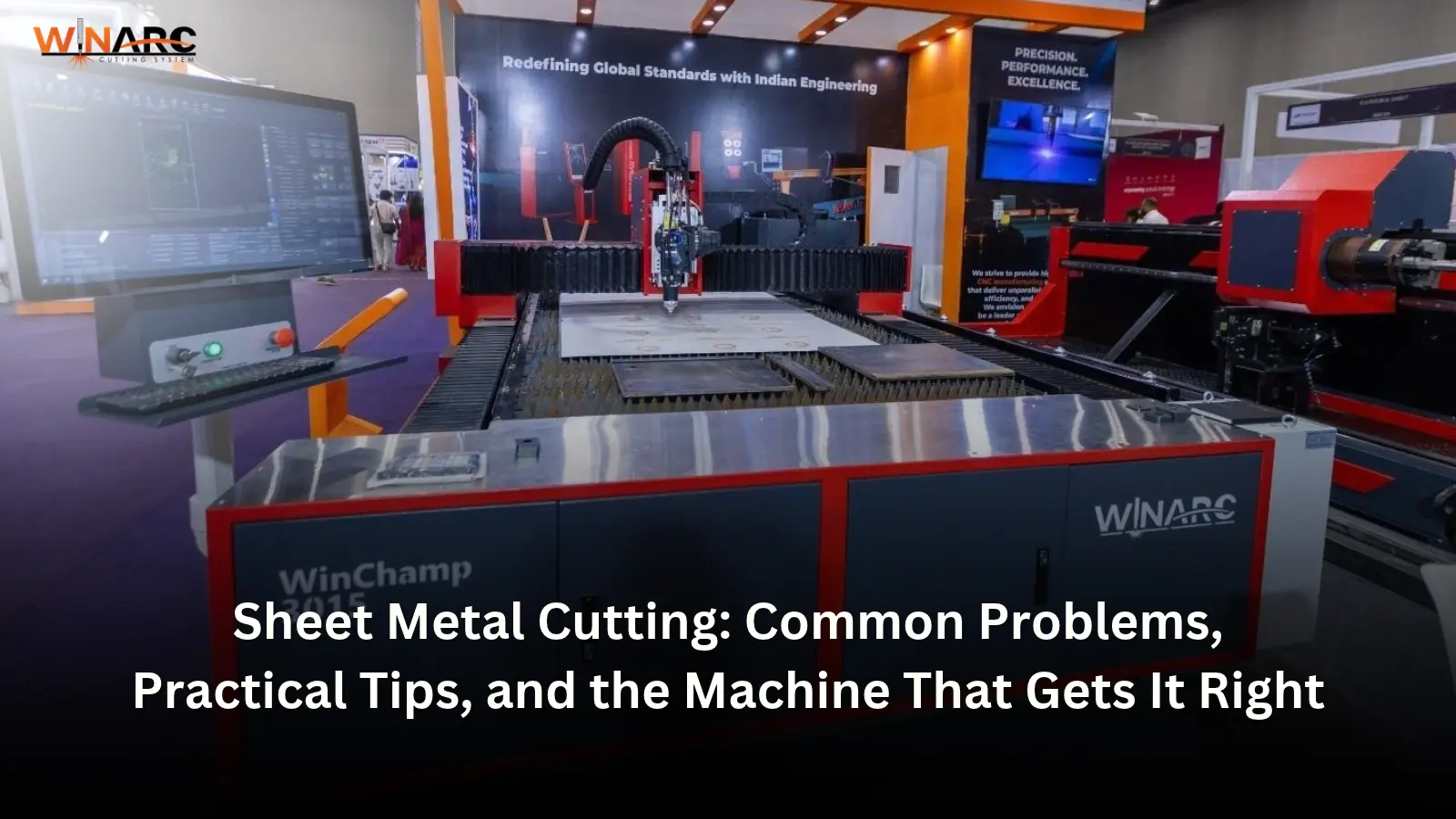
Winarc designs and manufactures CNC fiber laser and plasma cutting machines built for exactly this kind of production environment — Indian fabricators and OEMs cutting brackets, frames, racking, chutes and enclosures in mild steel, stainless steel and aluminium, day after day, at production volume.
Our fiber laser range is engineered for the tolerance and repeatability that material handling components demand, with nesting software to control scrap, and a service and support network built around keeping shop floors running rather than machines sitting idle. Fabricators supplying conveyor, racking and material handling OEMs use Winarc machines to cut lead times, reduce rework, and take on higher-volume orders with confidence.
Frequently Asked Questions
Q1. Can a CNC laser cutting machine cut thick structural steel used in heavy material handling chassis?
High-power fiber laser machines cut mild steel up to 20–25 mm and beyond, which covers most material handling chassis and frame applications. For very thick structural members, plasma cutting is sometimes more cost-effective.
Q2. Is fiber laser cutting suitable for stainless steel conveyor components used in food or pharma industries?
Yes. Fiber laser cutting produces a clean, oxidation-minimal edge on stainless steel, which is why it’s widely used for food-grade and pharmaceutical material handling equipment where hygiene standards are strict.
Q3. How much lead time can CNC laser cutting save versus manual fabrication?
Lead time savings vary by part complexity and volume, but manufacturers typically see the biggest gains on repeat parts — nested nesting and unattended cutting runs mean brackets and plates that once took days can be cut in hours.
Q4. What sheet thickness range is typical for material handling system parts?
Most conveyor, racking and enclosure parts fall between 1 mm and 12 mm, well within the sweet spot of a mid-power fiber laser cutting machine. Heavier chassis components may run up to 20 mm or more.
Q5. Does CNC laser cutting reduce the need for secondary finishing?
Yes. The clean, dross-free edge from fiber laser cutting often eliminates or reduces deburring before welding or powder coating, saving a downstream production step.
Ready to Upgrade Your Material Handling Fabrication?
If your shop floor is still relying on manual or semi-automated cutting for conveyor, racking, hopper or trolley components, a CNC laser cutting machine for material handling system fabrication can cut lead times, reduce scrap and improve part consistency from day one. Talk to Winarc’s team about the right fiber laser or plasma cutting machine for your product range.