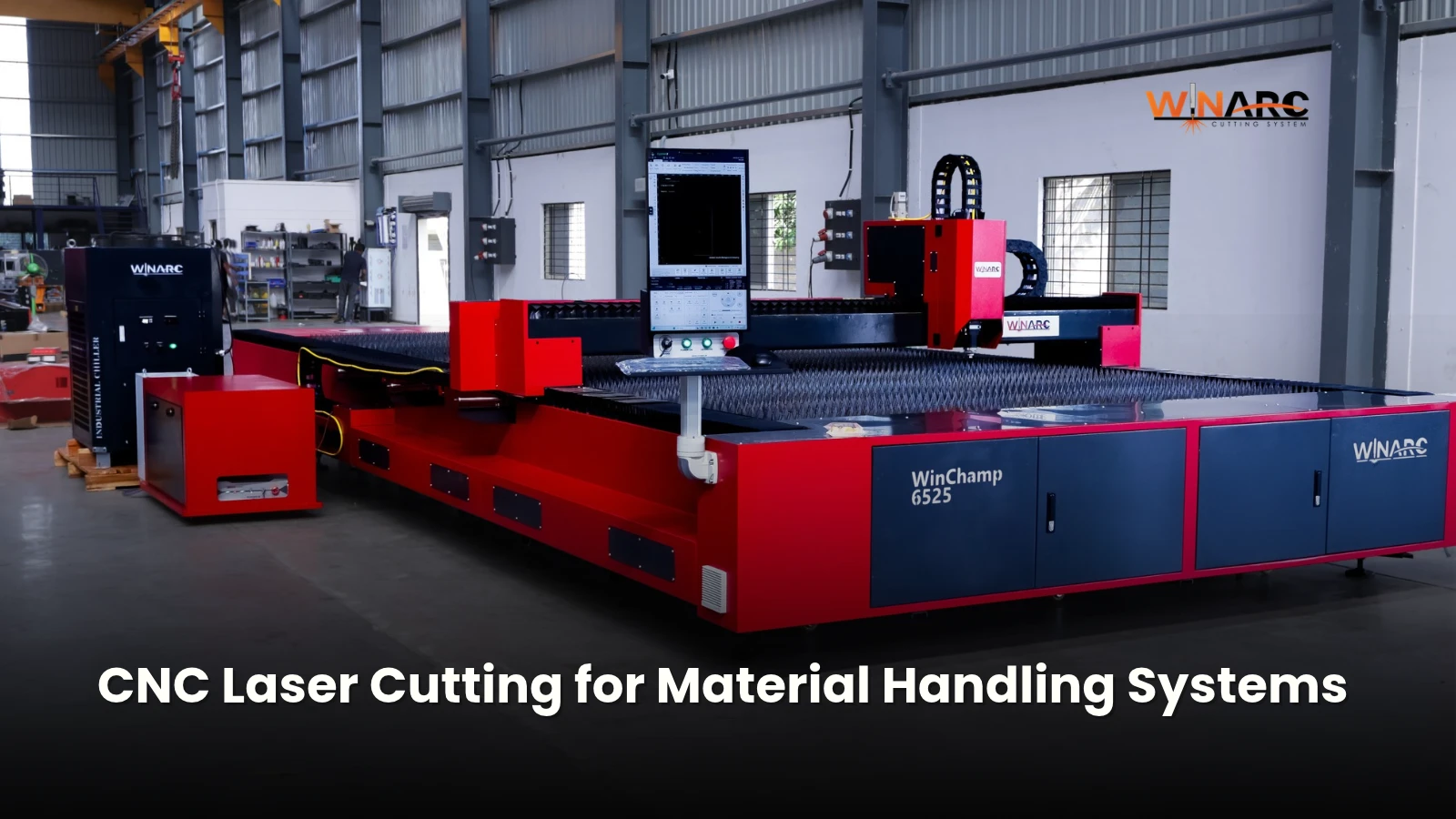
Metal cutting is an essential process in modern manufacturing, fabrication and engineering industries. From cutting structural steel plates to manufacturing automotive components, businesses require reliable cutting solutions that deliver speed, precision and productivity.
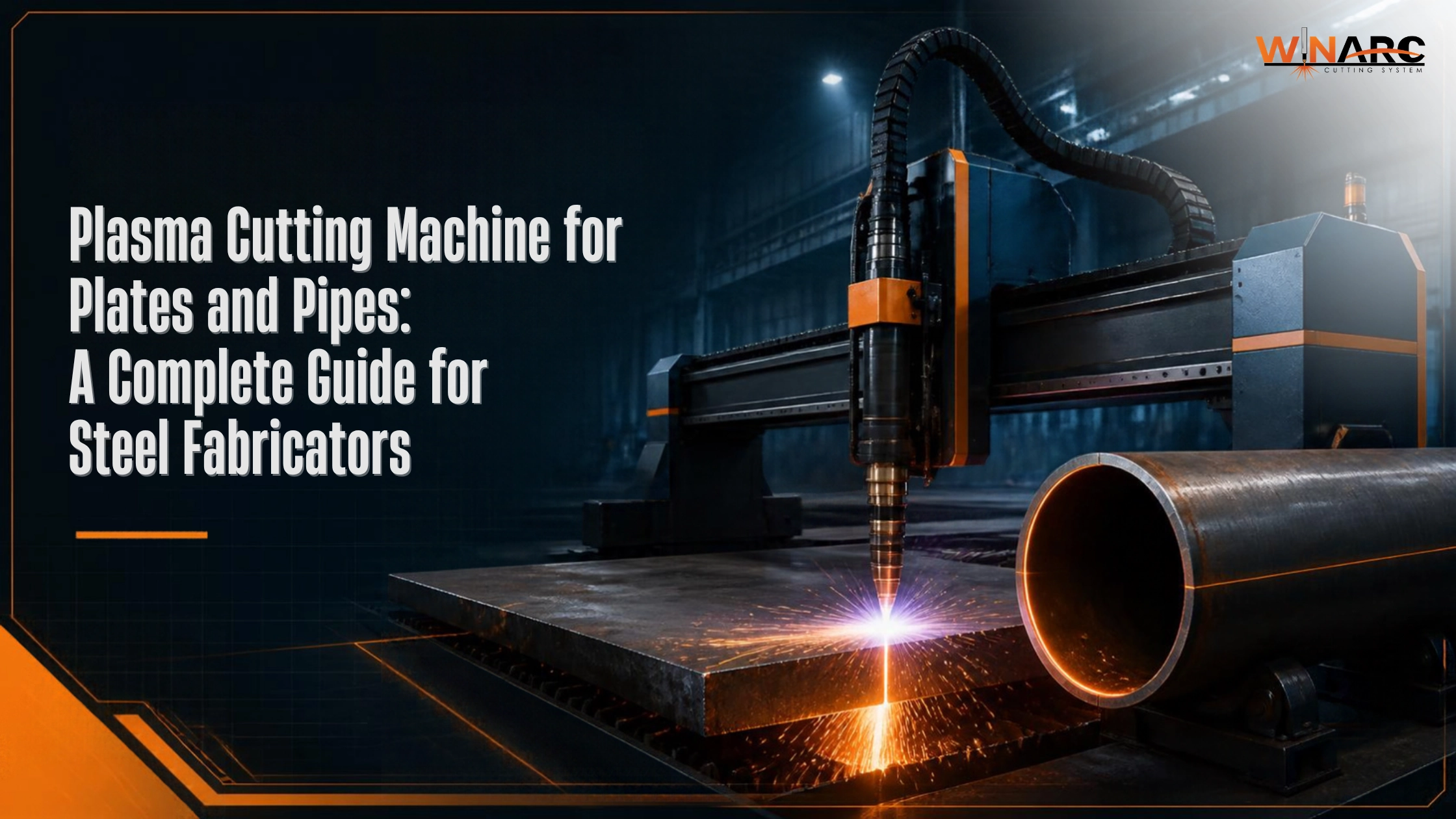
A CNC plasma cutting machine for metal is widely used in industrial applications because it combines plasma arc technology with computer-controlled movement to cut conductive metals into different shapes and profiles.
Whether you operate a fabrication workshop, heavy engineering unit, automotive manufacturing facility or structural steel production company, understanding CNC plasma cutting technology can help you select the right metal cutting machine for your production requirements.
In this guide, we will explore how CNC plasma cutting machines work, their types, applications, advantages, important components, pricing factors and how to choose the right machine for your business.
We will also look at Winarc Cutting System’s CNC plasma cutting solutions, including the WinFire and WinPlus series.
1. What Is a CNC Plasma Cutting Machine?
A CNC plasma cutting machine for metal is an automated metal cutting system that uses a high-temperature plasma arc to cut electrically conductive materials such as mild steel, stainless steel and aluminium.
It combines a plasma power source, cutting torch, compressed gas supply and CNC controller to produce accurate cuts according to programmed designs.
Unlike manual cutting methods, a CNC plasma cutter automatically controls the torch movement, cutting speed and cutting path, allowing manufacturers to produce repeatable shapes and profiles.
How Plasma Cutting Outperforms Traditional Methods
Traditional metal cutting methods, such as manual gas cutting, mechanical shearing and hand-held cutting, often require considerable operator involvement.
CNC plasma cutting offers several operational differences:
- Automation: The CNC controller follows programmed cutting paths, reducing manual intervention.
- Faster processing: Plasma cutting can process suitable metal thicknesses at high speeds.
- Complex profiles: It can produce curves, holes, slots and intricate shapes.
- Repeatability: Programmed cutting paths help maintain consistency across production batches.
- Reduced manual work: Automated movement reduces operator dependence during cutting.
- Material versatility: Suitable plasma systems can cut different electrically conductive metals.
For fabrication businesses handling different profiles and production volumes, CNC plasma cutting can improve workflow efficiency.
2. How a CNC Plasma Cutting Machine Works
A CNC plasma cutting machine works by generating an electrically conductive plasma arc that melts metal and removes molten material from the cutting area.
The process involves several components working together.


9
Step-by-Step Working Process
1. Plasma Arc Generation
The plasma power source supplies electrical energy to create an arc between the electrode and the workpiece. The arc ionises the gas, producing high-temperature plasma.
2. Plasma Torch Operation
The plasma torch directs the plasma arc towards the metal surface. The concentrated energy melts the material along the programmed cutting path.
3. Compressed Gas Supply
Compressed air or another suitable plasma gas passes through the torch. It helps establish the plasma arc and removes molten metal from the cut.
The appropriate gas depends on the material, thickness and plasma system.
4. CNC Controller
The CNC controller receives the cutting program and controls the movement of the machine axes, torch activation and cutting sequence.
5. Gantry and Motion System
The gantry moves the cutting torch across the working area using servo motors, gearboxes, rack and pinion systems and linear guides.
6. Metal Cutting Table
The metal plate is positioned on the cutting table. The table supports the workpiece throughout the cutting operation.
7. Automated Cutting
The machine follows the programmed design and completes the cutting operation automatically.
CAD/CAM to G-Code Workflow
The cutting process generally follows this sequence:
- Create a component design using CAD software.
- Import the drawing into CAM or nesting software.
- Arrange multiple components on the metal sheet to optimise material utilisation.
- Generate the cutting path and machine instructions.
- Transfer the program to the CNC controller.
- Position the material and start the cutting operation.
Software such as Hypertherm ProNest and SigmaNEST is commonly used for industrial plasma cutting applications.
3. Types of CNC Plasma Cutting Machines
CNC plasma cutting machines are available in different configurations depending on production requirements, material dimensions and cutting applications.

11
Table-Type CNC Plasma Cutting Machine
Table-type machines feature a fixed cutting bed where metal sheets or plates are placed for cutting.
They are suitable for fabrication workshops, sheet metal processing and general industrial applications.
Gantry-Type CNC Plasma Cutting Machine
Gantry-type machines feature a moving bridge structure that carries the cutting torch across the working area.
They are commonly used for larger plates, structural steel and heavy fabrication requirements.
Portable CNC Plasma Cutting Machine
Portable systems are designed for applications where mobility and compact installation are important.
They are generally used for smaller cutting requirements and maintenance work.
2D and Bevel Plasma Cutting Machines
- 2D plasma cutting: Performs straight, curved and profile cutting on flat metal plates.
- Bevel plasma cutting: Produces angled edges for welding preparation and specialised fabrication.
- 5-axis systems: Offer additional movement capabilities for complex cutting applications.
Dry Table and Water Table Plasma Cutting
- Dry cutting table: Uses a dry cutting bed, often combined with a fume extraction system.
- Water table: Uses water beneath the cutting area to help control dust, sparks and fumes.
The choice depends on the production environment, material handling requirements and workshop setup.
4. Metals You Can Cut Using a CNC Plasma Cutting Machine
A CNC plasma cutting machine can process different electrically conductive metals.
The cutting capacity depends on the plasma power source, amperage, gas selection, torch configuration and material properties.

10
| Metal Type | Common Applications | Cutting Considerations |
|---|---|---|
| Mild Steel | Structural fabrication, machinery frames, industrial equipment | Widely used for plasma cutting across different thicknesses. |
| Stainless Steel | Food processing equipment, industrial tanks, fabrication | Requires suitable plasma gas and cutting parameters. |
| Aluminium | Automotive components, transport equipment, fabrication | Requires appropriate gas and torch settings. |
| Copper | Electrical components, busbars and specialised fabrication | Requires suitable power and cutting parameters. |
| Brass | Decorative components and industrial parts | Cutting capability depends on thickness and equipment configuration. |
| Galvanised Steel | Ducting, enclosures and sheet metal fabrication | Coating fumes require appropriate ventilation and extraction. |
Typical Metal Thickness Capability
There is no universal thickness range applicable to every plasma machine. Actual cutting capacity depends on the power source and manufacturer-recommended cutting charts.
For reference, Winarc’s quoted WinFire configuration with Hypertherm Powermax125 specifies the following piercing capacities:
| Material | WinFire PMX125 Specified Piercing Thickness |
|---|---|
| Mild Steel | 20 mm |
| Stainless Steel | 16 mm |
| Aluminium | 16 mm |
These are the piercing thickness specifications stated in the WinFire quotation, not guaranteed maximum severance thicknesses. Consult the plasma source cutting charts for production cutting limits.
The supplied quotation specifies oxyfuel cutting of mild steel from 6 mm to 250 mm.
646 – M P ENGINEERING WORKS – PMX125 with OXYFUEL Cutting.pdf
5. Key Components and Features of a CNC Plasma Cutting Machine
The performance of an industrial plasma cutting machine depends on the quality of its mechanical structure, electrical components, cutting source and CNC control system.
Here are the major components to understand.

7
Plasma Power Source
The plasma power source generates the electrical energy required for plasma arc cutting.
Brands such as Hypertherm and Kjellberg are used in industrial plasma cutting systems.
Winarc configuration: The quoted WinFire machine uses the Hypertherm Powermax125 plasma source from the USA.
Plasma Torch Height Controller (THC)
Torch Height Control automatically adjusts the torch-to-workpiece distance based on arc voltage feedback.
Maintaining the correct torch height helps achieve consistent cutting performance.
Winarc configuration: F1629 digital plasma arc voltage height controller.
CNC Controller
The CNC controller manages machine movement, cutting sequences and programmed designs.
Winarc configuration: F2500A CNC controller with a 15-inch industrial display and 2-axis linkage, with provision for a customised 3-axis configuration.
646 – M P ENGINEERING WORKS – PMX125 with OXYFUEL Cutting.pdf
Rack and Pinion Drive System
Rack and pinion mechanisms help transfer motor movement into controlled gantry motion.
They contribute to accurate positioning and smooth machine operation.
Servo Motors and Gearboxes
Servo motors provide controlled movement along the machine axes.
Winarc’s quoted WinFire configuration uses Delta Taiwan servo motors, drives and planetary gearboxes.
Linear Guides and Rails
Linear guides support smooth movement and help maintain gantry stability.
The WinFire configuration includes Hiwin X-axis linear guides and 24 kg heavy-duty Y-axis rails.
Fume Extraction System
Plasma cutting produces smoke, metal particles and fumes. Suitable ventilation or extraction equipment is important to maintain a safer working environment.
CAD/CAM and Nesting Software
Nesting software helps arrange cutting components on metal sheets to improve material utilisation and manage production programs.
Winarc’s WinFire quotation specifies ProNest nesting software.
646 – M P ENGINEERING WORKS – PMX125 with OXYFUEL Cutting.pdf
6. Advantages of CNC Plasma Cutting
CNC plasma cutting offers several advantages for industrial metal fabrication and manufacturing.
High Cutting Speed
Plasma cutting provides fast processing for suitable material thicknesses, helping manufacturers improve production output.
Reduced Manual Intervention
Automated cutting paths reduce the need for continuous manual torch operation.
Versatile Metal Cutting
Plasma systems can cut mild steel, stainless steel and aluminium, subject to the machine’s specifications.
Complex Profile Cutting
The CNC controller can execute programmed designs, including holes, slots, curves and complex profiles.
Production Repeatability
Saved cutting programs allow manufacturers to reproduce components using consistent machine settings.
Cost-Effective Processing
For suitable materials and thicknesses, plasma cutting can offer economical operating costs compared with alternative cutting processes.
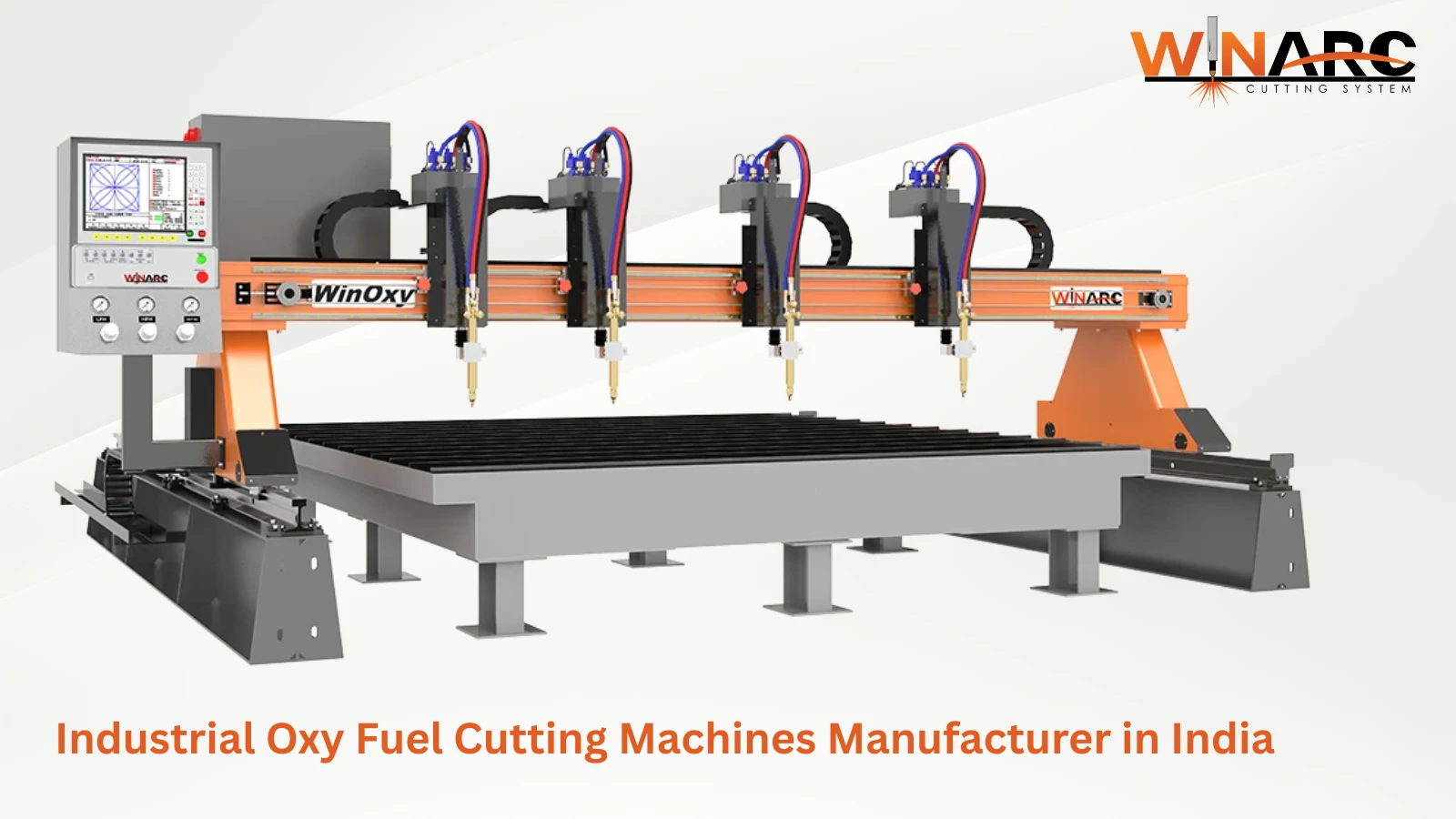
Integration with Oxyfuel Cutting
Combined plasma and oxyfuel machines provide flexibility for different metal thickness requirements.
7. Industries and Applications of CNC Plasma Cutting Machines
CNC plasma cutting machines are used across several manufacturing and engineering sectors.
8
| Industry | Common Applications |
|---|---|
| General Fabrication | Metal frames, brackets, plates and structural components |
| Automotive | Vehicle chassis components, brackets and metal parts |
| Construction | Structural steel sections, base plates and support structures |
| HVAC | Ducting, ventilation components and sheet metal parts |
| Shipbuilding | Steel plates, structural profiles and marine components |
| Agriculture Equipment | Tractor components, machinery frames and equipment parts |
| Signage | Metal letters, decorative panels and signage structures |
| Heavy Engineering | Industrial equipment, machine bases and heavy metal fabrication |
The ability to cut different profiles makes CNC plasma cutting a practical solution for manufacturers working with varied production requirements.
8. CNC Plasma Cutting Machine Uses
A CNC plasma cutter is not limited to basic straight-line metal cutting. It can perform several operations based on the machine configuration and cutting software.
Common uses include:
- Cutting large metal plates into required dimensions.
- Producing circular holes and slots.
- Manufacturing structural steel components.
- Cutting machine frames and equipment bases.
- Preparing metal parts for welding.
- Producing brackets and mounting plates.
- Cutting customised metal profiles.
- Manufacturing industrial components in batches.
- Performing oxyfuel cutting of thicker mild steel plates when equipped with an oxyfuel torch.
For businesses handling different metal fabrication projects, a CNC profile cutting machine can support multiple production requirements using one machine platform.
9. Benefits of Using a CNC Plasma Cutting Machine
Beyond the basic cutting operation, investing in a CNC plasma cutting machine can influence the overall manufacturing workflow.
Some important business benefits include:
- Improved production planning: Digital cutting programs make production scheduling easier.
- Better material utilisation: Nesting software helps organise components on metal sheets.
- Reduced rework: Appropriate cutting parameters and machine calibration help maintain cut consistency.
- Lower labour dependency: Automated cutting reduces repetitive manual operations.
- Flexible production: Different cutting designs can be loaded without changing the entire machine setup.
- Scalable manufacturing: Businesses can adapt machine configurations to their production requirements.
The actual productivity and cost benefits depend on operating conditions, material utilisation, consumables and machine maintenance.
Looking for an industrial CNC plasma cutting machine?
Winarc Cutting System offers CNC plasma and oxyfuel cutting solutions designed for industrial fabrication and metal processing applications.
Explore the WinFire and WinPlus machine series for configurations based on your cutting dimensions, material thickness and production requirements.
Website: https://winarc.in/
10. How to Choose the Right CNC Plasma Cutting Machine
Selecting the right CNC plasma cutting machine requires understanding your production requirements rather than focusing only on the plasma power source.
Here are the important factors to consider.
Cutting Table Size
Choose a working area that accommodates your regular metal sheet dimensions.
Common considerations include:
- Effective cutting width.
- Effective cutting length.
- Material loading and unloading space.
- Future production requirements.
Plasma Power and Amperage
The plasma source determines the available cutting capacity.
Choose the power source based on the materials and thicknesses you regularly process.
Material Thickness
Consider both piercing thickness and production cutting thickness.
A machine that can pierce a particular thickness does not necessarily guarantee the same quality or speed throughout the cutting process.
Cutting Quality
Evaluate:
- Edge finish.
- Kerf width.
- Dross formation.
- Dimensional accuracy.
- Bevel angle.
- Cutting repeatability.
CNC Controller Brand
The controller should support your preferred cutting programs, machine functions and production requirements.
Software Compatibility
Check whether the machine supports compatible CAD/CAM and nesting software.
Duty Cycle
The power source duty cycle indicates its rated operating capability under specified conditions. It is important for businesses planning extended cutting operations.
Service and Spare Parts Support
Consider:
- Availability of genuine consumables.
- Technical assistance.
- Installation and commissioning.
- Operator training.
- Preventive maintenance.
- Availability of replacement components.
Choosing a suitable CNC plasma cutting machine manufacturer with technical support can help maintain production continuity.
11. CNC Plasma Cutting Machine Price: What Determines the Cost?
One of the common searches among industrial buyers is CNC plasma cutting machine price.
However, the price of an industrial plasma cutting machine varies according to its configuration and production capabilities.
The following factors influence the overall investment.
| Pricing Factor | How It Affects the Machine Cost |
|---|---|
| Plasma Power Source | Brand, amperage and cutting capabilities |
| Working Table Size | Larger cutting dimensions require a larger machine structure. |
| CNC Controller | Controller features and automation capabilities |
| Servo Motors and Drives | Brand, performance and motion control configuration |
| Torch Height Control | Automatic height adjustment and control features |
| Oxyfuel Integration | Additional torch and gas cutting arrangements |
| Bevel Cutting | Specialised bevel head and additional axis configuration |
| Software | CAD/CAM and nesting software options |
| Installation | Site requirements, commissioning and related services |
Before comparing quotations, check whether the quoted price includes the plasma source, CNC controller, cutting torch, software, accessories, transportation, installation and applicable taxes.
This provides a clearer understanding of the total investment.
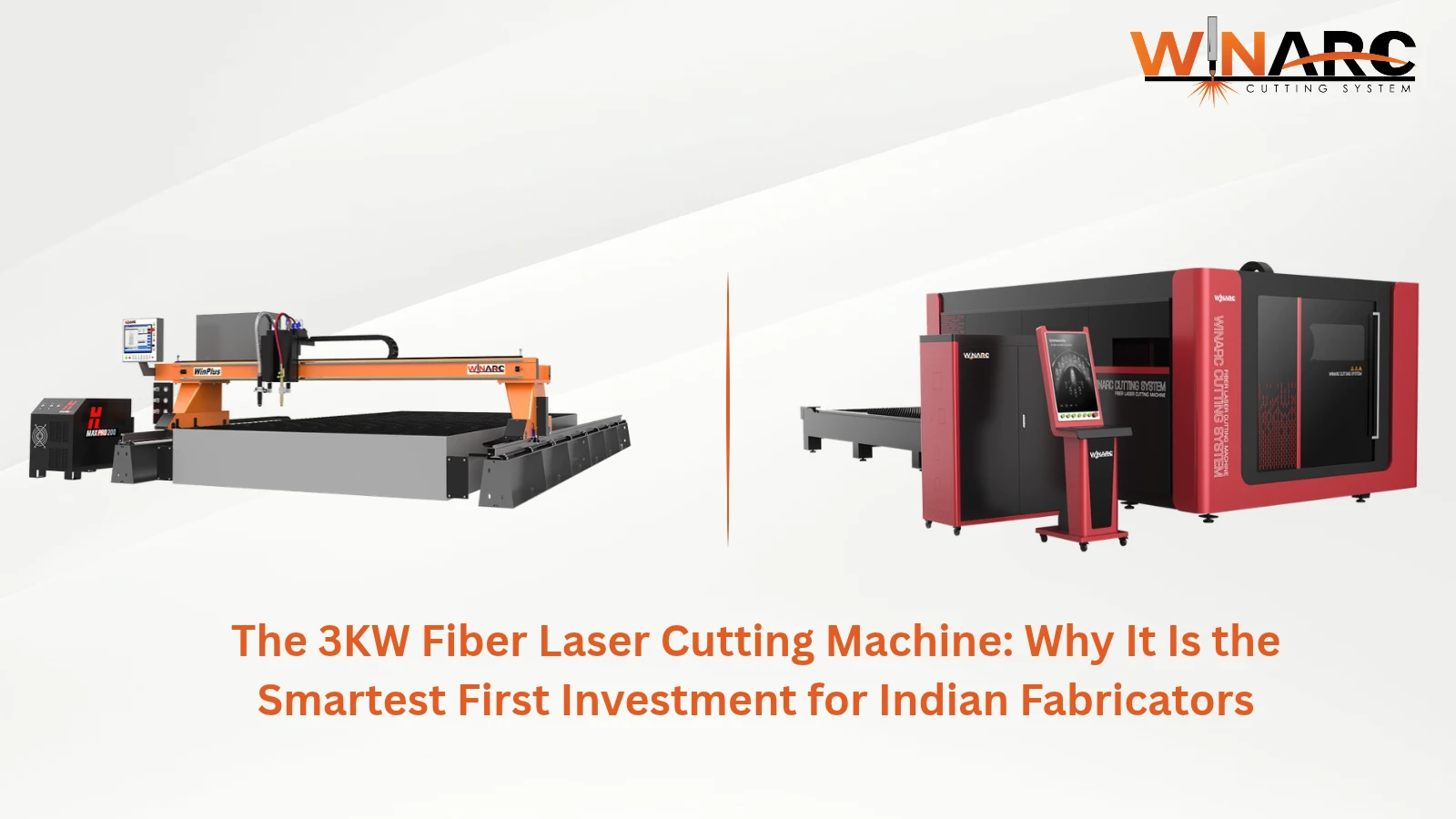
12. CNC Plasma vs. Fiber Laser vs. Oxyfuel vs. Waterjet Cutting
Choosing the right metal cutting technology depends on the material, thickness, required edge quality, production speed and operating cost.
| Parameter | CNC Plasma | Fiber Laser | Oxyfuel | Waterjet |
|---|---|---|---|---|
| Cutting Method | Ionised gas and electrical arc | Focused laser beam | Fuel gas and oxygen | High-pressure water with abrasive |
| Suitable Materials | Conductive metals | Depends on laser configuration and material | Primarily ferrous metals | Wide range of materials |
| Speed | High for suitable thicknesses | High, particularly for suitable thin and medium sheets | Generally slower on thick plates | Varies with material and thickness |
| Edge Quality | Good, depending on parameters | Typically high precision | Generally requires more finishing | High-quality cuts with no heat-affected zone |
| Heat-Affected Zone | Present | Present | Present | No thermal heat-affected zone |
| Thick Plate Cutting | Suitable with the correct source | Depends on laser power and material | Particularly suitable for thick mild steel | Suitable with appropriate system configuration |
| Operating Considerations | Consumables and compressed gas | Optics, power and maintenance | Fuel gas and oxygen | Water, abrasive and high-pressure maintenance |
| Typical Applications | Industrial fabrication and profiles | Precision sheet metal processing | Heavy steel plate cutting | Specialised and precision cutting |
Which Cutting Technology Should You Consider?
- CNC plasma: Suitable for industrial metal fabrication requiring versatile conductive metal cutting.
- Fiber laser: Suitable for applications requiring high precision and fine edge quality.
- Oxyfuel: Suitable for cutting thicker mild steel plates.
- Waterjet: Suitable for materials and applications where thermal cutting effects need to be avoided.
For businesses processing both regular metal plates and thicker mild steel, a combined CNC plasma and oxyfuel cutting machine can provide two cutting processes within one machine setup.
13. Maintenance and Consumables for CNC Plasma Cutting Machines
Regular maintenance is important for maintaining cutting quality and extending machine component life.
Common Plasma Consumables

Electrodes: Help establish and maintain the plasma arc. Worn electrodes can affect arc stability.
Nozzles: Control the plasma arc and gas flow. Damaged or worn nozzles can affect cut quality.
Shield Cups: Protect the torch components from heat and molten metal splashes.
Swirl Rings: Help control gas flow within the torch assembly.
Tips to Extend Consumable Life
- Maintain the recommended cutting height.
- Use the correct amperage and cutting speed.
- Ensure clean and dry compressed air.
- Follow the manufacturer’s consumable replacement guidelines.
- Avoid unnecessary torch contact with the workpiece.
- Inspect the torch assembly regularly.
- Maintain correct gas pressure and flow.
Common Plasma Cutting Problems
| Problem | Possible Cause |
|---|---|
| Excessive Dross | Incorrect cutting speed or torch height |
| Poor Edge Quality | Worn consumables or incorrect parameters |
| Angular Cuts | Incorrect torch alignment or height |
| Unstable Arc | Poor electrical connection or gas supply issue |
| Excessive Consumable Wear | Incorrect operating conditions |
| Incomplete Cutting | Insufficient power or unsuitable cutting parameters |
Always refer to the plasma source manufacturer’s cutting charts and maintenance instructions.
14. Safety and Operating Best Practices
CNC plasma cutting involves high temperatures, electrical energy, sparks, noise and metal fumes. Proper safety procedures are essential.
Important precautions include:
- Personal Protective Equipment: Use suitable eye protection, welding helmets, gloves, safety shoes and protective clothing.
- Ventilation: Provide appropriate ventilation and fume extraction.
- Electrical Safety: Ensure correct electrical connections and grounding.
- Fire Prevention: Keep combustible materials away from the cutting area.
- Compressed Air: Maintain suitable air pressure and filtration.
- Emergency Stop: Ensure emergency stop controls are accessible.
- Operator Training: Allow only trained personnel to operate the machine.
- Machine Inspection: Check the torch, cables, gas lines and mechanical components before operation.
When cutting galvanised or coated materials, additional precautions for hazardous fumes are necessary.
15. Factors Affecting CNC Plasma Cutting Quality
Cut quality depends on several machine settings and operating conditions.
Cutting Speed
If the cutting speed is too high or too low, it can cause dross formation, poor edge finish and incomplete cutting.
Torch Height
The distance between the torch and workpiece influences arc stability and cutting performance.
Amperage
The correct amperage should match the material thickness and manufacturer’s recommended cutting parameters.
Gas Selection
Gas type and purity influence arc characteristics and edge quality.
Consumable Condition
Worn electrodes and nozzles can reduce cutting performance.
Material Condition
Rust, paint, surface coatings and uneven plates may affect cutting consistency.
Bevel Angle
Torch alignment and machine configuration influence the bevel angle and edge preparation quality.
Correct machine calibration, appropriate cutting parameters and regular maintenance help achieve consistent results.
16. Why Choose Winarc Cutting System for CNC Plasma Cutting Machines?
Winarc Cutting System is an Indian manufacturer of CNC metal cutting machines, offering solutions for industrial fabrication, engineering and manufacturing requirements.
With a focus on machine construction, motion control, cutting technology and application-specific configurations, Winarc provides CNC plasma and oxyfuel cutting solutions for different production environments.
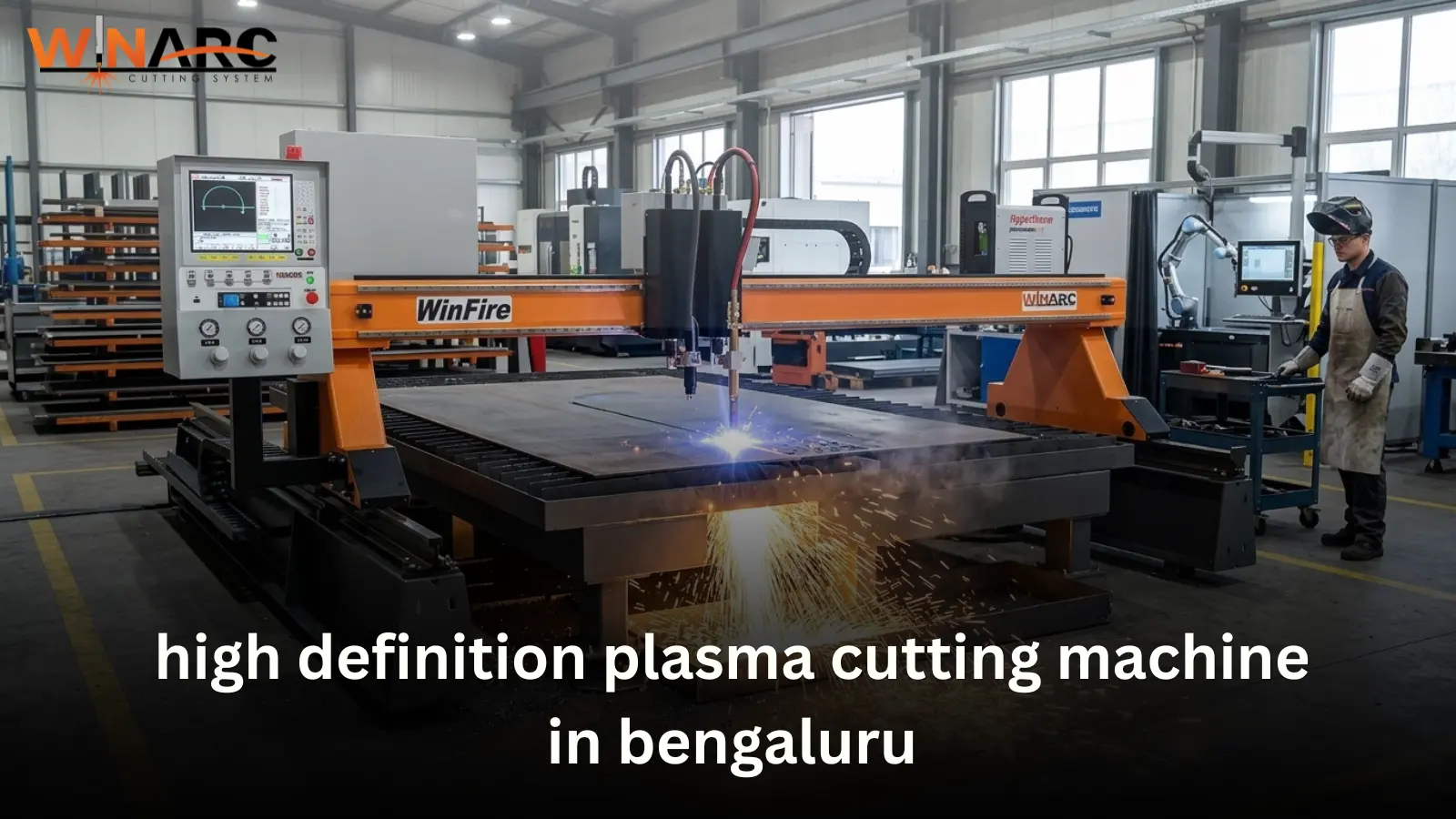
Its plasma cutting product range includes WinFire and WinPlus machines.
WinFire – CNC Plasma and Oxyfuel Cutting Machine
The WinFire series combines CNC plasma cutting and oxyfuel cutting technologies in one machine.
The configuration detailed in Winarc’s September 2026 quotation includes:
| Technical Specification | WinFire Configuration |
|---|---|
| Effective Cutting Width | 2500 mm |
| Effective Cutting Length | 6500 mm |
| Overall Machine Size | 3500 × 8000 mm |
| Plasma Source | Hypertherm Powermax125 – USA |
| Plasma Rated Power | 24 kW |
| CNC Controller | F2500A |
| Torch Height Controller | F1629 |
| Servo Motors and Drives | Delta Taiwan |
| Gearbox | Delta Taiwan |
| X-Axis Linear Guide | Hiwin Taiwan |
| Y-Axis Guide | 24 kg Heavy-Duty Rail |
| Oxyfuel Torch | Harris (Lincoln Electric) |
| Nesting Software | ProNest |
| Rapid Positioning Speed | 0–12,000 mm/min |
| Longitudinal Guiding Accuracy | ±0.3 mm / 3 m |
| Repeatability Accuracy | ±0.3 mm / 3 m |
Specifications are based on the WinFire 2500 × 6500 mm configuration in the supplied quotation. Other machine configurations may differ.
646 – M P ENGINEERING WORKS – PMX125 with OXYFUEL Cutting.pdf
Key Features of WinFire
Robust Machine Construction
Designed with a steel frame and heavy-duty guiding arrangements to support industrial cutting operations.
Hypertherm Plasma Technology
Equipped with a Hypertherm Powermax125 plasma source for cutting mild steel, stainless steel and aluminium.
Delta Servo Drive System
Delta servo motors and gearboxes support controlled gantry movement.
Automatic Torch Height Control
The F1629 torch height controller helps maintain the appropriate torch-to-workpiece distance through arc voltage feedback.
Torch Breakaway Protection
The plasma torch breakaway system helps protect the torch when accidental contact with obstacles occurs.
Oxyfuel Cutting Capability
The machine includes a Harris oxyfuel torch for mild steel cutting, with the quoted configuration specifying a 6–250 mm cutting thickness range.
ProNest Nesting Software
Supports CAD/CAM-based profile nesting and cutting program preparation.
646 – M P ENGINEERING WORKS – PMX125 with OXYFUEL Cutting.pdf
646 – M P ENGINEERING WORKS – PMX125 with OXYFUEL Cutting.pdf
WinPlus – High-Definition CNC Plasma Cutting Machine
WinPlus is Winarc’s high-definition CNC plasma cutting machine designed with an emphasis on machine rigidity, optimised motion control and HD plasma cutting technology.
The machine combines plasma and oxyfuel cutting capabilities to support different industrial metal fabrication requirements.
Its key features include:
- Sturdy machine construction.
- Smooth gantry movement.
- Rack and pinion drive mechanism.
- Dual synchronised servo motors for longitudinal movement.
- Magnetic torch breakaway protection.
- Ergonomic operator seating mounted on the gantry.
- Emergency stop and machine safety features.
- Customisable machine configurations.
- Technical support and maintenance services.
The WinPlus configuration information provided by Winarc also identifies Hypertherm/Kjellberg plasma source options, Eckelmann CNC control systems, Hiwin/CPC linear guides and Delta/Fuji servo motor options.
CAD/CAM software options include Hypertherm ProNest and SigmaNEST.
Winarc’s Technical Support and After-Sales Service
Selecting a cutting machine involves more than choosing the right technical specifications.
Installation, commissioning, operator training, maintenance guidance and replacement part availability are important considerations.
Winarc provides technical assistance, maintenance guidance, operator training and genuine replacement parts support to help customers maintain their machine operations.
646 – M P ENGINEERING WORKS – PMX125 with OXYFUEL Cutting.pdf
For machine configurations, technical specifications and application requirements, customers can contact the Winarc technical team.
17. Frequently Asked Questions About CNC Plasma Cutting Machines
1. What thickness of metal can a CNC plasma cutter cut?
The cutting thickness depends on the plasma source, amperage, material type and cutting conditions.
For example, Winarc’s quoted WinFire configuration with Hypertherm PMX125 specifies piercing capacities of 20 mm for mild steel and 16 mm for stainless steel and aluminium.
2. Can a CNC plasma machine cut stainless steel and aluminium?
Yes. CNC plasma cutting machines can process stainless steel and aluminium because both materials are electrically conductive.
The appropriate plasma source, gas supply and cutting parameters must be selected.
3. Is plasma cutting better than laser cutting?
Both technologies have different applications. Plasma cutting is commonly used for industrial metal fabrication and thicker conductive materials, while fiber laser cutting is widely used where fine precision and edge quality are important.
The suitable technology depends on the material, thickness, accuracy and production requirements.
4. How accurate is a CNC plasma cutting machine?
Accuracy depends on the mechanical structure, CNC controller, servo drives, calibration and cutting parameters.
Winarc’s quoted WinFire configuration specifies longitudinal guiding accuracy of ±0.3 mm per 3 metres and repeatability accuracy of ±0.3 mm per 3 metres.
5. How much power or amperage do I need for a CNC plasma cutter?
The required plasma amperage depends on the material type, thickness, cutting speed and desired edge quality.
It is advisable to select a plasma power source based on the manufacturer’s recommended cutting charts.
6. What gas is used in plasma cutting?
Compressed air is commonly used in air plasma systems. Industrial plasma systems may also use oxygen, nitrogen and other gases depending on the material and cutting requirements.
7. How long do plasma cutting consumables last?
Consumable life depends on the operating conditions, cutting parameters, material thickness, gas quality and number of piercing cycles.
Regular inspection and correct operating settings help extend consumable life.
8. What software does a CNC plasma machine use?
CNC plasma cutting machines use CAD/CAM and nesting software to prepare cutting designs and machine programs.
Common examples include Hypertherm ProNest and SigmaNEST. Winarc’s WinFire quotation specifies ProNest nesting software.
9. What is the difference between CNC plasma and oxyfuel cutting?
Plasma cutting uses an electrical arc and ionised gas to cut electrically conductive metals. Oxyfuel cutting uses fuel gas and oxygen to cut suitable materials, primarily mild steel.
Oxyfuel is commonly used for thicker mild steel plates.
10. What should I check before purchasing a CNC plasma cutting machine?
Consider the cutting table size, plasma power source, material thickness, CNC controller, torch height control, drive system, software, installation requirements, service support and consumable availability.
Conclusion: Choose the Right CNC Plasma Cutting Machine for Your Manufacturing Needs
A CNC plasma cutting machine is an important investment for businesses involved in metal fabrication, engineering, structural steel manufacturing and industrial production.
Understanding the machine’s working principle, cutting capabilities, components and operating requirements helps manufacturers select a configuration that meets their production needs.
Whether you require a CNC plasma cutting machine for sheet metal, structural fabrication or heavy plate processing, selecting the right combination of plasma technology, machine construction, automation and technical support is essential.
Winarc Cutting System offers CNC plasma and oxyfuel cutting solutions through its WinFire and WinPlus product series, designed to support a variety of industrial metal cutting applications.
Looking for a CNC plasma cutting machine for your business?
Contact Winarc Cutting System today to discuss your requirements, explore available machine configurations and request a quotation.
- Website: https://winarc.in/
- Email: service@winarc.in
- Product Range: WinFire | WinPlus | CNC Plasma & Oxyfuel Cutting Machines