Manufacturing is evolving rapidly. Customers expect better product quality, faster delivery, consistent accuracy and competitive pricing. For manufacturers working with metal, meeting these expectations increasingly depends on the technology used on the shop floor.
One technology that has transformed modern metal fabrication is CNC laser cutting.
From automotive components and electrical enclosures to industrial machinery, structural fabrication and precision sheet metal parts, CNC laser cutting machines help manufacturers process metal with a high degree of accuracy and repeatability. However, not all laser cutting machines are designed for the same applications. Different technologies, machine configurations, laser power levels and automation features serve different manufacturing requirements.
As the Managing Director of Winarc Cutting Systems, I believe that understanding these differences is the first step towards making a sound manufacturing investment.
A machine should not be selected simply because it has a higher laser power rating or a longer list of features. It should be selected because its capabilities match the materials you process, the components you manufacture, your production volumes and your long-term business objectives.
In this guide, I will explain the types of CNC laser cutting machines, how they work, where they are used, their advantages and limitations, and the factors manufacturers should consider before investing in one.
What Is a CNC Laser Cutting Machine?
A CNC laser cutting machine is a computer-controlled system that uses a concentrated laser beam to cut material according to a programmed design.
CNC stands for Computer Numerical Control. It allows the machine to follow programmed instructions that control the movement of its cutting head, the cutting path and other relevant operating parameters.
A typical CNC laser cutting system includes several key components:
- Laser source: Generates the laser beam used for cutting.
- Cutting head: Directs and focuses the laser beam onto the material.
- CNC controller: Coordinates machine movement and executes programmed cutting instructions.
- Motion system: Moves the cutting head, workpiece or both along the required axes.
- Worktable or material-handling system: Supports the material during processing.
- Assist-gas system: Supplies gas used to support the cutting process and remove molten material from the cut zone.
- Cooling system: Helps maintain suitable operating temperatures for the laser source and associated equipment.
- CAD/CAM software: Helps convert component drawings into machine-readable cutting programs.
- Fume extraction system: Collects fumes and particles generated during cutting.
In operation, a component drawing is prepared or imported into compatible software. The cutting path is generated, suitable cutting parameters are selected, and the CNC controller directs the machine through the programmed sequence.
The result is a controlled cutting process that can produce complex component shapes with repeatable accuracy, provided the material, machine configuration and cutting parameters are appropriate for the application.
It is important to understand that CNC describes the control system, while laser technology describes the source and cutting method. Different laser sources can be integrated into CNC-controlled machines.
This brings us to the first major distinction.
1. Types of CNC Laser Cutting Machines Based on Laser Technology
The laser source is one of the most important factors affecting a machine’s performance. Different technologies have different characteristics, making them suitable for different materials, thicknesses and applications.
The principal laser technologies used in industrial cutting include fiber lasers and CO₂ lasers. Solid-state lasers such as Nd have also been used in industrial material processing, although their role in modern production depends on the application and equipment design.
Let’s examine the main types.
1.1 CNC Fiber Laser Cutting Machines
Fiber laser cutting machines use a solid-state laser source in which the laser energy is generated and amplified through an optical fiber.
Fiber laser technology is widely used in modern metal fabrication because of its efficiency, beam characteristics and suitability for processing a range of metals.
These machines are commonly used to cut mild steel, stainless steel and aluminium. With suitable equipment and operating parameters, fiber lasers can also process materials such as copper and brass.
Their performance depends on factors including laser power, material type, material thickness, cutting-head capability, assist gas and the quality of the overall machine system.
How Does a Fiber Laser Cutting Machine Work?
The laser source generates a beam that is delivered to the cutting head through an optical fiber. The cutting head focuses the beam onto a small area of the workpiece, creating sufficient energy concentration to melt or otherwise remove material.
Assist gas helps remove molten material from the cut zone. The CNC motion system moves the cutting head along the programmed path to produce the required component.
Because the cutting path is computer-controlled, the machine can produce intricate shapes, holes, slots and other features without relying on manual marking and cutting.
Advantages of CNC Fiber Laser Cutting Machines
1. High processing efficiency
Fiber lasers can deliver high cutting speeds on suitable material thicknesses, particularly in many thin- and medium-sheet-metal applications. Actual throughput depends on the material, thickness, geometry, laser power and the time required for loading, unloading and setup.
2. Energy efficiency
Fiber laser systems generally convert electrical energy into laser output more efficiently than traditional industrial CO₂ laser systems. This can contribute to lower energy consumption, although total operating costs also depend on machine configuration, auxiliary equipment and production conditions.
3. Versatility across metals
Fiber lasers are suitable for a wide range of industrial metals. This makes them attractive to manufacturers who process different metal grades or supply multiple industries.
4. Low routine optical maintenance
Fiber laser systems generally do not require the same beam-delivery mirror alignment and maintenance associated with conventional CO₂ systems. However, the cutting head, protective windows, cooling system, filters, nozzles and other machine components still require appropriate maintenance.
5. Precision and repeatability
A properly configured fiber laser machine can produce detailed geometries and repeatable cuts. The achievable quality depends on the machine’s motion system, calibration, material condition, programming and cutting parameters.
Where Are Fiber Laser Cutting Machines Used?
Common applications include:
- Sheet metal fabrication.
- Automotive components.
- Electrical cabinets and enclosures.
- Agricultural machinery.
- Industrial equipment.
- HVAC components.
- Metal furniture.
- Stainless steel fabrication.
- Structural components and machine frames.
- General engineering and manufacturing.
Who Should Consider a Fiber Laser Cutting Machine?
Fiber laser technology is worth evaluating if your business regularly cuts metal sheets or profiles and needs a combination of cutting precision, production efficiency and flexibility.
For example, a sheet metal fabricator producing electrical enclosures may prioritise intricate cuts and repeatability. A manufacturer processing large volumes of brackets may focus on cycle time and material utilisation. A business producing structural components may require a machine designed specifically for tubes and profiles.
The right configuration depends on the actual production requirement.
At Winarc Cutting Systems, our fiber laser product range includes machines for sheet cutting, large-format processing and tube or combined plate-and-profile applications.
Explore our CNC fiber laser cutting machines and product range.
1.2 CNC CO₂ Laser Cutting Machines
CO₂ laser cutting machines use a gas-based laser source in which carbon dioxide forms part of the gas mixture used to generate the laser beam.
These machines have been widely used for industrial cutting and engraving, particularly for non-metallic materials. They have also been used for metal cutting in suitable industrial configurations.
However, fiber laser technology has become a major choice for many modern metal-cutting applications because of its efficiency and performance characteristics.
How Does a CO₂ Laser Cutting Machine Work?
A CO₂ laser source generates a beam using an electrically excited gas mixture. The beam is directed through an optical path and focused onto the material by the cutting head.
Mirrors and other optical components are typically used to guide the beam from the source to the cutting area.
The laser heats the material, while the cutting process and assist gas help remove material along the programmed path.
Advantages of CO₂ Laser Cutting Machines
- Established technology with a long industrial history.
- Suitable for many non-metallic materials, depending on the system.
- Can provide good cutting quality in appropriate applications.
- May be suitable for businesses with an existing CO₂ laser infrastructure and established workflows.
Limitations to Consider
CO₂ laser systems generally require more attention to their beam-delivery optics than fiber laser systems. Their electrical efficiency and performance on many metal-cutting applications can also be less favourable than those of modern fiber lasers.
The suitability of a CO₂ machine depends on the material being processed, its thickness, required edge quality, operating cost and production requirements.
Where Are CO₂ Laser Cutting Machines Used?
Depending on their configuration, CO₂ laser machines are used for applications such as:
- Acrylic cutting.
- Wood and selected engineered wood products.
- Textiles and fabrics.
- Paper and packaging materials.
- Selected plastics.
- Certain metal-cutting applications.
Not every CO₂ machine can safely or effectively process every material. For example, some plastics release hazardous fumes when laser-cut, so material compatibility and proper extraction must be verified.
Fiber Laser vs CO₂ Laser: Which Is Better?
There is no universal answer for every application.
For many modern metal fabrication operations, fiber laser technology is an attractive choice because of its efficiency and suitability for a broad range of metals. CO₂ technology may remain relevant in specific applications, particularly where non-metallic material processing is important.
Manufacturers should compare both technologies against their actual production requirements rather than relying on a general claim that one technology is always superior.
1.3 Solid-State Laser Cutting Machines
Solid-state laser systems generate laser energy using a solid gain medium rather than a gas-based source.
Nd lasers are one example of solid-state laser technology that has been used in industrial material processing.
Historically, solid-state lasers have supported applications such as precision cutting, drilling, marking and welding. Their suitability for cutting depends on the specific source, beam delivery, power level and application.
Fiber lasers are themselves a type of solid-state laser. However, in everyday industrial purchasing discussions, the term “solid-state laser” is sometimes used more narrowly to refer to other solid-state architectures, such as traditional rod-based systems.
Where Are These Systems Used?
Depending on the system, solid-state laser technology can be used in:
- Precision component processing.
- Fine cutting and drilling.
- Specialised manufacturing.
- Laser welding.
- Marking and other material-processing applications.
For most buyers evaluating a new CNC machine for general sheet metal production, the more useful comparison is usually between specific modern fiber laser systems and other technologies suitable for the intended material and application.
Key takeaway: When comparing laser technologies, look beyond the category name. Evaluate the actual laser source, power, cutting capability, operating cost, support and suitability for your materials.
2. Types of CNC Laser Cutting Machines Based on Machine Configuration
Laser source technology is only one part of the decision.
Two machines may use fiber laser sources but be designed for completely different manufacturing tasks. One may process flat sheets, another may cut tubes, and a third may handle both plates and structural profiles.
The machine’s mechanical configuration determines how the material is loaded, supported and processed.
The following configurations are particularly relevant to industrial metal fabrication.
2.1 Single-Pallet CNC Fiber Laser Cutting Machines
A single-pallet fiber laser cutting machine uses one primary worktable or pallet to support the sheet during cutting.
The material is loaded onto the worktable, the machine executes the programmed cutting process, and the finished parts are unloaded before the next sheet is processed.
Key Advantages
- Straightforward worktable arrangement.
- Suitable for a wide range of sheet metal applications.
- Can be a practical choice for general fabrication.
- Available in different working areas and laser power configurations.
What Should Buyers Consider?
Because the machine has one primary cutting pallet, loading and unloading arrangements can affect production continuity. Depending on the system design, material handling may require cutting to stop while the operator changes the workpiece.
Actual downtime depends on how the material is handled, how the machine is configured and whether auxiliary handling systems are used.
Typical Applications
Single-pallet machines can suit manufacturers producing:
- Metal enclosures.
- Brackets and mounting plates.
- General sheet metal components.
- Custom fabrication parts.
- Components for industrial equipment.
This configuration is worth evaluating when the production mix requires flexibility and a dual-pallet system is not essential to the business case.
2.2 Dual-Pallet CNC Fiber Laser Cutting Machines
A dual-pallet machine uses an automatic pallet-changing arrangement to help separate cutting operations from material loading and unloading.
While the machine cuts material on one pallet, an operator can prepare material on the other pallet. After the cutting cycle, the system changes pallets so that the next sheet can be processed.
This arrangement can reduce the idle time associated with material changes.
Key Advantages
Improved production continuity: Loading and unloading can take place while the machine is cutting, depending on the system design and safety procedures.
Better utilisation of cutting time: Reducing changeover delays can improve the proportion of time the laser spends processing material.
Suitability for repeated production: Manufacturers processing multiple batches of sheet metal parts may benefit from a more continuous workflow.
Potential for higher throughput: The benefit is greatest when material handling would otherwise create a significant interruption between cutting cycles.
Who Should Consider a Dual-Pallet Machine?
This configuration is worth considering for manufacturers with recurring production requirements, higher sheet throughput or frequent material changes.
However, a dual-pallet machine does not automatically double production. Actual output depends on cutting time, loading and unloading time, part complexity, machine utilisation, operator availability and the wider production process.
At Winarc, the WINMASTER is our dual-pallet CNC fiber laser cutting machine, designed for manufacturers seeking to improve production continuity in sheet metal processing.
You can explore the Winarc product range to learn more about the available machine configurations.
2.3 Gantry-Type CNC Fiber Laser Cutting Machines
Gantry-type laser cutting machines use a bridge-like structure that supports the cutting head and its motion system across the work area.
Depending on the machine design, gantry configurations can be engineered for larger working areas and demanding fabrication environments.
Key Advantages
- Can accommodate large-format work areas.
- Suitable for processing larger sheets or plate formats within the machine’s capacity.
- Can support applications where component size or production layout requires a larger cutting envelope.
- Can be configured for industrial fabrication requirements.
Typical Applications
Gantry-type machines may be used in applications such as:
- Heavy fabrication.
- Large sheet metal components.
- Industrial machinery.
- Infrastructure-related manufacturing.
- Large-format metal processing.
What Should Buyers Consider?
A gantry structure alone does not determine a machine’s cutting capability. Buyers should evaluate the complete machine design, including working area, rigidity, motion performance, laser power, material support, cutting-head specifications and the manufacturer’s stated material capacity.
They should also consider factory space, material movement and the requirements for loading and unloading large sheets.
Winarc’s WINPRO is a gantry-type fiber laser cutting machine intended for large-format cutting and heavy fabrication requirements.
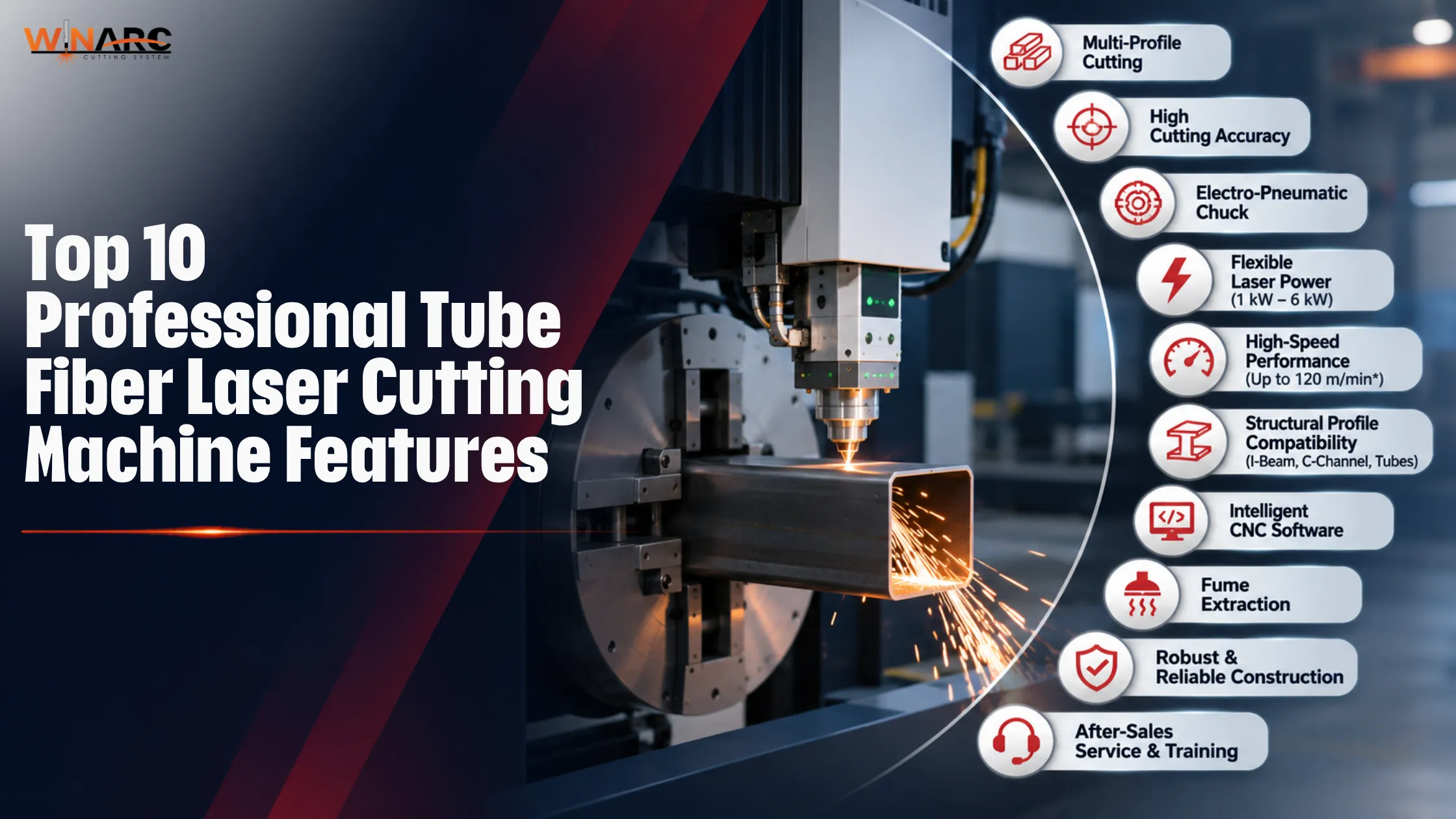
2.4 CNC Tube Laser Cutting Machines
Flat sheet processing is only one part of metal fabrication. Many industries also use round tubes, square tubes, rectangular tubes and other structural profiles.
A CNC tube laser cutting machine is specifically designed to process tubular material and compatible profiles.
Unlike a conventional flat-sheet laser cutter, a tube laser machine uses a material-handling and clamping system that rotates and positions the workpiece while the cutting head follows the programmed path.
This allows the machine to create holes, slots, notches and end cuts at specified locations, subject to its design and supported profiles.
How Does a CNC Tube Laser Cutting Machine Work?
The tube is loaded into the machine’s feeding or clamping system. The system positions and, where required, rotates the tube according to the programmed cutting path.
The laser cutting head processes the material while the CNC controller coordinates the movement of the cutting head and workpiece.
Depending on the machine’s capabilities, the system may handle different profile shapes and produce a range of features without requiring each feature to be created through a separate manual operation.
Key Advantages
1. Reduced manual marking
Programmed cutting can reduce the need for repeated manual measurement and marking.
2. Integrated feature cutting
Suitable machines can produce holes, slots and notches as part of the programmed process.
3. Improved repeatability
Computer-controlled positioning can help maintain consistency across repeated components.
4. Potentially fewer secondary operations
Depending on the part design, the machine may reduce the need for separate drilling, notching or cutting operations.
5. Support for complex profiles
Suitable tube laser systems can process supported profile geometries that would be more difficult to prepare using conventional manual methods.
Industries That Use Tube Laser Cutting Machines
CNC tube laser cutting is relevant to manufacturers working in:
- Structural steel fabrication.
- Automotive components.
- Industrial machinery.
- Furniture manufacturing.
- Agricultural equipment.
- Material-handling systems.
- Construction and infrastructure.
- Metal frames and support structures.
Who Should Consider a Tube Laser Cutting Machine?
If your business regularly processes tubes or compatible structural profiles and performs multiple operations on each component, a dedicated tube laser machine may be worth evaluating.
The most important consideration is profile compatibility. Before purchasing, confirm that the machine supports your tube shapes, dimensions, wall thicknesses, material grades and required cutting features.
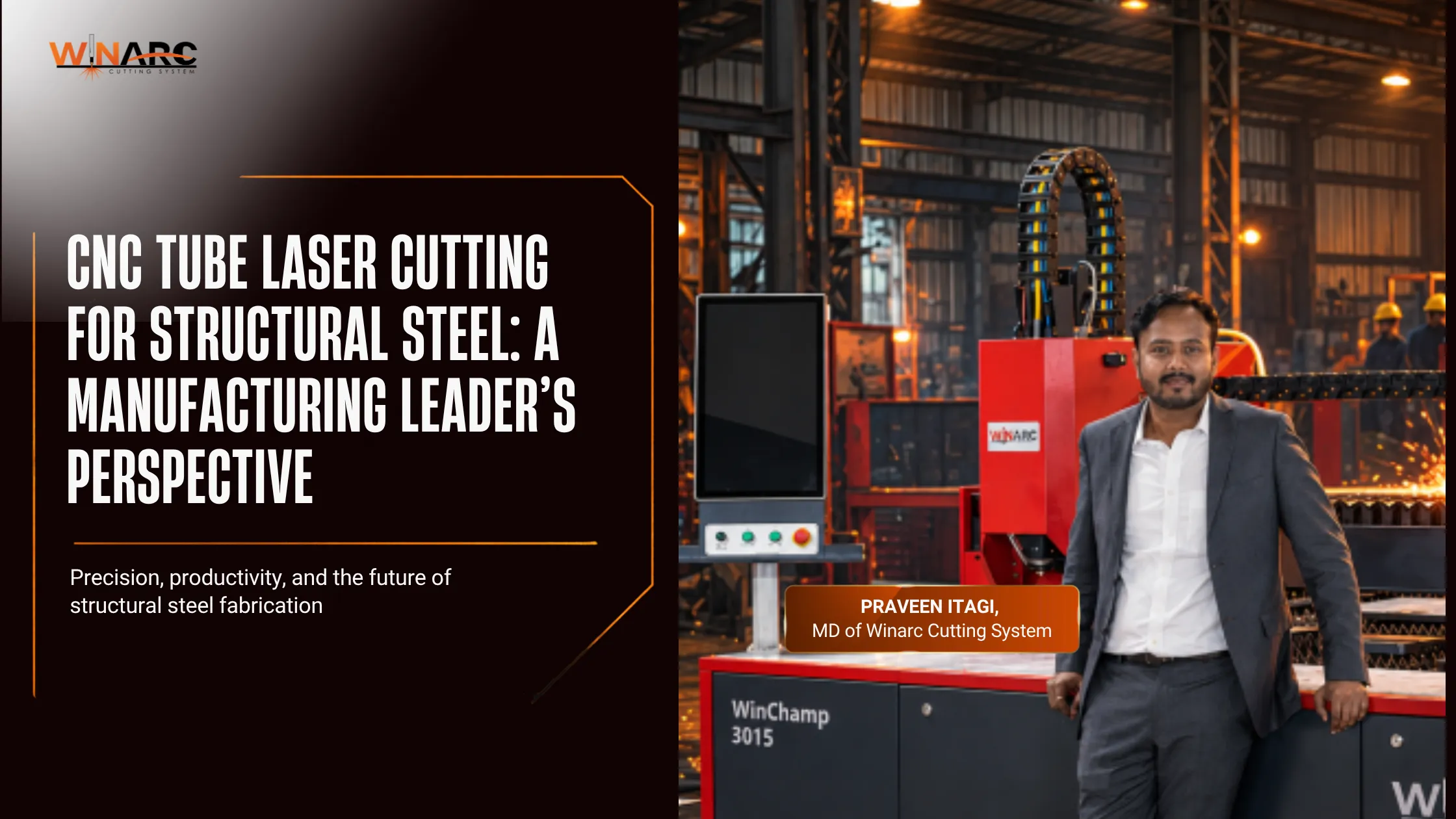
At Winarc, WINTUBE is our dedicated tube fiber laser cutting machine. It is designed for metal tubes and compatible profiles, including round, square and rectangular sections, as well as supported structural profiles such as I-beams and C-channels.
Learn more about our tube laser cutting machines.
2.5 Plate-and-Tube Combination Laser Cutting Machines
Some manufacturers work with both flat sheets and tubular or structural profiles.
For these businesses, investing in separate machines for every material format may not always be the most suitable approach. A combination machine can offer an alternative, provided its capabilities match the production requirements.
A plate-and-tube combination laser cutting machine is designed to process flat sheets and compatible profiles using one machine platform with the relevant cutting and material-handling arrangements.
Key Advantages
Greater application flexibility: The machine can support both flat-sheet and compatible profile processing.
Potential space savings: A combination system may reduce the need for separate machine footprints, depending on the factory layout and auxiliary equipment.
Consolidated equipment investment: For some production mixes, one combination machine may be a practical alternative to purchasing separate sheet and tube systems.
Support for varied orders: Manufacturers producing both sheet components and structural profiles may benefit from having multiple processing capabilities available.
What Are the Limitations?
Combination machines are not automatically the best choice for every manufacturer.
A dedicated sheet machine may be more suitable when flat-sheet throughput is the primary requirement. A dedicated tube machine may be preferable when tube processing dominates production and specialised handling is important.
A combination system should therefore be evaluated against both sides of the production mix. Buyers should confirm the machine’s supported sheet dimensions, profile shapes, profile sizes, clamping arrangements, laser power and cutting capabilities.
Winarc’s WINHYBRID is a plate-and-tube combination fiber laser cutting machine designed to process flat plates and supported profiles, including compatible C-channels and I-beams.
For manufacturers with mixed processing requirements, this configuration is worth considering as part of the machine-selection process.
2.6 Large-Format CNC Laser Cutting Machines
Large-format laser cutting machines are designed to accommodate workpieces that require a larger cutting area than standard sheet configurations provide.
They may be used for large components, extended sheets or production layouts where material size is a key consideration.
Large-format describes the machine’s working envelope rather than a separate laser-source technology. A large-format machine may use a fiber laser source and may also have a gantry-style mechanical arrangement.
Typical Applications
- Large industrial panels.
- Machinery components.
- Large fabricated sheet metal parts.
- Industrial equipment structures.
- Selected infrastructure and heavy-fabrication components.
What Should Buyers Consider?
Working area is only one factor. Manufacturers should also evaluate material thickness, machine rigidity, cutting-head performance, laser power, loading arrangements and the ability to handle the largest and heaviest workpieces in their production mix.
A larger machine is not necessarily more productive for smaller components. The best configuration depends on the materials and parts that the business processes regularly.
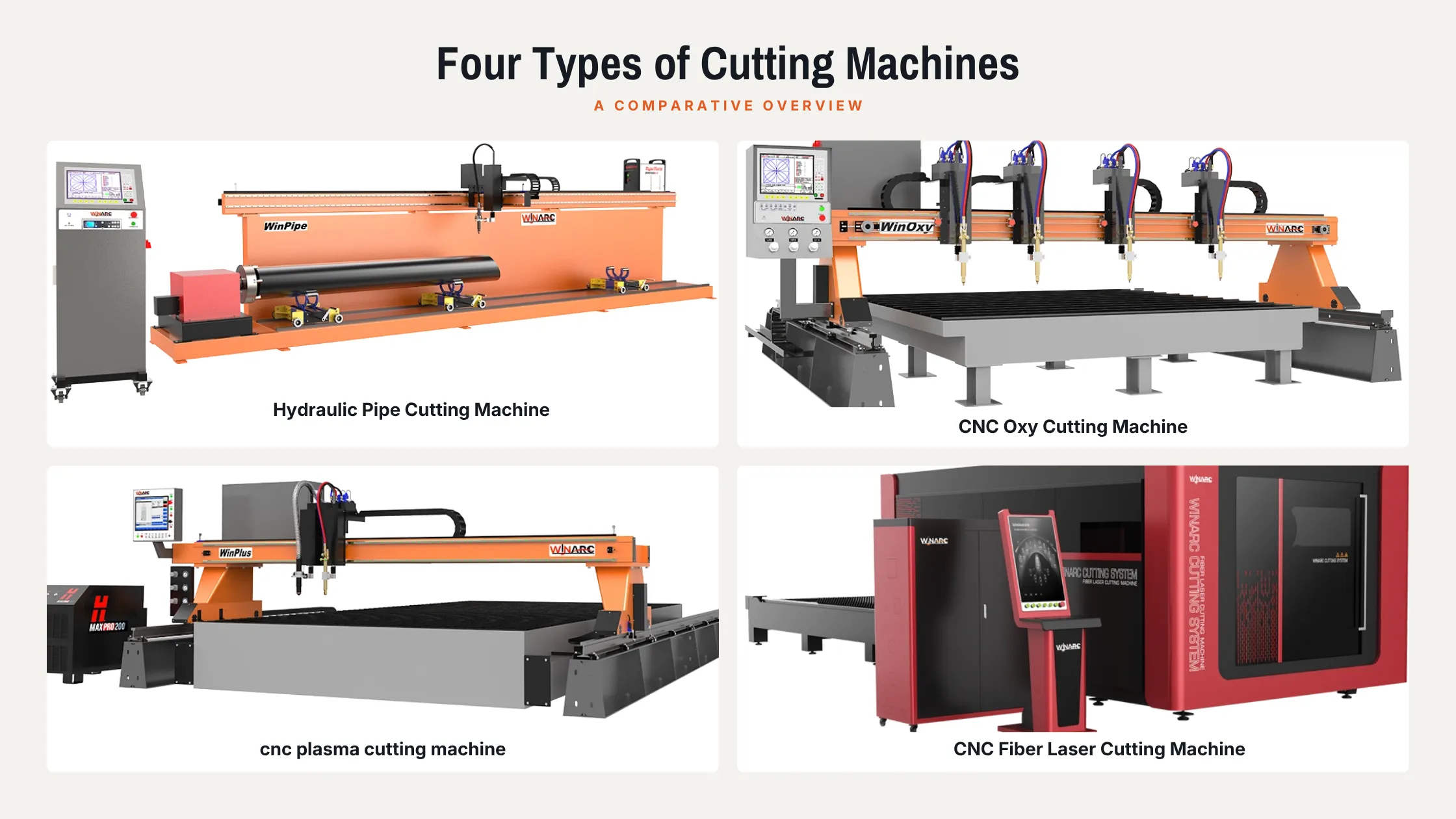
3. Types of CNC Cutting Machines That Are Often Confused With Laser Cutting Machines
When researching CNC cutting technology, buyers often encounter fiber laser, plasma and oxy-fuel machines on the same supplier websites.
Although these machines can all use CNC controls, plasma cutting and oxy-fuel cutting are not laser cutting technologies. They use different physical processes and have different application characteristics.
Understanding this distinction is important when comparing machines.
3.1 CNC Plasma Cutting Machines
CNC plasma cutting uses an electrically conductive, ionised gas to cut electrically conductive materials.
The plasma arc melts the material, while the gas flow removes molten metal from the cut.
Plasma cutting is commonly used for conductive metals, particularly in applications involving plate and profile processing where the required edge quality, accuracy and thickness are compatible with the system.
Advantages
- Suitable for many conductive metals.
- Can be practical for certain medium- and heavy-plate applications.
- Available in CNC configurations for programmed cutting.
- Can be suitable for fabrication tasks where its cutting characteristics meet the requirements.
Limitations
Compared with laser cutting, plasma cutting may produce a wider kerf or a larger heat-affected zone in some applications. Edge quality and precision depend on the system, material, thickness and cutting parameters.
Typical Applications
- Structural fabrication.
- Industrial equipment.
- Heavy metal fabrication.
- Selected plate-cutting operations.
3.2 CNC Oxy-Fuel Cutting Machines
CNC oxy-fuel cutting uses a fuel gas and oxygen to heat and cut suitable metals through an oxidation process.
It is particularly associated with cutting thicker carbon steel plate, subject to the machine configuration and operating requirements.
Advantages
- Suitable for certain heavy-duty carbon steel cutting applications.
- Can be practical for thick plate where high-speed, fine-detail laser cutting is not the primary requirement.
- Used in heavy fabrication and industrial manufacturing.
Limitations
Oxy-fuel cutting is not suitable for every metal. Its process characteristics, cutting speed, heat input and achievable edge quality differ from those of laser cutting.
Typical Applications
- Heavy structural steel fabrication.
- Large industrial components.
- Selected thick carbon steel plate applications.
Why This Difference Matters
A manufacturer processing thin stainless steel sheets for electrical enclosures may have different requirements from a business cutting thick carbon steel plate for heavy fabrication.
The objective should be to choose the appropriate cutting process for the material, thickness, required quality and production economics.
Winarc offers different CNC cutting solutions for different manufacturing needs. The appropriate technology should be selected according to the actual application rather than treating all CNC cutting machines as interchangeable.
4. How to Choose the Right Type of CNC Laser Cutting Machine
Understanding the types of CNC laser cutting machines is useful, but the next question is more important: which type is right for your business?
I recommend evaluating the decision through a structured assessment of your production requirements.
4.1 Identify the Materials You Process
Start by listing the materials your business uses regularly.
Examples include:
- Mild steel.
- Stainless steel.
- Aluminium.
- Copper.
- Brass.
Not every machine will deliver the same performance on every material. Reflectivity, thermal properties, material grade and thickness can affect the cutting process.
Ask the machine manufacturer to confirm material compatibility and demonstrate cutting performance using representative samples.
4.2 Determine Your Material Thickness
Laser power is an important specification, but it should not be considered in isolation.
A higher-power machine may offer advantages for certain thicker-material applications or higher-throughput requirements. However, the suitable laser power depends on the material, thickness, required edge quality, cutting speed and production volume.
Before comparing machines, prepare a list of the material thicknesses you process most frequently and the maximum thicknesses you expect to cut.
Ask the supplier to distinguish between the machine’s recommended production range and its maximum stated cutting capability.
The thickest material you occasionally process should not automatically determine the specification of the entire machine.
4.3 Decide Whether You Need Sheet Cutting, Tube Cutting or Both
This is one of the most important decisions.
| Your production requirement | Machine type worth evaluating |
|---|---|
| Flat metal sheets and standard sheet components | Single-pallet or dual-pallet fiber laser |
| Higher-throughput flat-sheet production | Dual-pallet fiber laser, depending on handling requirements |
| Large-format sheet or plate components | Large-format or gantry-type fiber laser |
| Round, square and rectangular tubes | Dedicated tube laser cutting machine |
| Flat sheets and compatible tubes or structural profiles | Plate-and-tube combination machine |
| Non-metallic materials such as suitable acrylic or wood | A laser system specifically designed and approved for the intended material |
| Certain thick carbon steel plate applications | Compare suitable laser systems with CNC plasma or oxy-fuel alternatives |
This is a starting point, not a substitute for technical evaluation. The machine’s supported dimensions, material range and configuration must be verified before purchase.
4.4 Evaluate Your Production Volume
Your daily or monthly production volume influences the machine configuration that makes sense.
For lower-volume or highly varied production, flexibility and ease of setup may be important.
For recurring production with frequent material changes, automation and faster material handling may have greater value.
For large-format components, working area and material handling may be more important than the highest possible cutting speed.
Consider the entire production cycle, including programming, setup, loading, cutting, unloading and secondary operations.
4.5 Consider Material Utilisation
Raw material is a significant cost for many manufacturers.
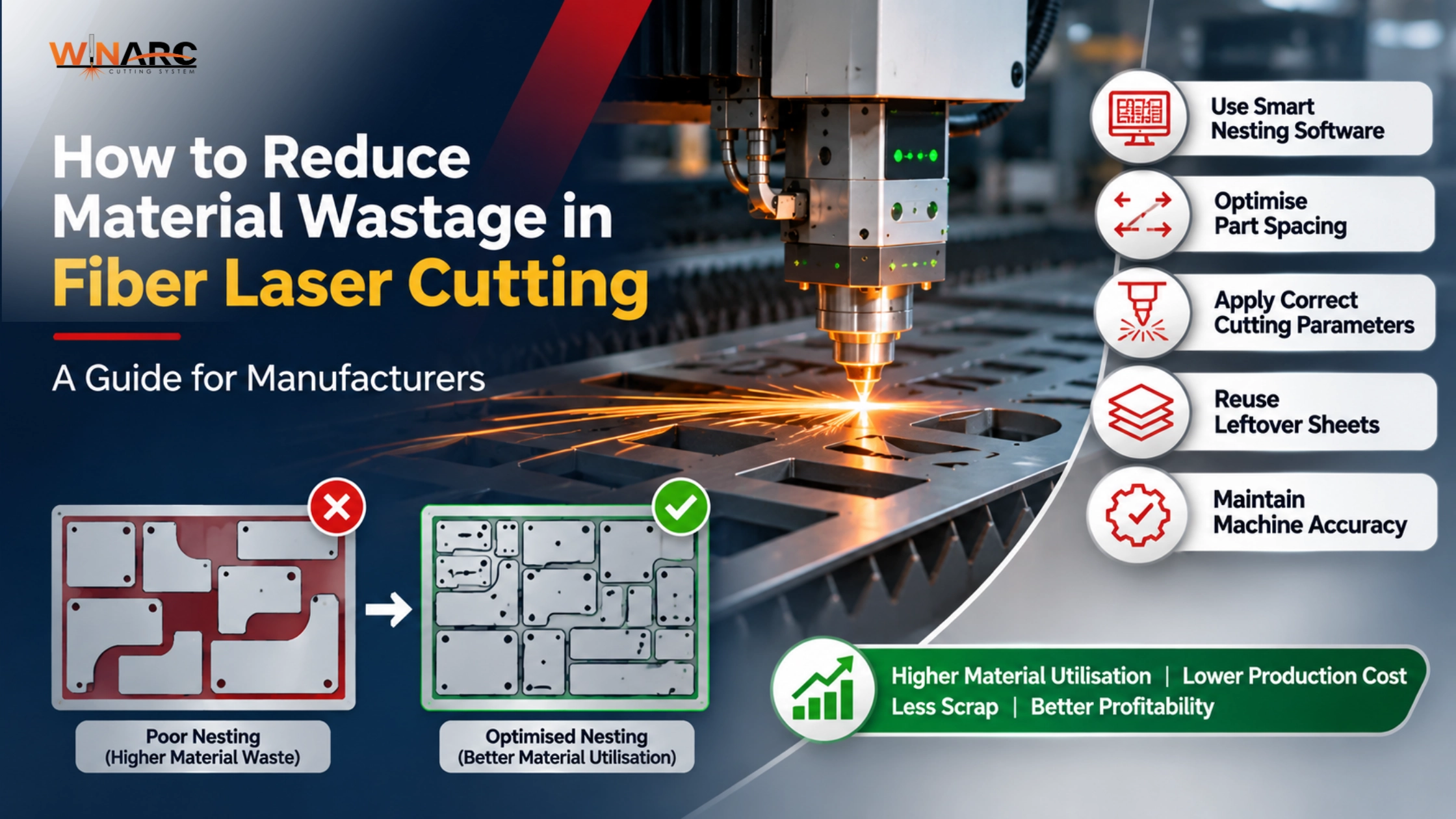
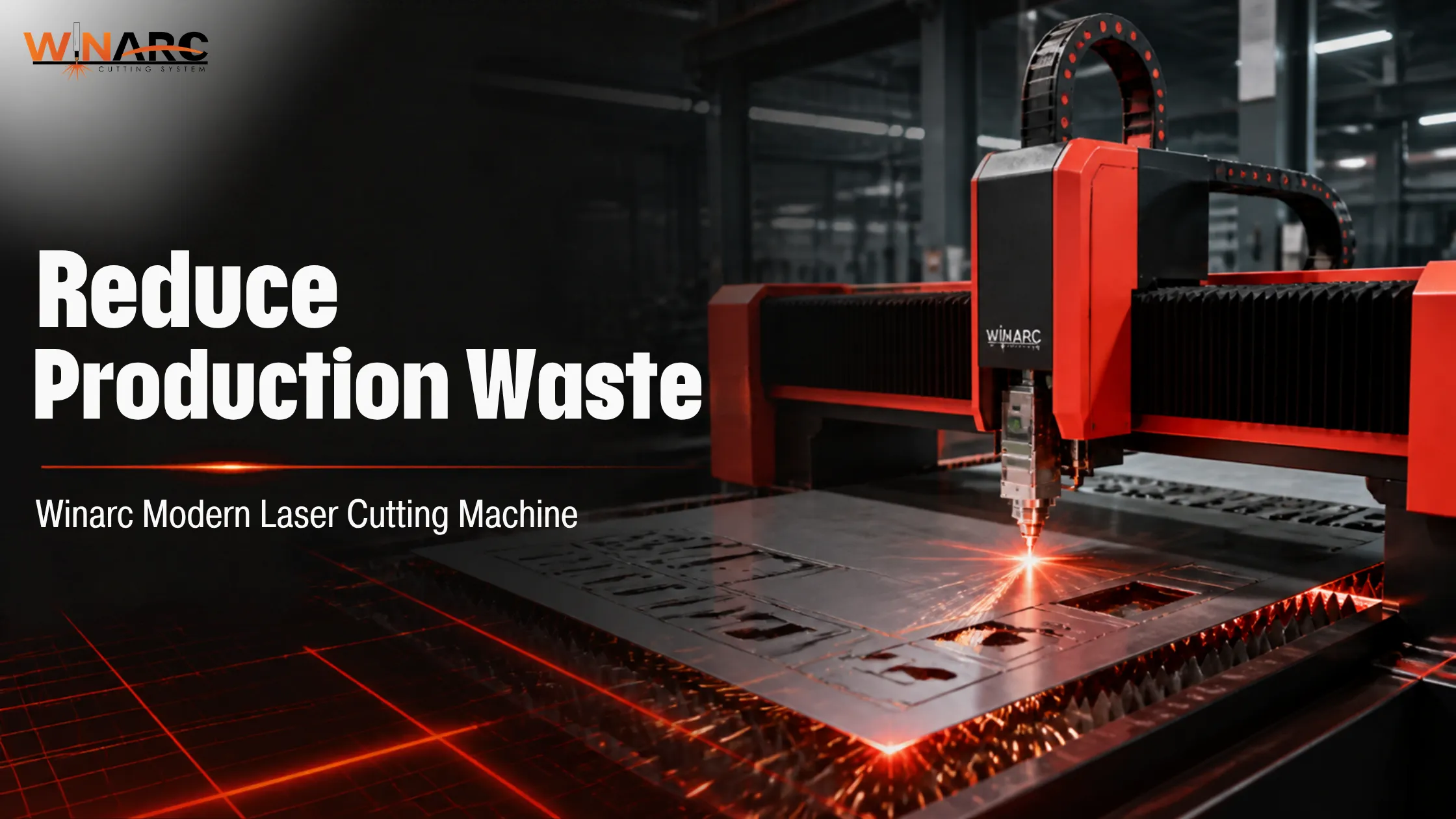
A suitable machine combined with good nesting and cutting-plan preparation can help improve material utilisation and reduce avoidable scrap.
However, the actual savings depend on part geometry, sheet dimensions, production scheduling, nesting strategy and cutting parameters.
When evaluating a machine, ask how its software supports nesting and how you can measure material utilisation before and after implementation.
4.6 Assess Software and CNC Controls
The CNC controller and CAD/CAM software influence the way a machine is programmed and operated.
Evaluate factors such as:
- Compatibility with your existing drawing workflow.
- Ease of creating and modifying cutting programs.
- Nesting and material-planning capabilities.
- Support for different component geometries.
- Operator training requirements.
- Availability of technical assistance.
A machine’s capabilities can only be fully realised when the programming workflow and operating practices are appropriate for the application.
4.7 Check Maintenance and After-Sales Support
A manufacturing machine is a long-term investment. The purchase price is only one part of the ownership cost.
Before making a decision, understand:
- Warranty coverage.
- Preventive maintenance requirements.
- Availability of consumables and spare parts.
- Operator training arrangements.
- Technical support response procedures.
- Installation and commissioning requirements.
- Cooling and fume-extraction requirements.
Reliable support can help manufacturers maintain production continuity and manage the machine throughout its working life.
4.8 Calculate the Total Cost of Ownership
The least expensive machine is not necessarily the least expensive to operate.
A useful comparison should include the purchase price, installation, electricity, assist gas, consumables, maintenance, labour, material utilisation and expected production output.
You should also consider the cost of downtime and the potential impact of improved throughput on delivery performance.
Where possible, compare machines using a representative set of components from your actual production.
This makes the decision more meaningful than comparing specifications alone.
5. Understanding Laser Power: Is a Higher kW Rating Always Better?
Laser power is one of the most visible specifications in a CNC laser cutting machine brochure. It is also one of the most frequently misunderstood.
Laser power affects the energy available for cutting and can influence processing speed and the range of material thicknesses a system can handle.
However, more power is not automatically better for every manufacturer.
For example, a business primarily cutting thin sheet metal may place a high value on fast processing, precise small features and efficient handling. A manufacturer processing thicker material may place more emphasis on available power and the ability to achieve the required edge quality.
Other factors matter too, including:
- Laser source performance.
- Cutting-head capability.
- Machine rigidity and motion performance.
- Assist-gas selection and pressure.
- Material grade and thickness.
- Nozzle selection and cutting parameters.
- Part geometry and required edge quality.
- Loading and unloading time.
When comparing laser power options, ask the supplier to demonstrate the machine using your actual material and component requirements.
The most useful comparison is not simply the maximum thickness a machine can cut. It is how reliably and economically the machine can process the materials you use in normal production.
6. What Industries Benefit From CNC Laser Cutting Machines?
CNC laser cutting technology supports a wide range of manufacturing applications. The best machine configuration depends on the parts, materials and production methods used in each industry.
Automotive Manufacturing
Automotive suppliers produce brackets, mounting plates, sheet metal components and other parts that require repeatability and consistent quality.
Fiber laser cutting can support programmed production of suitable metal components.
Sheet Metal Fabrication
Sheet metal fabricators may process parts for electrical enclosures, cabinets, machinery, HVAC systems and industrial equipment.
Fiber laser machines are often considered for their ability to produce intricate shapes and support flexible production.
Structural Steel Fabrication
Manufacturers producing structural frames, supports and compatible profiles may benefit from dedicated tube laser or combination plate-and-profile systems.
These machines can support the preparation of programmed features and may reduce the need for certain secondary operations.
Agricultural Equipment
Agricultural machinery manufacturers use metal components in equipment frames, brackets, guards and other assemblies.
The appropriate cutting technology depends on material type, thickness, component design and production requirements.
HVAC Manufacturing
HVAC manufacturers may produce ducts, enclosures, brackets and other sheet metal components.
Fiber laser cutting can support precise component preparation and a varied production mix.
Industrial Machinery
Machine manufacturers often require a combination of sheet components, frames, brackets and other metal parts.
Depending on the material formats involved, a sheet laser, tube laser or combination system may be suitable.
Electrical and Electronics Enclosures
Enclosure manufacturing often requires holes, slots, cut-outs and formed-part preparation.
A suitable fiber laser machine can support repeatable cutting of compatible sheet metal components.
Heavy Fabrication and Infrastructure
Heavy fabrication businesses may process large plates, structural sections and other substantial components.
Depending on the material thickness and required quality, a manufacturer may need to compare fiber laser, plasma and oxy-fuel cutting rather than assuming one technology is suitable for every operation.
7. Common Mistakes to Avoid When Buying a CNC Laser Cutting Machine
A machine purchase can have a long-term effect on productivity and manufacturing costs. Avoiding a few common mistakes can make the evaluation process more effective.
Mistake 1: Selecting a Machine Based Only on Laser Power
Laser power matters, but it does not tell you everything about cutting quality, machine capability or production efficiency.
Better approach: Evaluate the complete machine and test it against your material and component requirements.
Mistake 2: Ignoring the Material Format
A flat-sheet machine and a dedicated tube laser machine serve different purposes.
Better approach: Confirm whether your production requires flat sheets, tubes, structural profiles or a combination of these formats.
Mistake 3: Focusing Only on Cutting Speed
Cutting speed is only one part of the production cycle.
Better approach: Consider setup, programming, material handling, unloading and secondary processing alongside cutting performance.
Mistake 4: Overlooking Software and Operator Training
Even a capable machine needs appropriate programming, setup and operation.
Better approach: Assess the software workflow, training and technical support before making a purchase.
Mistake 5: Ignoring Operating Costs
Electricity, assist gas, consumables, maintenance and material wastage can affect the economics of the machine.
Better approach: Compare expected operating costs and total cost of ownership rather than purchase price alone.
Mistake 6: Choosing a Machine Without Testing Real Components
A demonstration using a simple sample may not reflect your actual production challenges.
Better approach: Provide representative drawings and materials to the supplier and evaluate the resulting parts for cutting quality, dimensional requirements and production suitability.
8. How Winarc Approaches CNC Laser Cutting Solutions
At Winarc Cutting Systems, we understand that manufacturers have different production priorities.
Some businesses need to process high volumes of flat sheet metal. Others require large-format cutting, dedicated tube processing or the flexibility to work with both sheets and structural profiles.
That is why machine selection should begin with the application.
Our fiber laser product range includes several configurations designed for different manufacturing needs:
WINMASTER — Dual-Pallet Fiber Laser Cutting Machine
Designed for sheet metal production where automatic pallet changing can help reduce interruptions associated with loading and unloading.
This configuration is worth evaluating for manufacturers seeking improved production continuity.
WINCHAMP — Single-Pallet Fiber Laser Cutting Machine
Designed for sheet metal cutting applications that require a single-pallet configuration.
It can be considered by manufacturers evaluating a flexible flat-sheet cutting solution.
WINPRO — Gantry-Type Fiber Laser Cutting Machine
Designed for large-format cutting and demanding fabrication applications where the working area and machine configuration are important considerations.
WINHYBRID — Plate-and-Tube Combination Fiber Laser Cutting Machine
Designed to process flat plates and compatible tubes or structural profiles, making it relevant to manufacturers with mixed processing requirements.
WINTUBE — Dedicated Tube Fiber Laser Cutting Machine
Designed for tube and compatible profile processing, including supported round, square and rectangular tubes and selected structural sections.
These configurations serve different needs. The right choice depends on your materials, component designs, production volumes, factory layout and investment objectives.
You can review the Winarc product range to explore the available configurations and identify the options relevant to your application.
For manufacturers specifically evaluating tube and profile processing, visit our tube laser cutting machine page.
My Perspective as Managing Director
In manufacturing, technology decisions should always be connected to operational objectives.
A CNC laser cutting machine can be a valuable investment, but its value depends on how effectively it addresses the challenges a business faces. For one manufacturer, the priority may be reducing material wastage. For another, it may be improving production continuity, processing complex components or reducing manual operations.
I encourage manufacturers to begin by understanding their existing workflow.
Identify where time is being lost, which operations require repeated manual intervention, where rework occurs and what limits production capacity. Then evaluate the available technologies against those specific challenges.
A well-selected machine should support the business’s present requirements while allowing for realistic future growth.
At Winarc Cutting Systems, our focus is on helping manufacturers understand their options and select CNC cutting solutions suited to their applications. We believe an informed investment decision begins with a clear understanding of the work the machine is expected to perform.
Conclusion: Choosing the Right Type of CNC Laser Cutting Machine
Understanding the different types of CNC laser cutting machines is essential for manufacturers planning to improve their metal fabrication capabilities.
Fiber laser machines are widely used for metal cutting, while CO₂ lasers remain relevant to selected industrial applications, particularly involving non-metallic materials. Solid-state laser technologies also serve specialised material-processing requirements.
Within fiber laser technology, manufacturers can choose from single-pallet, dual-pallet, gantry-type, dedicated tube and plate-and-tube combination configurations. Each has its own purpose and must be evaluated against the intended application.
It is equally important to distinguish laser cutting from CNC plasma and oxy-fuel cutting. Although these technologies can all be computer-controlled, they operate differently and suit different material and production requirements.
My advice is to look beyond machine specifications. Evaluate material compatibility, thickness, working area, production volume, software, material handling, operating costs and after-sales support.
Most importantly, test the machine against your actual manufacturing requirements wherever possible.
The right CNC laser cutting machine is not necessarily the most powerful or the most expensive. It is the one that helps your business achieve the required quality, productivity and operating economics.
If you are planning to invest in a CNC laser cutting machine, the Winarc team can help you explore the available configurations and understand which options may suit your production requirements.
Explore our CNC cutting machine product range to take the next step.