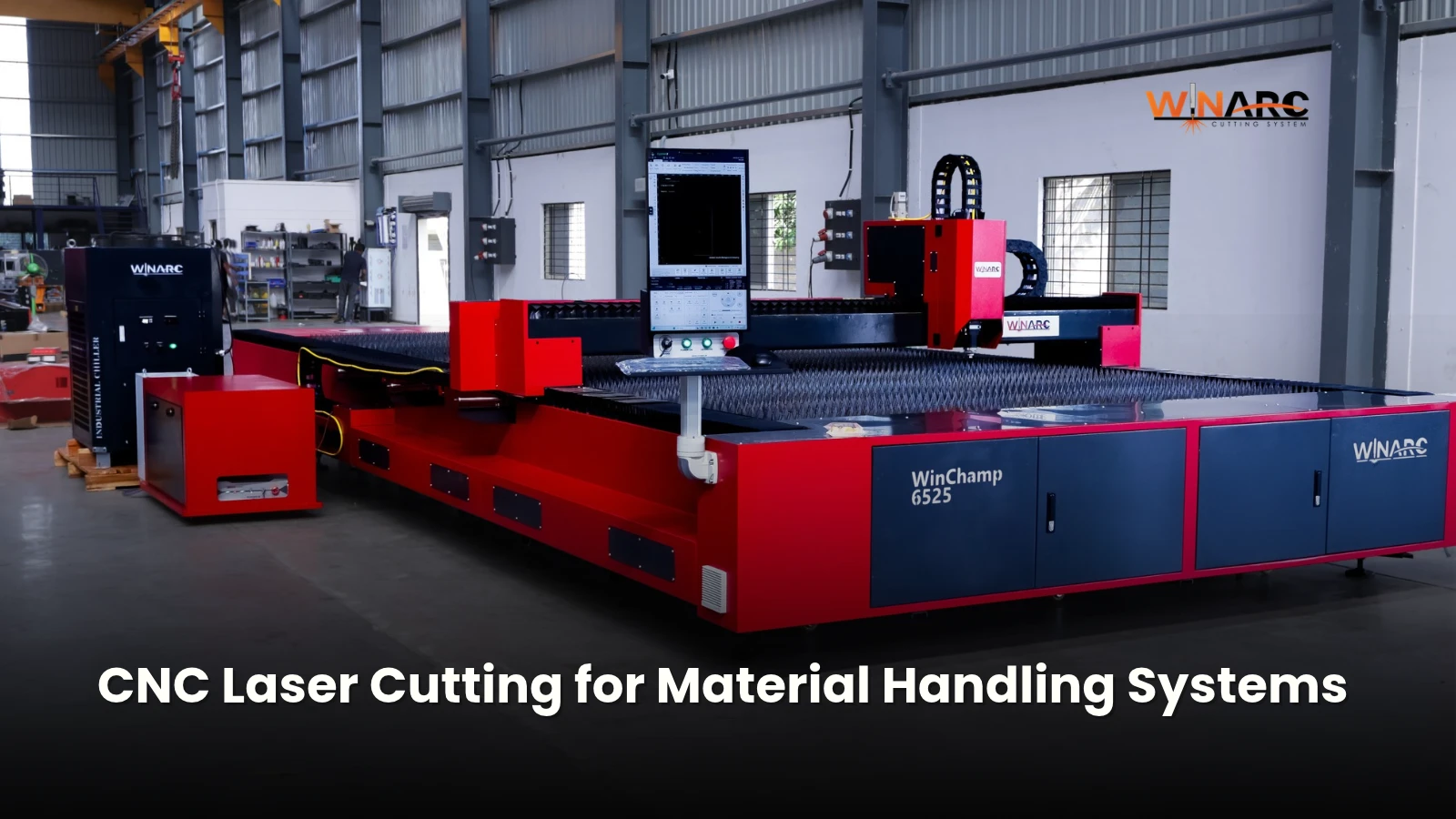
A fiber laser cutting machine is one of the most significant capital investments a fabrication company makes. In India, a serious production-grade fiber laser cutting machine costs anywhere from Rs 12 lakh to Rs 80 lakh or more. It is the heart of the production floor, and when it stops, everything stops with it.
This is precisely why fiber laser cutting machine maintenance is not just a technical obligation. Regular fiber laser cutting machine maintenance is a financial strategy.
Consider the economics: a single unplanned breakdown requiring a replacement cutting head costs Rs 30,000 to Rs 80,000 and takes the machine out of production for two to five days. A chiller failure caused by clogged vents can degrade the laser source in ways that cost Rs 2 lakh or more to repair. A contaminated protective lens that goes unnoticed produces poor-quality cuts across an entire production shift, creating rework costs and customer complaints.
Contrast this with the cost of proper fiber laser cutting machine maintenance: a replacement protective lens costs Rs 1,500 to Rs 3,000. Chiller coolant replacement costs Rs 2,000 per service. Rail lubrication takes 15 minutes. The maths are stark.
A well-maintained fiber laser cutting machine delivers consistent cut quality, maximum uptime, and a working life of 10 to 15 years. A neglected machine degrades progressively in ways that are expensive, disruptive, and entirely avoidable.
This fiber laser cutting machine maintenance guide covers everything your production team needs: daily, weekly, and monthly schedules, pro tips for peak performance, costly mistakes to avoid, and the warning signs that tell you when professional intervention is needed.
Section 1: The Essential Fiber Laser Cutting Machine Maintenance Schedule
The most practical format for fiber laser cutting machine maintenance is a schedule broken into daily, weekly, and monthly tasks. Print this section and post it at the machine.
Daily Fiber Laser Cutting Machine Maintenance Tasks
Daily fiber laser cutting machine maintenance tasks take 10 to 20 minutes. They are the front line of machine health and should be completed by the operator at the start of every shift.
1. Clean the cutting head nozzle
The nozzle is the component closest to the cut zone. Spatter, metal oxide, and molten droplets accumulate on the nozzle face during production. A blocked or contaminated nozzle disrupts the assist gas flow pattern, leading to dross on the lower cut edge and inconsistent pierce quality.
Clean the nozzle face with a lint-free cloth daily. Check the nozzle orifice for blockage or deformation. Replace the nozzle immediately if the orifice is not perfectly round, as a deformed nozzle cannot produce clean cuts regardless of how well everything else is tuned.
2. Inspect the protective lens
The protective lens sits inside the cutting head and shields the focusing optics from cutting fumes, spatter, and metallic vapour. It is a consumable component and the most important daily inspection item in fiber laser cutting machine maintenance.
Hold the lens up to a light source and inspect for dust, haze, pitting, or cracks. A lightly dusty lens can be cleaned (see Section 3: Optics Care). A cracked or pitted lens must be replaced immediately. Running the machine with a damaged protective lens risks catastrophic damage to the collimating lens above it, a repair that costs 10 to 30 times more than a protective lens.
3. Check assist gas pressure
The assist gas (oxygen for mild steel, nitrogen for stainless steel and aluminium) must be at the correct pressure for the material and thickness being cut. Check the regulator reading at the start of every shift against the parameter settings for the day’s job. A pressure drop below specification produces dross, rough edges, and incomplete cuts.
4. Check for condensation or moisture in the gas line
Moisture in the assist gas line contaminates the cut zone and accelerates optical contamination. Check the gas line filter and moisture trap daily, drain if required, and replace the filter cartridge at the manufacturer-specified interval.
5. Visual inspection of the cutting head and nozzle holder
Visually inspect the cutting head body, nozzle holder, and sensor connections before starting each shift. Look for loose connections, physical damage from a collision event, or spatter accumulation on the sensor windows. Report any anomaly before running production.
Weekly Fiber Laser Cutting Machine Maintenance Tasks
Weekly fiber laser cutting machine maintenance tasks take 30 to 60 minutes and should be assigned to a specific team member on a fixed day each week.
1. Check water chiller coolant level and condition
The water chiller maintains stable temperature in the laser source and optical components. Low coolant level reduces cooling capacity and risks thermal damage to the laser diodes. Check the coolant reservoir level weekly and top up with the manufacturer-specified coolant only. Never use tap water or automotive antifreeze.
Check the coolant colour. Fresh coolant is typically clear or light blue. Coolant that has turned brown, milky, or has visible particles should be replaced immediately rather than waiting for the scheduled interval.
2. Clean chiller vents and air intake filters
Blocked chiller vents are one of the most common causes of chiller overheating and laser source damage. In Indian workshop environments, metal dust and lint accumulate rapidly on chiller intake grilles. Clean the vents with compressed air weekly, blowing from inside outward. Never run the machine in an environment where the chiller intake is obstructed.
3. Inspect and clean guide rail surfaces
The linear guide rails carry the cutting head assembly in X, Y, and Z axes. Metal dust, oil residue, and cutting fume deposits accumulate on the rail surfaces. Use a clean lint-free cloth to wipe the rail surfaces. Check for pitting, rust, or abnormal wear marks. Any visible damage on the rail surface requires professional inspection before continuing production.
4. Check air filter condition on the electrical cabinet
The electrical cabinet houses servo drives, the CNC controller, and power supplies. These components generate heat and require clean, filtered airflow to stay within operating temperature. Blocked cabinet air filters cause controller overheating, which leads to erratic servo behaviour and controller faults. Inspect weekly and replace if visibly clogged.
5. Test emergency stop function
Press the emergency stop button and confirm that all machine axes stop immediately and the laser source powers down. This is a safety verification that should not be skipped. If the emergency stop does not function as expected, do not run the machine until the issue is investigated and resolved.
Monthly and Annual Fiber Laser Cutting Machine Maintenance Tasks
Monthly and annual fiber laser cutting machine maintenance tasks require more time and in some cases specialist involvement. Some of these tasks should be scheduled with your machine manufacturer’s service team.
Monthly fiber laser cutting machine maintenance tasks:
Lubricate the linear guide rails and rack and pinion
The linear guides and rack and pinion transmission system require periodic lubrication to maintain smooth, accurate motion. Use only the lubricant specified by your machine manufacturer. Incorrect lubricants attract metal dust, forming an abrasive sludge that accelerates wear and destroys guide accuracy far faster than running dry.
Apply lubricant to the rail surface and the rack teeth per the manufacturer’s specification. Most machines with automatic lubrication systems will do this automatically, but the oil reservoir level must be checked monthly to ensure it is filled.
Check all electrical connections and cable management
Vibration during production can loosen terminal connections over time. Monthly, check all accessible electrical connections at the servo drives, CNC controller, and distribution panels for security. Inspect the drag chain cables for chafing or wear at the cable entry and exit points. Report any damaged insulation or loose connections immediately.
Inspect the fume extraction system
The fume extractor removes metallic fume, particulate, and cutting gases from the cutting zone. A clogged fume extraction system allows fume to contaminate the optical components, shortening protective lens life significantly. Check the extraction filter monthly and replace per the manufacturer’s specification or when extraction airflow visibly reduces.
Annual fiber laser cutting machine maintenance tasks:
Replace water chiller coolant
Even if the coolant appears clean, it degrades chemically over time, losing its anti-corrosion and biocide properties. Replace with fresh manufacturer-specified coolant at least annually. Flush the coolant circuit thoroughly before refilling.
Full diagnostic check
Schedule an annual full diagnostic with your machine manufacturer’s service team. This includes laser power output measurement, beam alignment verification, servo performance analysis, cutting parameter validation, and a full optical inspection. Many issues that develop gradually go unnoticed in daily operations but are caught and corrected during a structured annual service.
Section 2: Pro Tips for Peak Fiber Laser Cutting Machine Maintenance and Performance
These are the fiber laser cutting machine maintenance practices that separate machines that perform for 12 years from those that decline at year four.
Optics Care: The Most Critical and Most Misunderstood Task
Lenses must be cleaned only with 99% isopropyl alcohol applied with a lint-free optical-grade wipe. Do not use general-purpose solvents, workshop cloths, or paper towels.
The correct technique: place a small amount of isopropyl alcohol on a folded optical wipe. With a single, light, circular motion from the centre of the lens outward, clean the lens surface once. Discard the wipe. Never wipe back and forth, never apply pressure, and never reuse a wipe on the same lens.
Inspect first, clean only if necessary. Overcleaning is a common mistake that scratches optical coatings. If the lens is not visibly contaminated, leave it alone.
Control the Workshop Environment
Fiber laser cutting machines perform best in controlled environments. Aim to keep workshop temperature below 35 degrees Celsius. Above this temperature, the water chiller works harder to maintain stable laser source temperature, shortening coolant life and increasing the risk of thermal fluctuation in the laser output.
Good ventilation around the chiller unit is non-negotiable. A 600 mm clearance around all chiller sides allows adequate airflow. In Indian summer conditions where workshop temperatures frequently exceed 40 degrees Celsius, additional cooling measures such as air conditioning for the electrical room may be necessary.
Keep CNC Controller Firmware Updated
Not all machine failures are mechanical. CNC controller firmware updates from manufacturers fix known bugs, improve cutting algorithm performance, and add support for new cutting parameters. An outdated controller firmware version can cause erratic servo behaviour, incorrect pierce sequences, or communication faults that mimic mechanical problems.
Check with your machine manufacturer for available firmware updates at least annually and apply them during a scheduled maintenance window, not during active production.
Maintain a Maintenance Logbook
A dedicated maintenance logbook, whether physical or digital, is the single most underused tool in fiber laser cutting machine maintenance. Record every task performed, every consumable replaced, every alarm triggered, and every abnormal observation. This log transforms into an invaluable diagnostic tool when troubleshooting, and it is required documentation for warranty claims.
The Indian Machine Tool Manufacturers’ Association (IMTMA) recommends documented maintenance records as a best practice for capital equipment lifecycle management in Indian manufacturing facilities.
Section 3: Costly Fiber Laser Cutting Machine Maintenance Mistakes to Avoid
Every experienced service engineer has seen the same preventable fiber laser cutting machine maintenance errors cause repeated, costly breakdowns.
Mistake 1: Ignoring the Chiller Alarm
When the water chiller triggers an overtemperature alarm, the correct response is to stop the machine immediately and investigate. The instinct to dismiss the alarm and continue production until the shift ends is the instinct that destroys expensive laser diodes.
Laser diode degradation from thermal overload is cumulative and non-reversible. A laser source that has been run hot repeatedly delivers progressively lower output power, degraded beam quality, and eventually fails entirely. A replacement laser source costs Rs 5 lakh to Rs 15 lakh. The chiller alarm is not an inconvenience. It is a warning that protects one of the most expensive components in the machine.
Mistake 2: Overcleaning the Protective Lens
More cleaning does not mean better optics. Each cleaning pass carries a small risk of scratching the optical coating, contaminating the surface with lint, or introducing cleaning fluid residue. Inspect the protective lens before every cleaning decision. If it is visually clean, leave it alone.
Reserve cleaning for lenses that show visible contamination: a haze, a spot, or surface residue. When you do clean, use the correct materials and the correct technique described in Section 2. Never clean with paper towels, cloth rags, or general-purpose solvents.
Mistake 3: Using the Wrong Lubricant
This is one of the most damaging mistakes in fiber laser cutting machine maintenance. Random workshop grease, the same grease used on vehicles or general machinery, is often incompatible with precision linear guide systems and rack and pinion transmissions.
Incorrect lubricant viscosity causes either under-lubrication (metal-to-metal contact) or over-lubrication (lubricant accumulation that attracts metal dust and forms abrasive sludge). Metal dust is ubiquitous in a cutting environment. Mixed with the wrong lubricant, it becomes a lapping compound that grinds away guide rail surfaces and rack teeth far faster than running without lubrication would.
Always use the lubricant specified in your machine manual. If the specification is unclear, contact your manufacturer before applying anything.
Mistake 4: Skipping Operator Training
Untrained operators are the single largest risk to a fiber laser cutting machine’s long-term health. Without proper training, operators miss the early warning signs of optical contamination, ignore chiller alarms, use incorrect parameter settings that overload the cutting head, and fail to recognise collision events that damage the nozzle holder.
Every new operator should receive structured training at commissioning from the manufacturer’s team. Refresher training should be provided whenever process parameters change significantly or when a new material type is introduced. Winarc provides commissioning training for all machines as part of our commitment to proper fiber laser cutting machine maintenance from day one.
Section 4: Warning Signs That Require Professional Fiber Laser Cutting Machine Maintenance — When to Call a Professional
Good fiber laser cutting machine maintenance means knowing when to stop and escalate. Some issues can be addressed by the production team. Others require professional intervention. Here are the signs that tell you when to stop and call your manufacturer.
Sudden, unexplained drop in cutting power or speed
If your machine is cutting 6mm mild steel at 6 metres per minute on Monday and 3 metres per minute on Wednesday with no parameter change, something fundamental has changed. The most common causes are laser source degradation, optical contamination above the protective lens level, or a beam alignment drift. None of these can be diagnosed or corrected without specialist instruments and expertise.
Inconsistent cutting depth or persistent dross despite correct parameters
If cut quality has degraded and nozzle replacement, lens cleaning, and gas pressure checks have not resolved it, the issue is likely above the operator’s service level. Beam parameter issues, focus position drift, or chiller performance problems require professional diagnostic.
Abnormal grinding or clicking noises from servo motors or linear drives
Any new grinding, clicking, or vibration sound from the motion system should be treated as a priority issue, not a background annoyance. These sounds indicate debris in the guide system, bearing wear, or rack and pinion damage that will worsen rapidly if the machine continues running. Stop production and have the motion system inspected before resuming.
Repeated servo faults or CNC communication errors
Occasional controller faults are normal in any industrial environment. Repeated or escalating fault codes indicate a systematic issue: a failing encoder, a damaged cable in the drag chain, an EMI interference problem, or a deteriorating servo drive. These require professional diagnosis.
Chiller fault codes that do not clear after standard checks
If the chiller shows a fault code that does not clear after checking coolant level, cleaning the vents, and verifying ambient temperature, the fault may be internal: a pump failure, a refrigerant leak, or a sensor failure. Run the machine without cooling and you risk the laser source. Call the service team.
Winarc’s engineering team is based at our Peenya, Bangalore facility, and provides direct on-site fiber laser cutting machine maintenance support across South India. For urgent production issues, our team typically reaches the site within 24 hours. Contact Winarc for maintenance support or a scheduled service visit.
Conclusion: Preventive Maintenance Pays for Itself
A fiber laser cutting machine that receives consistent, documented fiber laser cutting machine maintenance delivers consistent, predictable production. An emergency repair on a neglected machine costs 5 to 20 times more than the preventive maintenance that would have prevented it. Unplanned downtime costs more than both.
The actions required for fiber laser cutting machine maintenance require discipline, not expertise. Daily inspection takes 15 minutes. Weekly tasks take an hour. Monthly lubrication and coolant checks are half a day. An annual professional service is one planned day out of production. Against these small investments, the return is a machine that runs accurately and reliably for a decade or more. Make fiber laser cutting machine maintenance a non-negotiable part of your production floor discipline.
Start with a maintenance logbook. Record every task, every consumable, every alarm, every observation. This log is the foundation of a well-maintained machine and the evidence that protects your warranty.
The Make in India initiative is driving Indian manufacturers to invest in production reliability as a competitive advantage. A well-maintained fiber laser cutting machine is one of the most direct ways to achieve that reliability.
Contact Winarc for a maintenance consultation, spare parts, or a scheduled service visit