Choosing between plasma cutting vs fiber laser cutting is one of the most important decisions a factory owner or production manager will make. Both technologies cut metal with impressive speed and accuracy. However, they serve very different purposes, and picking the wrong machine can cost your business time, money, and output quality.
In this guide, we break down everything you need to know: how each technology works, where each one excels, and which machine is the smarter investment for your specific application. Whether you run a metal fabrication shop, an automotive component unit, or a heavy engineering workshop, this comparison will help you decide with confidence.
What Is Plasma Cutting?
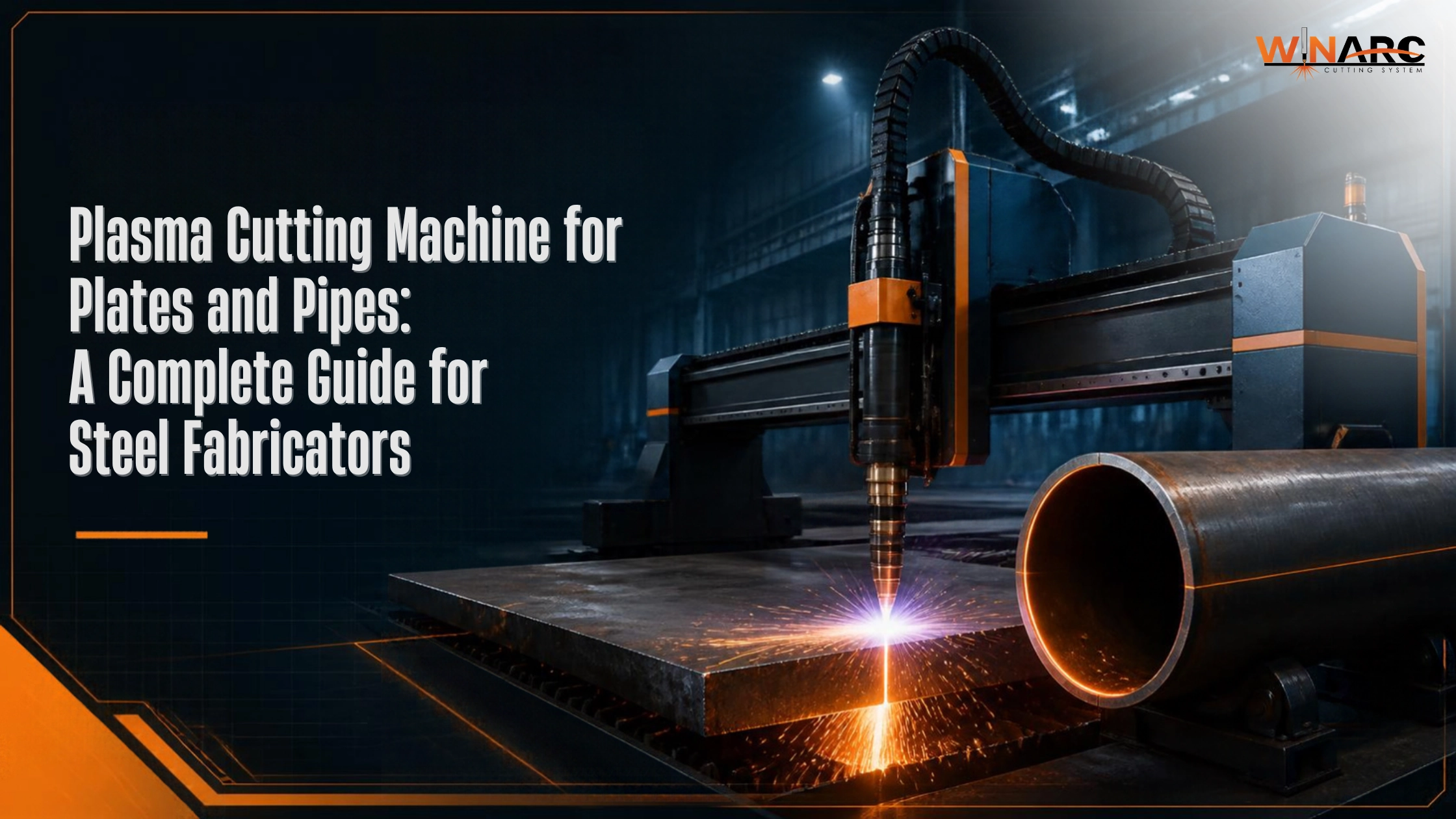
Plasma cutting uses a high-temperature, electrically ionised gas (known as plasma) to melt and remove metal along a programmed cutting path. A CNC plasma cutting machine pairs this technology with computer-controlled motion, allowing factories to cut complex shapes repeatedly and accurately.
Plasma cutting works on any electrically conductive metal: mild steel, stainless steel, aluminium, copper, and brass. It handles material thicknesses from 1 mm all the way up to 80 mm or more, making it highly versatile for heavy-duty industrial work. CNC plasma technology is widely recognised across India’s manufacturing ecosystem, the Indian Machine Tool Manufacturers’ Association (IMTMA) lists thermal cutting as one of the foundational technologies driving modern metal fabrication growth in India.
Plasma cutting is best suited for:
- Thick metal plates (above 12 mm)
- High-volume, high-speed cutting environments
- Workshops where budget is a primary concern
- Materials that are painted, rusty, or slightly uneven in surface condition
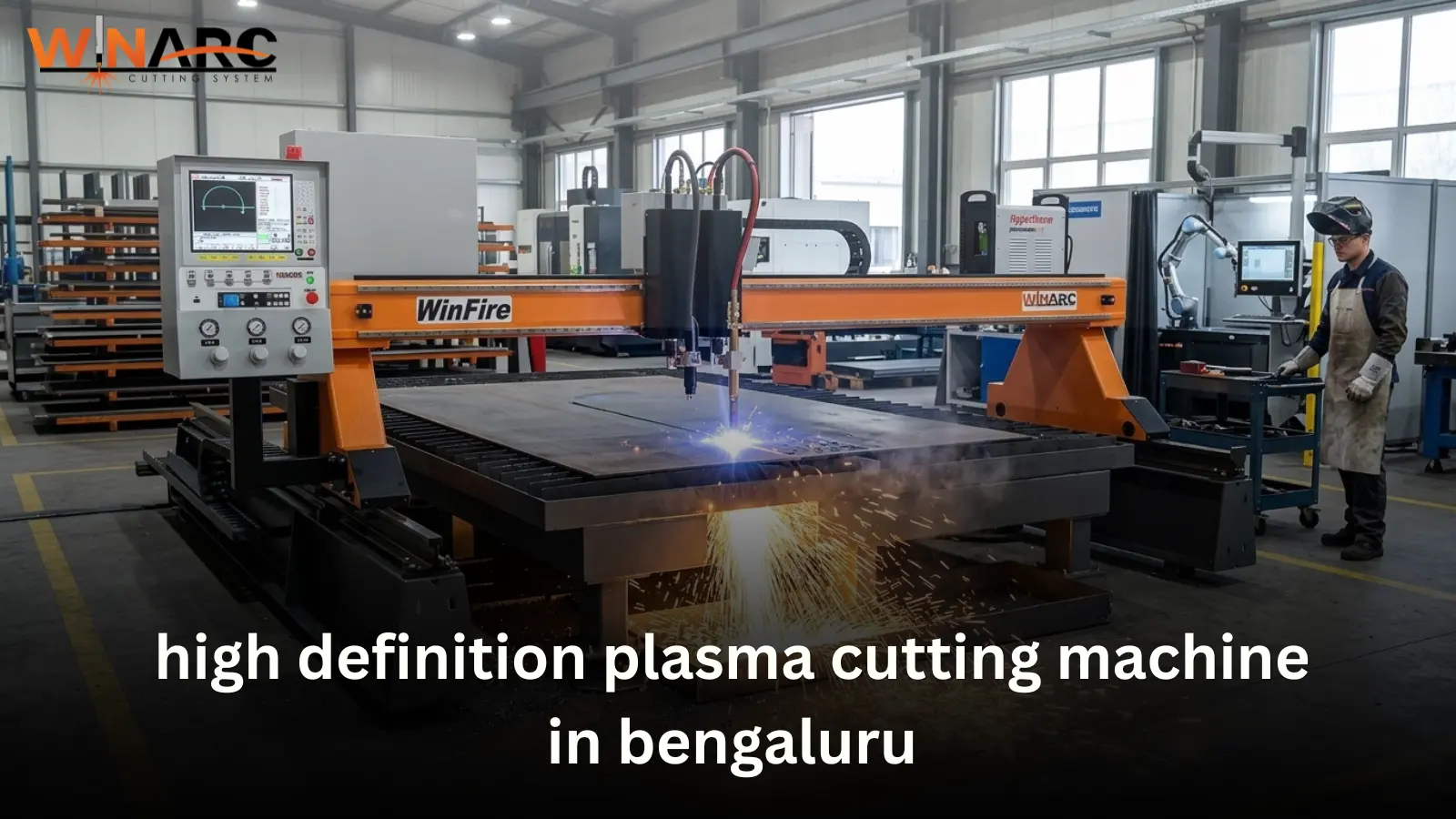
At Winarc, our WinFire CNC plasma cutting machine is our highest-selling plasma model — designed to work seamlessly with both entry-level and high-definition plasma sources.
What Is Fiber Laser Cutting?
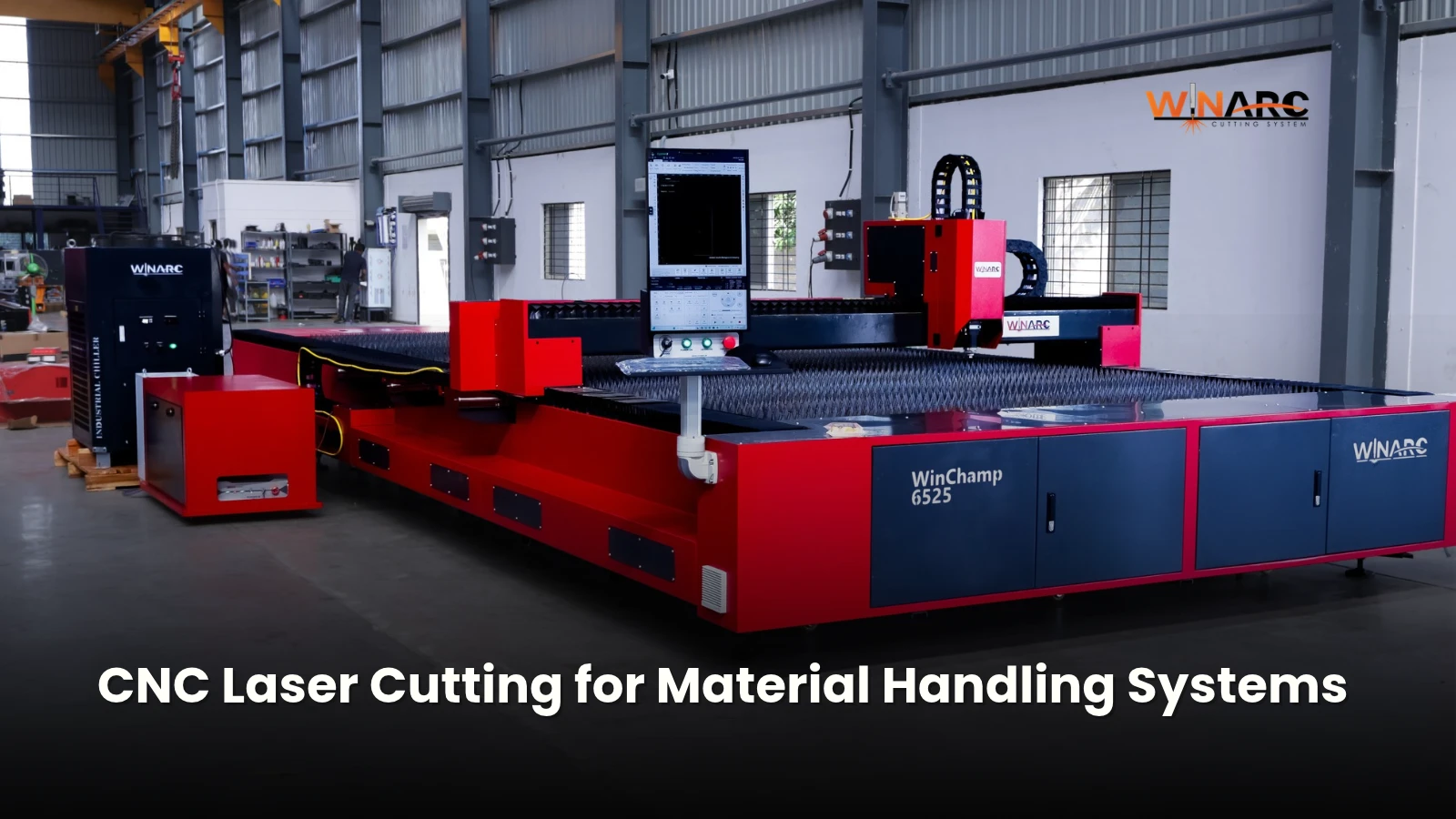
Fiber laser cutting uses a highly concentrated beam of light, generated through a fiber-optic cable, to melt and vaporise metal with extreme precision. A CNC fiber laser cutting machine controls this beam using computer-guided motion systems, producing cuts that are cleaner, narrower, and more accurate than plasma.
Fiber laser technology is best suited for thin to medium material thicknesses. It delivers near-zero heat-affected zones, minimal kerf width, and smooth, burr-free edges — often eliminating the need for secondary finishing work.
Fiber laser cutting is best suited for:
- Thin sheets and medium plates (0.5 mm to 25 mm)
- Parts requiring tight tolerances and fine detail
- Reflective metals such as aluminium, copper, and brass
- Industries where edge finish quality directly affects the final product
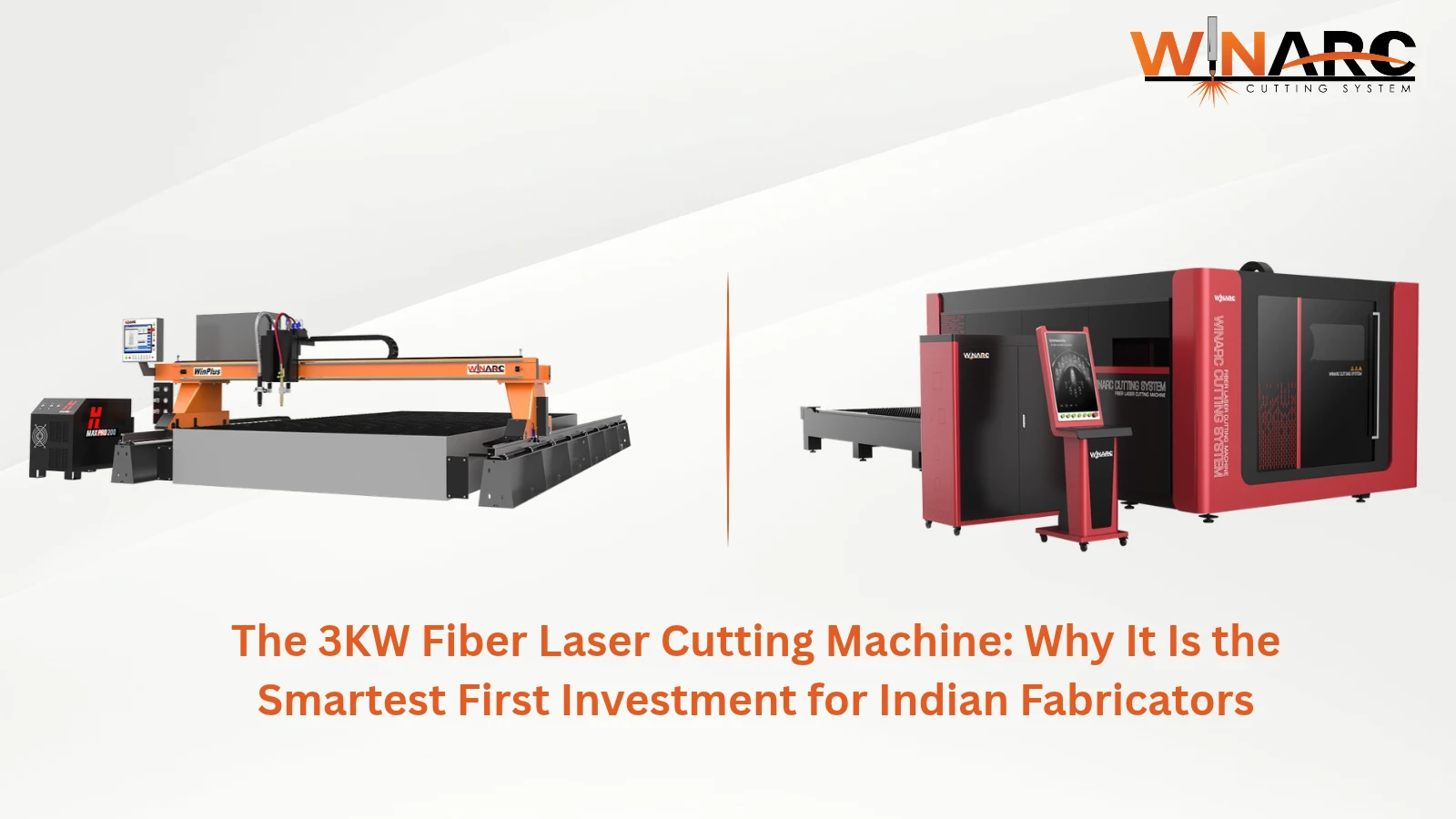
Our WinMaster fiber laser cutting machine is engineered for high-speed, high-precision cutting across a wide range of metals and is a popular choice among automotive, aerospace, and precision fabrication manufacturers.
Plasma Cutting vs Fiber Laser Cutting: Head-to-Head Comparison
1. Cutting Speed
Speed depends heavily on material thickness.
For thin sheets under 6 mm, fiber laser cutting is significantly faster. A 3 kW fiber laser can cut 2 mm mild steel at speeds exceeding 20 metres per minute. At this thickness range, plasma simply cannot match that pace.
However, as thickness increases beyond 12–15 mm, the advantage shifts. Plasma cutting outperforms fiber laser on thick plates both in cutting speed and operating cost-efficiency. For material above 20 mm, plasma is the clear winner in throughput.
Verdict: Fiber laser wins on thin sheets. Plasma wins on thick plates.
2. Cutting Precision and Edge Quality
This is where fiber laser pulls ahead decisively. Laser cutting delivers a kerf width of approximately 0.2–0.5 mm — fine enough for intricate profiles, small holes, and parts that go directly to assembly without rework.
Plasma cutting produces a kerf of 1–2 mm with a slightly bevelled edge. While modern high-definition plasma systems have greatly improved edge quality, they still cannot match the laser’s precision for fine detail work. Cut quality is typically measured using ISO 9013, the international standard for thermal cutting — which classifies angularity and edge finish across both plasma and laser processes.
Additionally, fiber laser cutting produces a very small heat-affected zone (HAZ), which reduces the risk of warping or distortion — especially important for thin sheets and heat-sensitive materials.
Verdict: Fiber laser wins on precision and edge quality.
3. Material Thickness Range
Plasma cutting handles a broader thickness range overall. It can cut mild steel from 1 mm up to 80 mm or even beyond, depending on the plasma source amperage.
Fiber laser cutting is most cost-effective between 0.5 mm and 25 mm. Beyond 25–30 mm, operating costs rise sharply as the laser source must work harder and gas consumption increases significantly.
Verdict: Plasma wins for thick-plate cutting applications.
4. Machine Cost and Investment
This is often the deciding factor for small and mid-sized manufacturers.
A CNC plasma cutting machine requires a significantly lower upfront investment compared to a fiber laser system of equivalent bed size. As a general benchmark, a fiber laser cutting machine costs 3 to 5 times more than a comparable plasma setup.
Moreover, plasma machines are simpler to operate and maintain. Spare parts are widely available and relatively affordable. Fiber laser machines, in contrast, require more controlled operating environments, more specialised maintenance, and higher-cost consumables such as assist gases and optical components.
Verdict: Plasma wins on upfront cost and total cost of ownership for heavy-plate work.
5. Operating Cost Per Cut
For thin sheet cutting, fiber laser operating costs are competitive or lower — because faster cutting speeds mean less gas and electricity consumption per part.
For thick plate cutting, plasma operating costs per metre of cut are considerably lower. Plasma uses simpler, cheaper consumables and consumes less assist gas per cycle on heavy material.
Additionally, plasma cutting is more forgiving of material condition. Painted, oiled, or mildly corroded plates do not significantly affect cut quality. Fiber laser cutting, by contrast, performs best on clean, flat, consistently graded metal.
Verdict: Fiber laser wins on thin-sheet operating cost. Plasma wins on thick-plate operating cost.
6. Versatility and Material Compatibility
Both machines cut steel, stainless steel, and aluminium. However, fiber laser has an edge on reflective materials, older laser technologies struggled with copper and brass, but modern fiber lasers handle them reliably.
Plasma is limited to electrically conductive metals and cannot cut non-metals. Fiber laser, in contrast, can cut certain non-metals and is also used for engraving and marking — offering broader application flexibility.
Verdict: Fiber laser is more versatile across materials and applications.
Quick Comparison Table
| Factor | Plasma Cutting | Fiber Laser Cutting |
| Best material thickness | 6 mm – 80 mm+ | 0.5 mm – 25 mm |
| Cutting speed (thin sheet) | Moderate | Very fast |
| Cutting speed (thick plate) | Very fast | Moderate |
| Edge quality | Good (HD: very good) | Excellent |
| Precision / tolerance | ±0.5 – 1 mm | ±0.1 – 0.2 mm |
| Machine investment | Lower | Higher (3–5x) |
| Operating cost (thick) | Lower | Higher |
| Operating cost (thin) | Higher | Lower |
| Material condition tolerance | High | Moderate |
| Reflective metals | Limited | Excellent |
| Maintenance complexity | Lower | Higher |
So, Which Machine Should You Choose?
The honest answer: it depends on what you cut, how thick it is, and what your budget allows.
Choose a CNC plasma cutting machine if:
- Your primary work involves mild steel or structural steel above 10 mm thickness
- You need a cost-effective machine with lower upfront investment
- Your production volumes are high and downtime tolerance is low
- Your materials are not always in perfect surface condition
- You cut pipes, plates, and profiles for fabrication or construction
Choose a fiber laser cutting machine if:
- You primarily cut thin to medium sheets (under 20 mm)
- Your customers demand tight tolerances and excellent edge finish
- You work with aluminium, stainless steel, copper, or brass regularly
- You want to eliminate or reduce secondary processing and finishing steps
- You are in automotive, aerospace, electronics, or precision engineering
Consider both if:
Some factories benefit from running both technologies — using plasma for heavy-plate work and laser for thin, precision parts. This is increasingly common in large metal fabrication shops that serve multiple industries. Winarc offers a full range of both technologies, so our team can help you build the right combination for your production floor.
Why Choose Winarc for Your CNC Cutting Machine?
At Winarc, we manufacture both CNC plasma cutting machines and fiber laser cutting machines from our facility in Peenya, Bangalore. Since 2018, we have helped factories across India — in metal fabrication, automotive, aerospace, and construction — choose the right cutting technology and maximise their production efficiency. With India’s manufacturing sector growing rapidly under the Make in India initiative, investing in the right CNC cutting technology is more critical than ever for staying competitive.
Our machines are built with premium-grade components, backed by comprehensive after-sales support, and designed for the real-world demands of Indian manufacturing environments.
- WinFire CNC Plasma Cutting Machine: our highest-selling plasma model, compatible with all plasma sources from entry-level to high-definition
- WinMaster Fiber Laser Cutting Machine: engineered for unparalleled precision, speed, and efficiency across all major metals
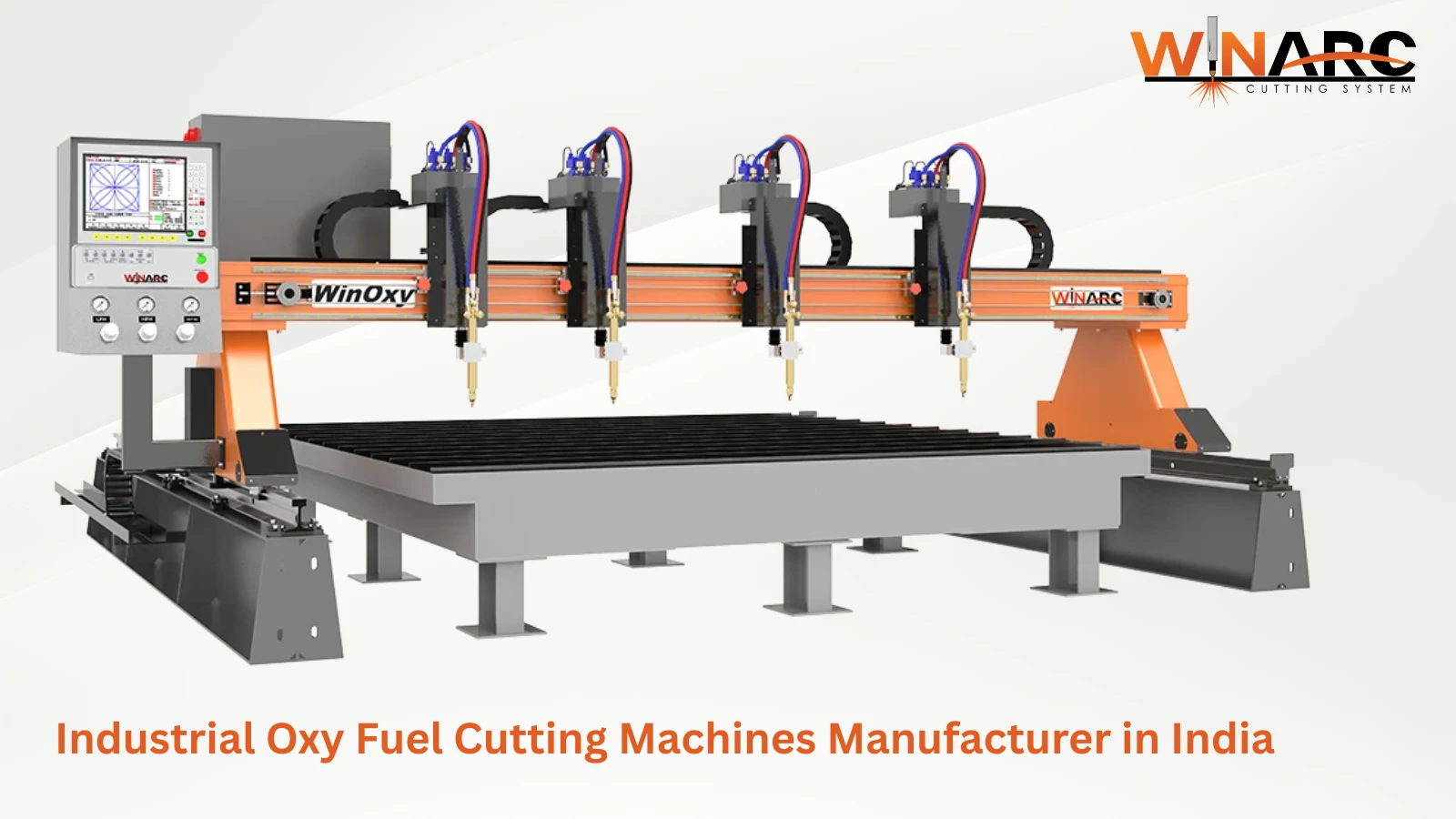
- WinOxy Oxyfuel Cutting Machine: for heavy-plate cutting above 50 mm where cost-efficiency is paramount
Not sure which machine fits your factory? Our engineers are happy to assess your production requirements and recommend the right solution — at no cost.
Get a free consultation today →
Frequently Asked Questions
Q: Can a plasma cutting machine match the quality of a fiber laser?
Modern high-definition plasma systems, like those using Hypertherm technology, have significantly closed the quality gap. For thick plates above 12 mm, HD plasma delivers edge quality that rivals laser cutting. However, for thin sheets requiring very tight tolerances, fiber laser remains the superior choice.
Q: Is fiber laser cutting worth the higher cost for my factory?
It depends on your product mix. If you cut thin, precision parts where secondary finishing is expensive or unacceptable, the fiber laser pays for itself through faster speeds and reduced rework. If you cut mostly thick plate in high volumes, the plasma machine’s lower cost and running expenses will likely give you better returns.
Q: What is the typical price of a CNC plasma cutting machine in India?
Prices vary significantly based on bed size, plasma source, and configuration. Entry-level CNC plasma machines start from approximately ₹8–12 lakh, while high-definition systems can range from ₹20–50 lakh. Contact Winarc for an accurate quote based on your specific requirements.
Q: What is the lifespan of a fiber laser cutting machine?
A well-maintained fiber laser cutting machine typically lasts 10–15 years. The laser source itself generally carries a 100,000-hour rated lifespan, making it a long-term asset. Regular maintenance of the optical system and cooling unit is essential to achieve this lifespan.
Q: Can Winarc machines cut stainless steel and aluminium?
Yes. Both our plasma and fiber laser machines are capable of cutting stainless steel and aluminium. For reflective metals like copper and brass, the fiber laser machine is recommended as it handles these materials with superior precision and consistency.
Looking for more information? Read our latest blog: Explore CNC Laser Cutting Machine Manufacturers in India or explore our full product range.