For any manufacturing business, investing in new technology is an important decision. The right machine can help improve productivity, maintain consistent quality, reduce manual operations and create opportunities to serve more customers. At the same time, the investment must make financial sense.
This is particularly true when purchasing a CNC laser cutting machine.
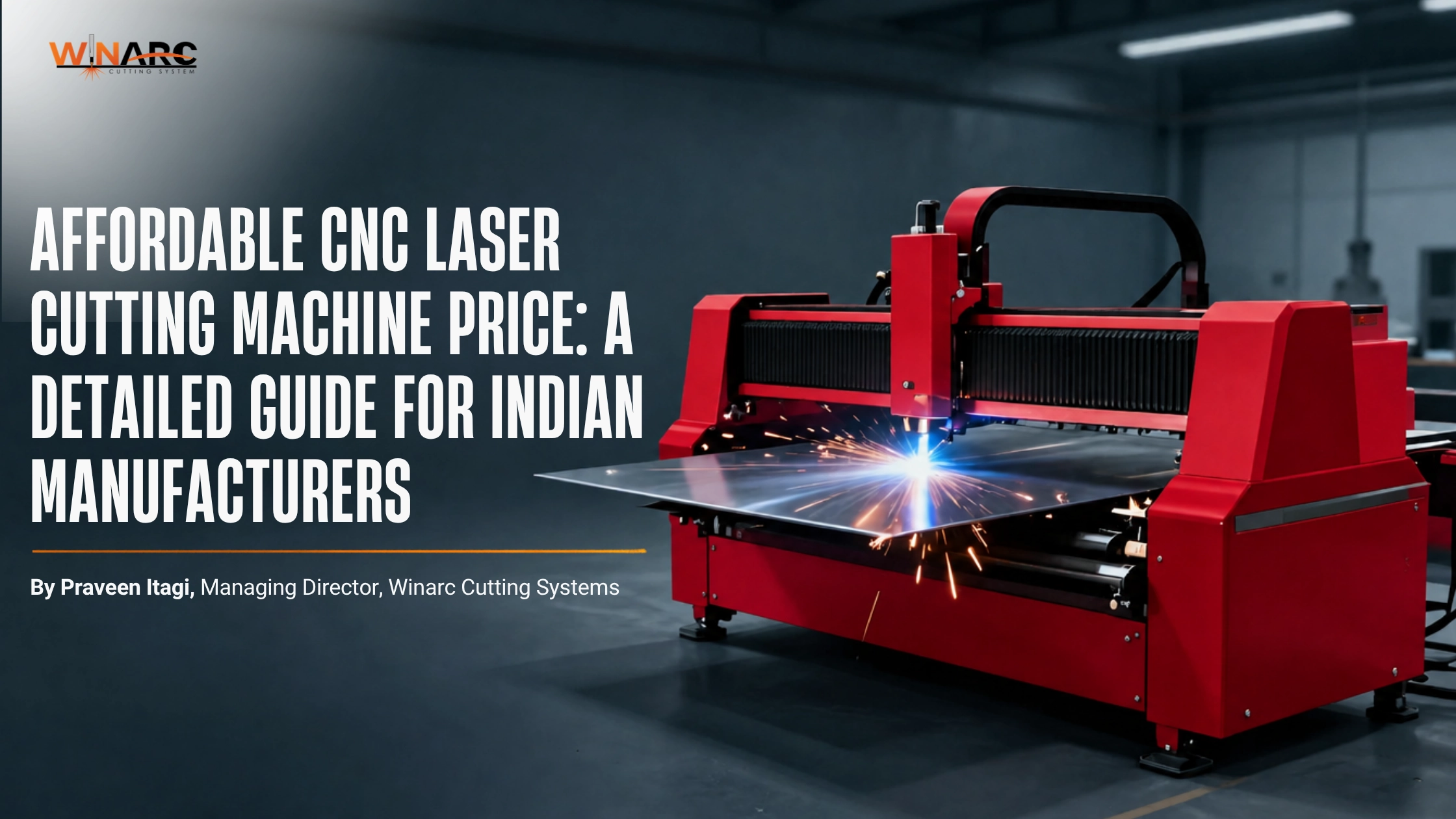
Many manufacturers begin their search with one important question: What is the price of an affordable CNC laser cutting machine in India?
However, the answer depends on several factors, including laser power, cutting area, machine configuration, material thickness, automation, software and the level of technical support required.
A machine designed for a small fabrication workshop will not necessarily suit a manufacturer processing thousands of metal components every month. Similarly, a business cutting thick metal sheets may need a different configuration from one producing precision components from thin stainless steel.
As the Managing Director of Winarc Cutting Systems, I believe affordability should be evaluated in terms of the value a machine delivers over its working life—not simply its initial purchase price.
In this guide, I will explain the factors that influence CNC laser cutting machine prices, how to compare different configurations, what additional costs to consider and how manufacturers can identify a machine that fits their production requirements and budget.
What Is the Price of an Affordable CNC Laser Cutting Machine?
The price of a CNC laser cutting machine varies considerably depending on the specifications and intended application.
In general, the purchase price is influenced by:
- Laser power, measured in kilowatts (kW).
- Effective cutting area and machine dimensions.
- Single-pallet or dual-pallet configuration.
- Type of laser source and cutting head.
- CNC controller and CAD/CAM software.
- Material-handling and automation systems.
- Machine construction and motion components.
- Installation, training and after-sales support.
For this reason, there is no single price that applies to every CNC laser cutting machine.
To make a meaningful comparison, buyers should first identify the type of machine they need and then compare quotations with equivalent specifications.
A Realistic Approach to CNC Laser Cutting Machine Prices
As an example, Winarc’s available quotation records include the following configurations and quoted prices:
| Machine configuration | Quoted price | Important details |
|---|---|---|
| WINCHAMP 3015 | ₹20lakh to 80 lakh | 3 kW laser source; effective cutting area of 3,150 × 1,550 mm |
| WINMASTER 4020 | ₹20lakh to 80 lakh | 6 kW laser source; effective cutting area of 4,000 × 2,000 mm |
| WINCHAMP 6525 | ₹20lakh to 80 lakh | 6 kW laser source; effective cutting area of 6,500 × 2,500 mm |
| WINMASTER 6525 | ₹20lakh to 80 lakh | 12 kW laser source; effective cutting area of 6,500 × 2,500 mm; closed-type dual-pallet configuration |
Important: These figures are examples from Winarc quotation records, not guaranteed current selling prices or a complete market price list. Prices, specifications, availability and commercial terms may change. Buyers should request a fresh quotation for the required configuration.
The quoted prices are ex-works in the referenced quotations. Transportation and insurance are additional, and the quotations specify 18% GST. Other project-specific expenses may also apply.
These examples illustrate an important point: the price of a CNC laser cutting machine depends on more than the manufacturer’s name. Laser power, working area, automation and machine configuration can make a substantial difference.
For current options, explore the Winarc CNC laser cutting machine product range.
Why Does the Price of a CNC Laser Cutting Machine Vary?
Two machines may both be described as CNC fiber laser cutting machines but have significantly different prices.
Understanding the reasons behind these differences helps buyers compare quotations more effectively.
1. Laser Power
Laser power is one of the most important factors affecting machine pricing.
Industrial fiber laser cutting machines are available with different power ratings, depending on the machine design and intended application.
A higher-power system may offer advantages when processing certain thicker materials or when the production requirement calls for faster cutting within the machine’s operating range.
However, higher power does not automatically mean better value for every manufacturer.
Consider two businesses.
The first primarily cuts thin sheet metal to manufacture electrical enclosures. The second regularly processes thicker mild steel plates for industrial equipment.
Their cutting requirements are different. The second business may benefit from a higher-power machine, while the first should evaluate whether the additional investment would deliver a worthwhile improvement in productivity.
Before selecting laser power, consider:
- The materials you process.
- The thicknesses you cut most frequently.
- Your required cutting quality.
- Your production volume.
- Your expected future requirements.
- The operating costs associated with each configuration.
My recommendation: Choose laser power based on your actual production mix rather than purchasing the highest available specification.
2. Working Area and Cutting Dimensions
The machine’s effective cutting area determines the maximum sheet dimensions it can accommodate.
For example, a machine designed for approximately 3,000 × 1,500 mm sheets serves a different purpose from one designed for 6,500 × 2,500 mm sheets.
A larger working area may be valuable if you regularly process large sheets or need to manufacture larger components.
However, a larger machine also affects the factory layout, material-handling requirements and overall investment.
When comparing machines, evaluate:
- Maximum sheet length and width.
- Usable cutting area.
- Material thickness and weight limits.
- Loading and unloading arrangements.
- Space required for installation and operation.
Do not pay for a larger working area unless your production requirements justify it.
3. Single-Pallet vs Dual-Pallet Configuration
Another important factor is the machine’s pallet arrangement.
A single-pallet machine has one primary cutting worktable. Depending on the configuration, the machine may need to pause while material is unloaded and the next sheet is loaded.
A dual-pallet machine uses an automatic pallet-changing system. While one pallet is being used for cutting, the other can be prepared for the next production cycle, subject to the machine’s design and safety procedures.
This arrangement can reduce material-change interruptions.
For businesses with frequent sheet changes and higher production requirements, a dual-pallet machine may offer a valuable productivity advantage.
However, the additional investment should be justified by expected production benefits. A business with low utilisation may not recover the extra cost as quickly as a manufacturer running recurring production batches.
Winarc’s WINCHAMP and WINMASTER product configurations provide options for manufacturers evaluating single-pallet and dual-pallet sheet cutting solutions.
Explore the Winarc product range to compare available configurations.
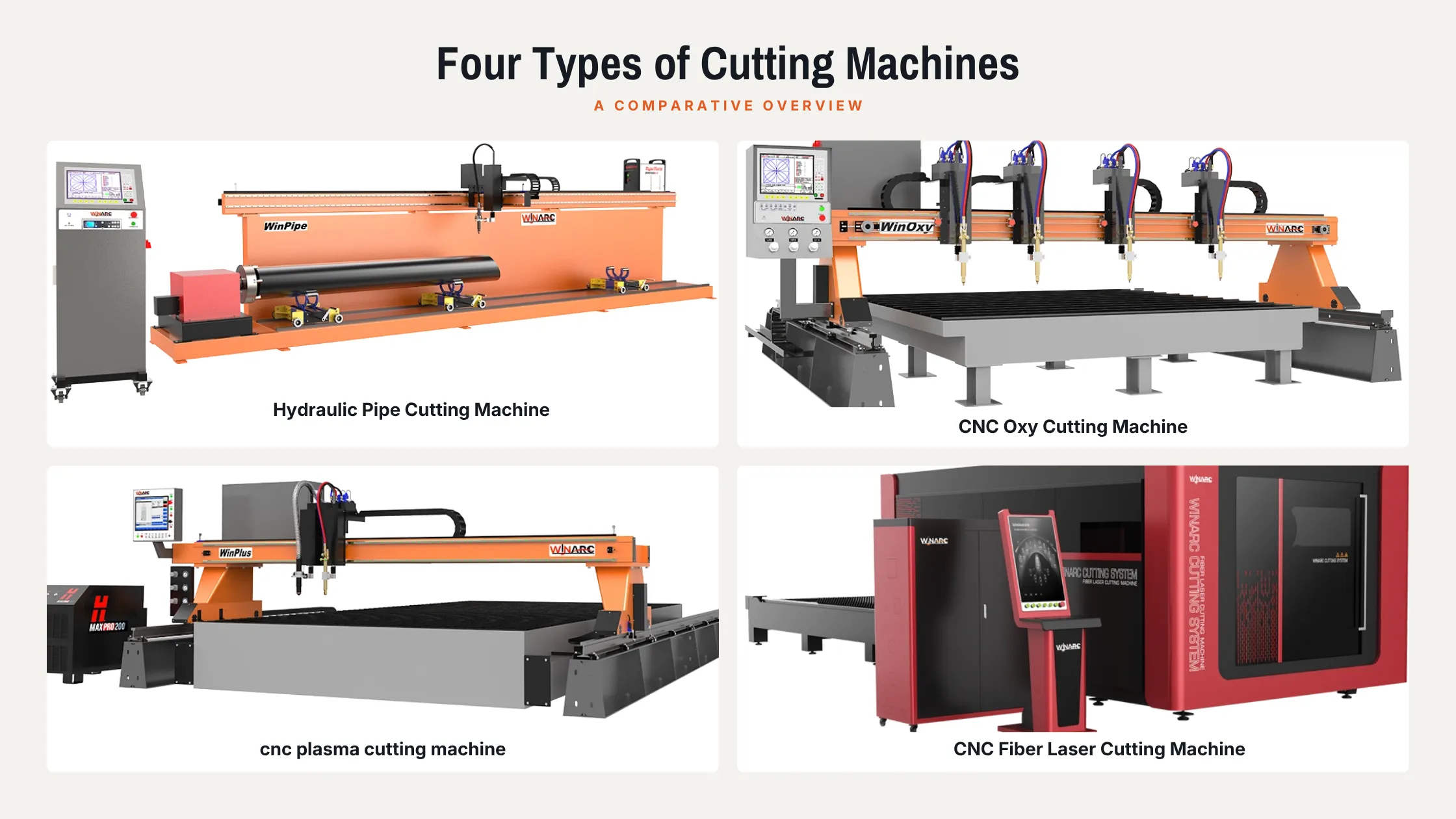
4. Type of Machine
Not every CNC laser cutting machine is designed for the same application.
The following configurations are commonly considered by industrial manufacturers.
Single-pallet fiber laser cutting machine: Suitable for many general sheet metal applications.
Dual-pallet fiber laser cutting machine: Worth evaluating when material changes create significant interruptions in production.
Gantry-type fiber laser cutting machine: Designed for applications requiring a larger working area and a suitable machine structure.
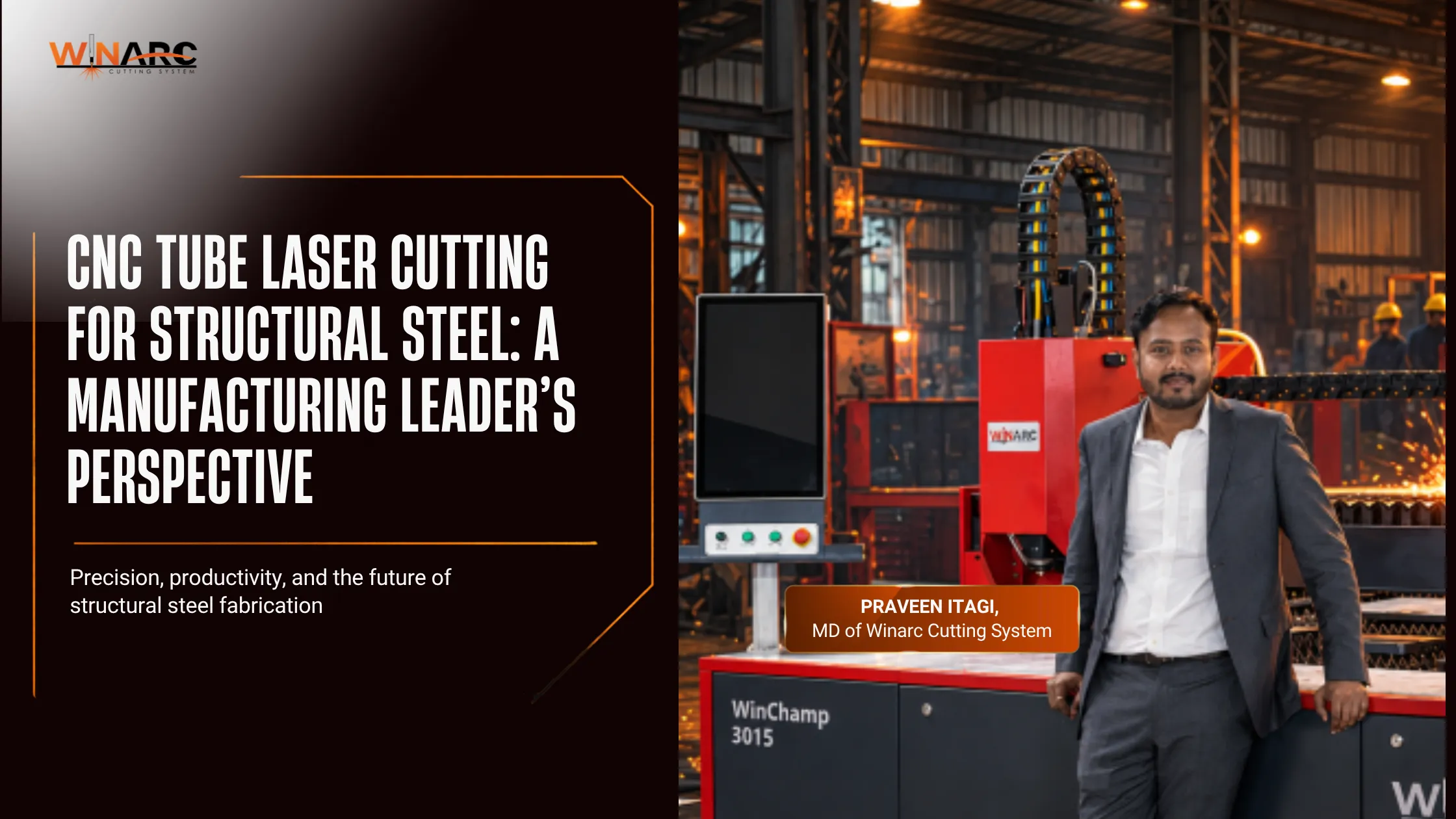
Tube laser cutting machine: Designed for processing compatible round tubes, square tubes, rectangular tubes and supported structural profiles.
Plate-and-tube combination machine: Suitable for manufacturers that need to process both flat sheets and compatible tubes or profiles.
Each configuration addresses a different requirement, and the price reflects its design and capabilities.
For example, a manufacturer processing only flat sheets may not need a dedicated tube laser machine. A business producing structural frames from tubes and profiles may find that a standard sheet cutting machine cannot meet its requirements.
Selecting the right configuration from the beginning can prevent unnecessary expenditure and avoid limitations later.
5. Laser Source, Cutting Head and CNC Components
The laser source is important, but it is not the only component that determines cutting performance.
A CNC laser cutting machine also relies on its motion system, cutting head, controller, transmission, cooling system and other components.
These elements influence how the machine moves, controls the cutting process and performs during regular production.
When comparing quotations, ask the supplier to specify:
- Laser source make and model.
- CNC controller.
- Cutting head.
- Servo drives and motion components.
- Linear guides and transmission system.
- Cooling equipment.
- Software included with the machine.
- Warranty and replacement-part arrangements.
A lower-priced machine may be a suitable choice if its specifications meet your requirements. However, buyers should understand exactly what is included before comparing it with a higher-priced alternative.
The objective is to compare complete, suitable solutions—not just headline prices.
What Is Included in the Total CNC Laser Cutting Machine Cost?
One of the most common purchasing mistakes is budgeting only for the machine’s quoted price.
The actual investment can be higher once taxes, transportation, installation requirements and other expenses are included.
Let’s examine the main cost categories.
1. Base Machine Price
This is the price quoted by the manufacturer for the specified machine configuration and included accessories.
Always confirm the working area, laser power, machine type, controller, software and standard accessories covered by the quotation.
2. GST and Other Applicable Taxes
The quotations referenced above specify 18% GST.
For budgeting purposes, buyers should confirm the applicable tax treatment with the supplier and their finance or tax adviser. The final invoice and applicable tax rules should determine the actual amount payable.
3. Transportation and Insurance
Some machine quotations are provided on an ex-works basis.
Under ex-works terms, the buyer generally has responsibility for arranging transportation from the specified location, subject to the agreed contract.
Confirm who is responsible for freight, transit insurance, unloading and any additional handling charges.
4. Installation and Commissioning
The machine must be installed at a suitable location with the required utilities and site arrangements.
Depending on the commercial agreement, installation and commissioning may be included, separately charged or subject to specific conditions.
Confirm the scope of work in writing.
5. Electrical and Facility Preparation
A CNC laser cutting machine may require suitable electrical infrastructure, earthing, compressed air, cooling arrangements, fume extraction and sufficient floor space.
The requirements depend on the machine configuration.
Before placing an order, ask the supplier for a site-readiness checklist so you can estimate the necessary preparation costs.
6. Operator Training
Operators need to understand safe machine operation, cutting parameters, software workflows and routine maintenance.
Confirm whether training is included and whether it takes place at the manufacturer’s facility or the customer’s premises.
7. Consumables and Maintenance
Regular operating expenses may include nozzles, protective windows, filters and other consumables, depending on the machine.
Maintenance, electricity, assist gas and cooling-system requirements should also be considered when estimating long-term costs.
8. Software and Optional Automation
Some configurations may include nesting software, automatic material handling or other features, while additional capabilities may be quoted separately.
Confirm which software licences, automation systems and accessories are included in the purchase price.
How to Choose an Affordable CNC Laser Cutting Machine Without Compromising on Quality
An affordable CNC laser cutting machine should meet your operational requirements at a price your business can justify.
Here are the factors I recommend evaluating before making a decision.
1. Define Your Production Requirements
Start by identifying the parts your business manufactures.
Prepare a list of your common materials, thicknesses, sheet dimensions and component designs.
For example, a manufacturer producing small sheet metal brackets has different needs from a business cutting large industrial panels.
Understanding your production mix helps narrow the available options and prevents you from paying for unnecessary capabilities.
2. Compare Machines With Equivalent Specifications
When requesting quotations, use the same specification checklist for every supplier.
Compare:
- Laser power.
- Effective cutting area.
- Laser source.
- Cutting head.
- CNC controller.
- Software.
- Machine construction.
- Automation.
- Warranty.
- Installation and training.
- After-sales support.
A machine with a lower price may not include the same accessories or services as another quotation.
Make sure you compare equivalent configurations before deciding which option offers better value.
3. Evaluate Cutting Quality
Ask the supplier to demonstrate the machine using your own materials and representative component drawings, wherever possible.
Evaluate the finished parts against your requirements for dimensional accuracy, edge quality, repeatability and secondary finishing.
A demonstration based on your actual production requirements is more useful than relying exclusively on brochure specifications.
4. Check the Manufacturer’s Technical Support
The relationship with the manufacturer continues after delivery.
If a machine requires technical assistance or replacement parts, the quality of the support arrangement can affect production continuity.
Before purchasing, understand:
- Warranty coverage.
- Service availability.
- Technical support procedures.
- Operator training.
- Maintenance guidance.
- Consumables and spare-part availability.
A lower initial price may not be advantageous if the machine is unsuitable for your application or if support arrangements are inadequate.
5. Consider Future Production Needs
Your production requirements may change as your business grows.
You may begin processing a limited range of sheet metal components and later receive orders requiring larger sheets, more complex designs or higher production volumes.
It is sensible to consider these possibilities, but avoid purchasing a substantially more expensive machine solely for hypothetical future demand.
The right balance is to choose a machine that meets current requirements and provides a reasonable path for anticipated growth.
Understanding the Return on Investment of a CNC Laser Cutting Machine
The purchase price is important, but it does not tell you how quickly the machine may deliver business value.
For manufacturers, the return on investment depends on how the machine affects production costs, throughput, quality and revenue opportunities.
A practical evaluation should examine five areas.
1. Labour and Process Efficiency
A CNC laser cutting machine may reduce certain manual cutting and marking activities.
Depending on the application, it may also reduce the need for separate drilling, slotting or other processing steps.
The potential benefit should be measured against the existing process rather than assumed in advance.
2. Material Utilisation
Metal is a significant input cost for many fabrication businesses.
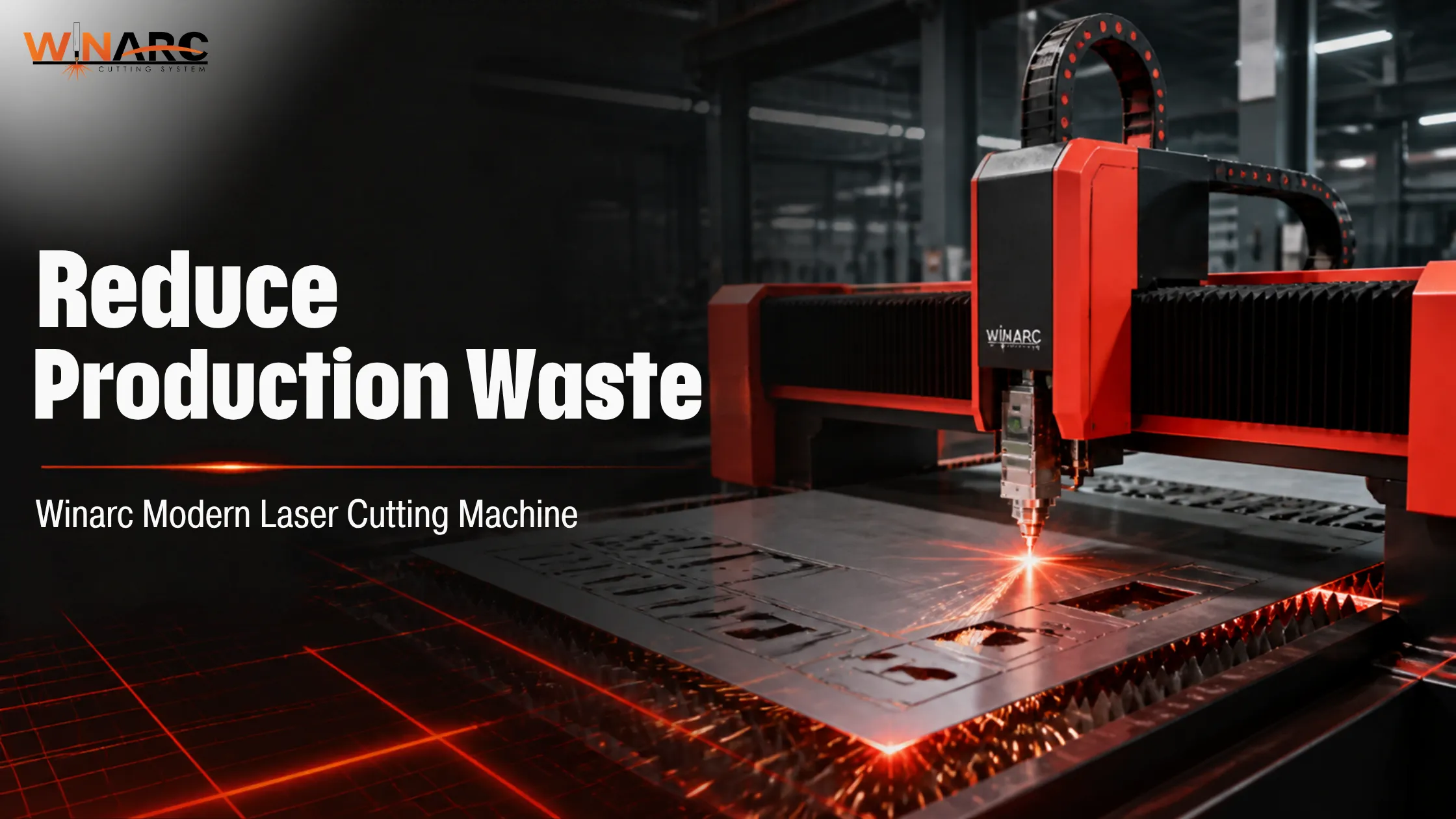
Suitable nesting software and well-planned cutting layouts can help improve material utilisation. The actual improvement depends on component geometry, sheet dimensions, production scheduling and the existing cutting process.
Measure scrap rates and material consumption before and after implementation to assess the benefit.
3. Production Throughput
A suitable machine can help process compatible components more efficiently.
However, overall throughput depends on more than cutting speed. Loading, unloading, setup, programming, operator availability and downstream operations all affect output.
Use realistic production assumptions when estimating the machine’s financial impact.
4. Rework and Quality Costs
Inconsistent cutting can create rework, additional finishing and delays.
If a new machine improves the consistency of suitable components, it may help reduce these costs. The actual benefit should be established through production data and quality checks.
5. Additional Business Opportunities
Improved manufacturing capabilities may allow a company to accept jobs that were previously difficult to process in-house.
This can create potential revenue opportunities, provided the business has sufficient demand, capacity and commercial margins.
A Simple Payback Calculation
Manufacturers can begin with a straightforward calculation:
Payback period = Total initial investment ÷ Monthly net financial benefit
For example, suppose a machine requires a total initial investment of ₹30 lakh and generates an estimated net financial benefit of ₹1 lakh per month.
The illustrative payback period would be:
₹30,00,000 ÷ ₹1,00,000 = 30 months
This is only an example, not a forecast of the payback period for a Winarc machine.
The monthly financial benefit should account for the relevant incremental operating expenses and should be based on realistic production volumes, actual savings and expected contribution from additional work.
A detailed business case should also consider financing costs, taxes, depreciation, maintenance, downtime and changes in demand.
Which Winarc CNC Laser Cutting Machine Should You Consider?
At Winarc Cutting Systems, we understand that manufacturers have different budgets, production volumes and material-processing requirements.
Our fiber laser product range includes multiple configurations designed for different applications.
The right option depends on what you manufacture, how frequently you run production and the type of material you need to process.
WINCHAMP: Single-Pallet Fiber Laser Cutting Machine
WINCHAMP is designed for sheet metal cutting applications using a single-pallet configuration.
It is worth evaluating if your business primarily processes flat sheets and requires a machine suited to its production dimensions and material specifications.
The appropriate laser power and working area should be selected according to your actual requirements.
WINMASTER: Dual-Pallet Fiber Laser Cutting Machine
WINMASTER is designed for sheet metal manufacturers looking to improve production continuity through automatic pallet changing.
Its dual-pallet configuration can help reduce interruptions associated with material changes when loading and unloading are coordinated with the cutting cycle.
This option is worth considering when production volume and machine utilisation justify the investment.
WINPRO: Gantry-Type Fiber Laser Cutting Machine
WINPRO is designed for large-format cutting and demanding fabrication requirements.
It may be relevant to manufacturers who need a larger working area and a machine configuration suited to their component dimensions.
WINHYBRID: Plate-and-Tube Combination Machine
WINHYBRID is designed to process flat plates and compatible tubes or structural profiles.
For manufacturers that handle both sheet metal and profile processing, a combination machine may offer a practical alternative to separate machines, depending on the production mix.
WINTUBE: Dedicated Tube Fiber Laser Cutting Machine
WINTUBE is designed for tube and compatible structural-profile processing.
It is worth evaluating for manufacturers working with round, square and rectangular tubes and supported profiles such as I-beams and C-channels.
How Should You Decide?
Rather than choosing a machine based on its name or price alone, consider the following:
| Your main requirement | Configuration to evaluate |
|---|---|
| General flat-sheet fabrication | WINCHAMP or another suitable sheet configuration |
| Higher-throughput sheet production | WINMASTER, depending on your production requirements |
| Large-format cutting | WINPRO |
| Both sheet and compatible profile cutting | WINHYBRID |
| Dedicated tube and profile cutting | WINTUBE |
This is an initial guide, not a final technical recommendation. The required working area, laser power, material thickness and machine configuration should be confirmed with the Winarc team.
Explore the complete Winarc product range to review the available options.
Why Buying Directly From the Manufacturer Can Matter
When evaluating an affordable CNC laser cutting machine price, buyers should consider the overall purchasing and support arrangement.
Working directly with a manufacturer can help you discuss your production requirements with the team responsible for the machine, understand the available configurations and clarify technical questions.
Winarc Cutting Systems is based in Peenya, Bengaluru, and has been providing CNC cutting solutions since 2018.
Our approach is to help manufacturers identify a suitable machine configuration rather than recommend the same specification to every customer.
The evaluation process should consider:
- Your material and component requirements.
- Required laser power and working area.
- Production volume and automation needs.
- Machine specifications and included accessories.
- Installation and operator training.
- Warranty and after-sales support.
- Overall investment and operating costs.
A clear technical discussion before purchase can help prevent specification mismatches and make the investment decision more informed.
Questions to Ask Before Purchasing an Affordable CNC Laser Cutting Machine
Before finalising your purchase, ask the manufacturer the following questions.
1. What is the complete machine price?
Confirm the base price, taxes, transportation, insurance, installation and other applicable expenses.
2. Which laser source is included?
Verify the make, model, rated power and warranty terms.
3. What materials and thicknesses can the machine process?
Ask for recommended production ranges and request a demonstration using representative samples.
4. What is the effective cutting area?
Confirm the usable working dimensions rather than relying only on the machine’s external dimensions.
5. Which software and accessories are included?
Check the CNC controller, CAD/CAM software, nesting capabilities and standard accessories.
6. What are the payment terms and delivery schedule?
Ensure the commercial terms are documented in the quotation.
7. What training and technical support are available?
Understand the support arrangements for installation, commissioning, routine maintenance and troubleshooting.
8. What will the machine cost to operate?
Estimate electricity, assist gas, consumables, maintenance and other recurring expenses.
9. Can the manufacturer demonstrate the machine using my components?
Where practical, request a demonstration that reflects your material, thickness, cutting features and quality requirements.
These questions will help you compare quotations on a like-for-like basis and choose a machine that fits your business.
Final Thoughts: Affordable Does Not Mean Choosing the Cheapest Machine
As manufacturers plan their next investment, I encourage them to look beyond the initial purchase price.
The right CNC laser cutting machine should meet your production requirements, provide the necessary cutting quality and offer a commercially sensible balance between investment and operating costs.
A lower-priced machine may be the right choice for one business, while a higher-specification system may deliver better value for another. The decision depends on the work the machine is expected to perform.
Before investing, define your requirements, compare equivalent specifications, evaluate the complete cost and request a technical demonstration wherever possible.
At Winarc Cutting Systems, we believe that the best purchasing decisions begin with a clear understanding of the manufacturer’s needs.
If you are searching for an affordable CNC laser cutting machine price in India, our team can help you explore suitable configurations and obtain a quotation based on your production requirements.
Explore the Winarc CNC laser cutting machine range and contact our team to discuss your application.