If your shop cuts thick mild steel plate every day, your cutting process directly decides your margins. Choosing the right industrial oxy fuel cutting machines manufacturer in India affects cost per cut, plate utilisation, edge quality, and how quickly you can scale.
This guide covers how oxy fuel cutting works, where it beats plasma and laser, and what to check before you invest.
What Is an Oxy Fuel Cutting Machine?
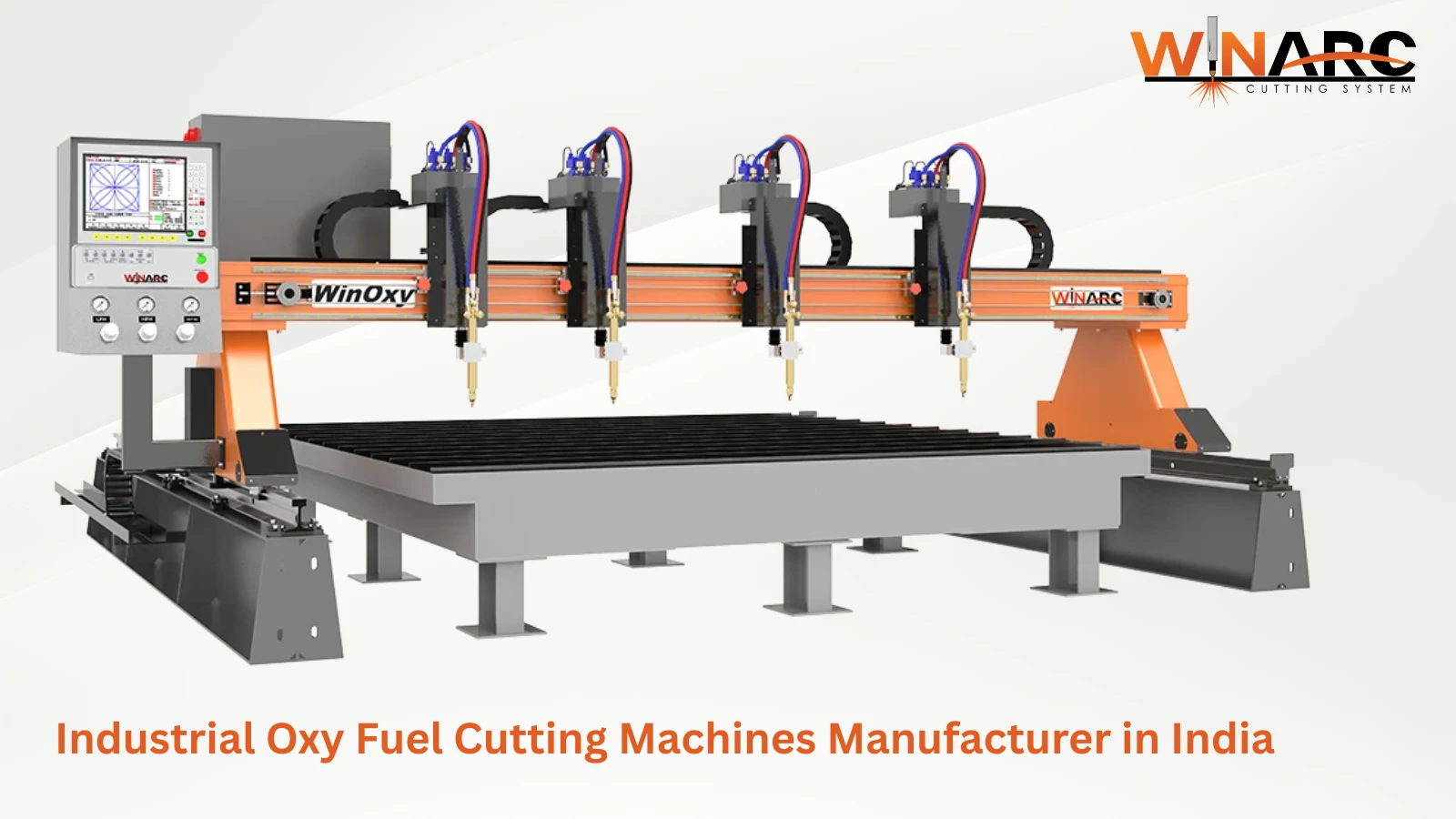
An oxy fuel cutting machine uses a preheat flame, fuelled by a gas such as LPG, propane, or acetylene, together with a jet of pure oxygen. The flame heats the steel to ignition temperature. The oxygen jet then oxidises the metal and blows it out of the cut, leaving a clean kerf.
On a CNC oxy fuel machine, a controller drives the torch along a programmed path. That is how you get repeatable profiles, bevels, and nested parts from a plate instead of relying on operator skill with a hand torch.
Where Oxy Fuel Cutting Wins
Oxy fuel is still the workhorse for heavy plate. Fabricators choose it because of:
- Thickness capability. It handles thick carbon and mild steel plate that stretches the practical limits of plasma and laser.
- Lower operating cost. Consumables and running costs are typically lower for thick-plate work.
- Lower entry cost. Machines are generally more affordable than high-power laser systems.
- Bevel and weld-prep cuts. Suited to structural, pressure vessel, and heavy fabrication work.
- Simple maintenance. Fewer complex components mean easier upkeep and less downtime.
Oxy Fuel vs Plasma vs Fiber Laser: Which Fits Your Shop?
| Factor | Oxy Fuel | Plasma | Fiber Laser |
|---|---|---|---|
| Best for | Thick carbon/mild steel | Medium plate, multiple metals | Thin to medium sheet, high precision |
| Materials | Carbon and mild steel only | Steel, stainless, aluminium | Wide range of metals |
| Cutting speed on thin sheet | Slower | Fast | Very fast |
| Cost per cut on thick plate | Lowest | Moderate | Higher |
| Initial investment | Lower | Moderate | Highest |
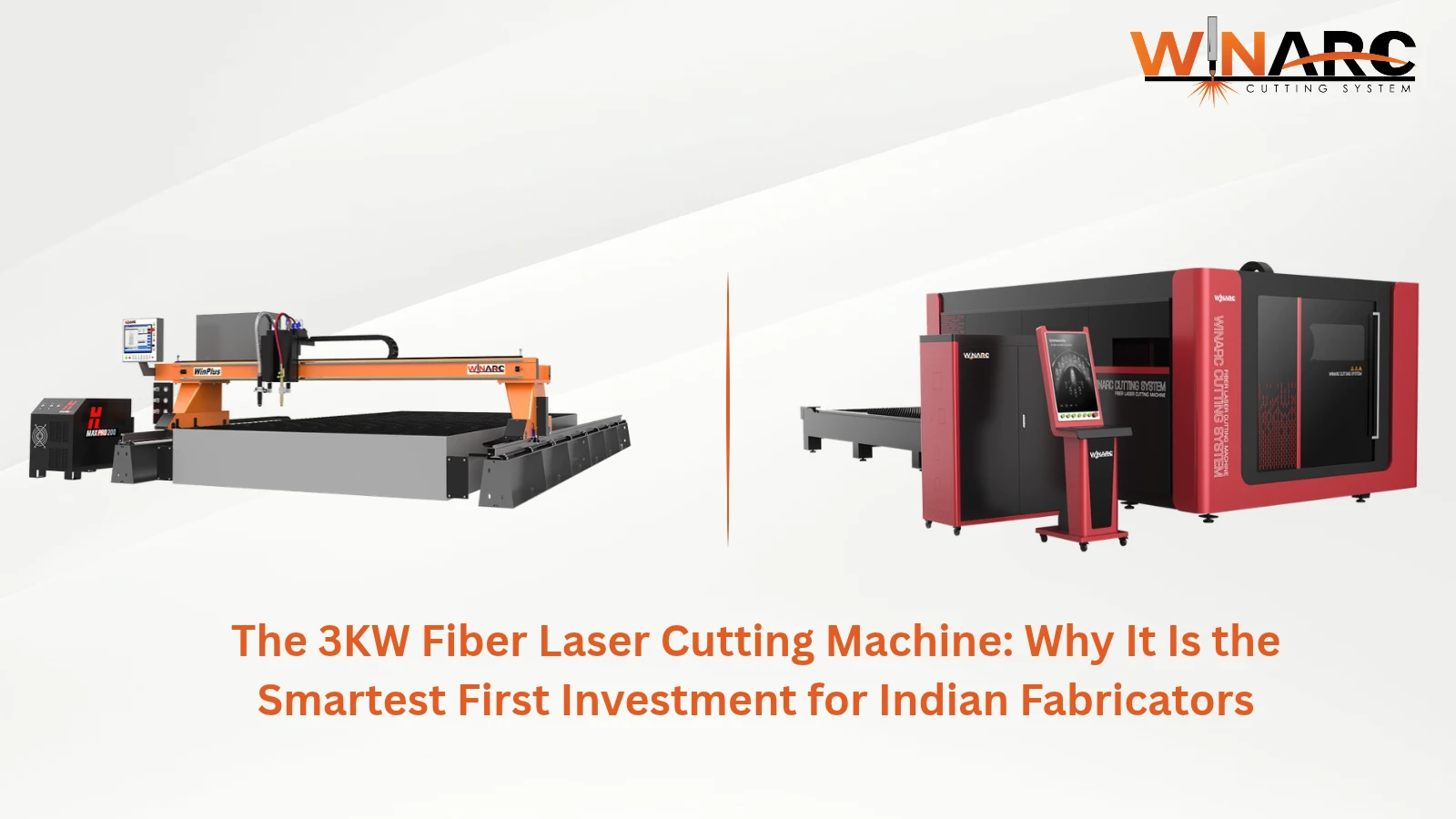
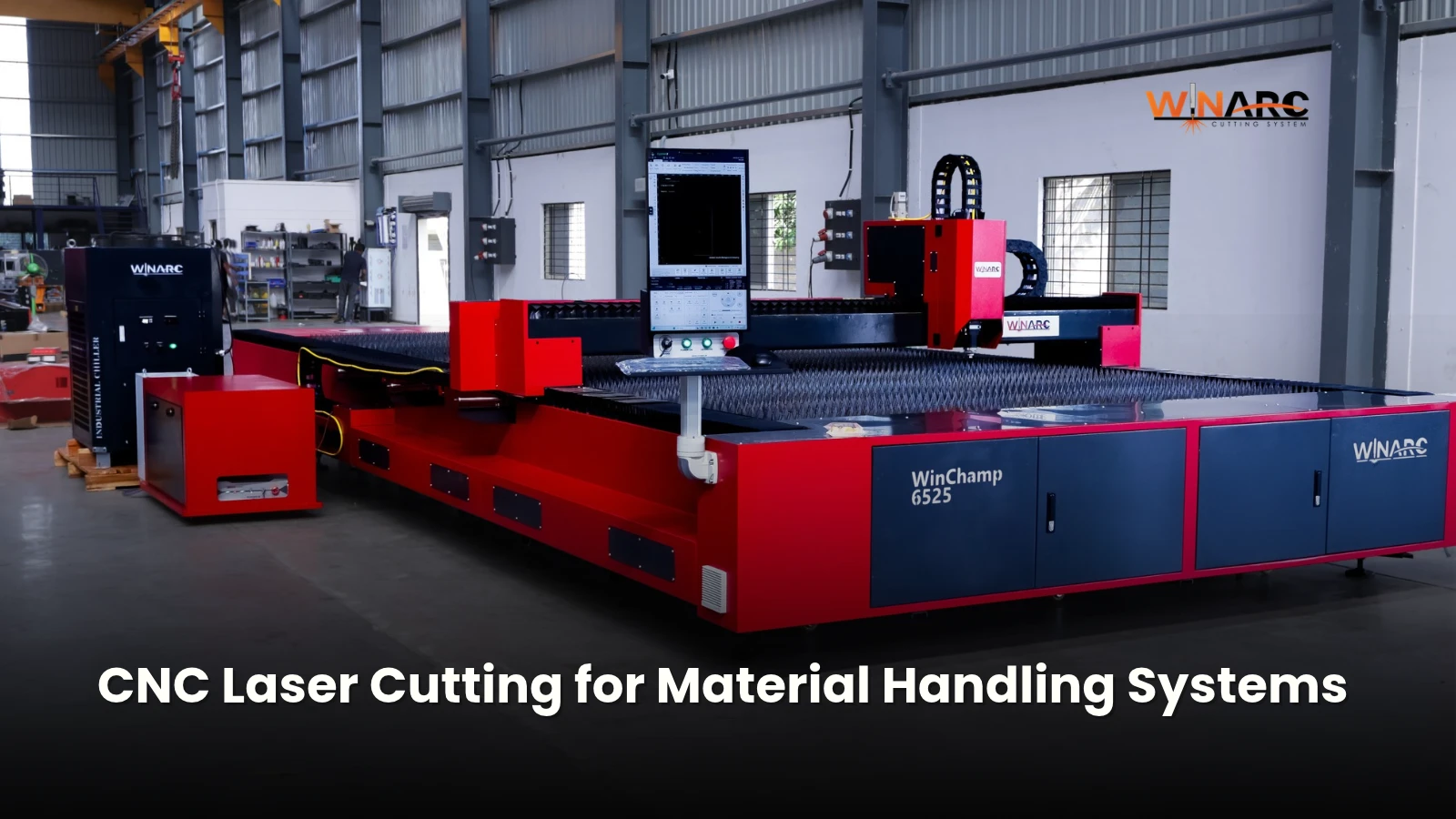
The honest answer for many workshops is a mix. A shop cutting mainly 3 to 12 mm sheet may be better served by fiber laser. A shop cutting heavy structural plate will usually get the best return from oxy fuel. Many growing fabricators run more than one technology. A good manufacturer will tell you which one your job mix actually needs, not just sell the one they have in stock.
7 Things to Check Before Choosing an Oxy Fuel Cutting Machine Manufacturer
1. Machine build and rigidity. A heavy, well-engineered gantry keeps the torch path accurate over long runs. Ask about frame construction, rails, and drive systems.
2. Motion and control system. Look for a reliable CNC controller, good nesting software compatibility, and smooth motion at low speeds, which matters for thick plate.
3. Torch control. Check the torch control setup and whether height control is automatic. Winarc has flexible installation options with capability to accommodate between 1 to 8 torches.
4. Multi-torch and bevel options. Multiple torches raise output on repeat parts. Bevel heads matter if you do weld prep.
5. Real cut samples and customer references. Ask to see actual cuts on your plate thickness, and talk to fabricators already running the machine. This is the strongest proof a manufacturer can offer.
6. Local service and spares. Downtime on a heavy-plate line is expensive. A manufacturer based in India with trained service engineers, quick spares, and remote support removes a major risk that imported machines carry.
7. Training and commissioning. Installation, operator training, and process setup support decide how fast you reach full productivity.
How to Get Better Results From Your Oxy Fuel Machine
Buying the machine is only half the job. These practices protect cut quality and cost:
- Use clean, flat, rust-free plate where possible.
- Keep nozzle standoff and preheat settings matched to plate thickness.
- Use nesting software to raise plate utilisation and cut scrap.
- Follow a routine schedule for nozzle cleaning, gas line checks, and rail lubrication.
- Train operators on parameter selection instead of relying on trial and error.
Small habits like these routinely make the difference between a machine that pays back quickly and one that underperforms.
Why Indian Fabricators Choose a Local Manufacturer
Working with an Indian manufacturer gives you shorter lead times, service that reaches your plant quickly, machines built around Indian power conditions and shop realities, and a team you can visit and hold accountable. Winarc Cutting Systems, based in Bangalore, designs and builds CNC cutting solutions for fabricators across India, with oxy fuel, plasma, and fiber laser options.
Frequently Asked Questions
What materials can an oxy fuel cutting machine cut?
It is designed for carbon steel and mild steel. It is not suitable for stainless steel or aluminium, which need plasma or laser cutting.
How thick can an oxy fuel cutting machine cut?
Our oxyfuel cutting machine offers a robust cutting range from 6mm to 350mm thickness, making it suitable for a wide variety of applications.
Is oxy fuel cheaper than plasma cutting?
For thick plate, running costs are typically lower with oxy fuel. For thin and medium sheet, plasma is usually faster and more economical.
How do I choose an oxy fuel cutting machine manufacturer in India?
Look at build quality, control system, cut samples on your plate, customer references, local service capability, and training support.
Talk to Winarc’s Cutting Experts
Not sure whether oxy fuel, plasma, or fiber laser fits your plate mix? Our engineers will review your materials, thicknesses, and volumes and recommend the right machine, even if that means a different technology.
📞 +91 96060 46233
🌐 winarc.in