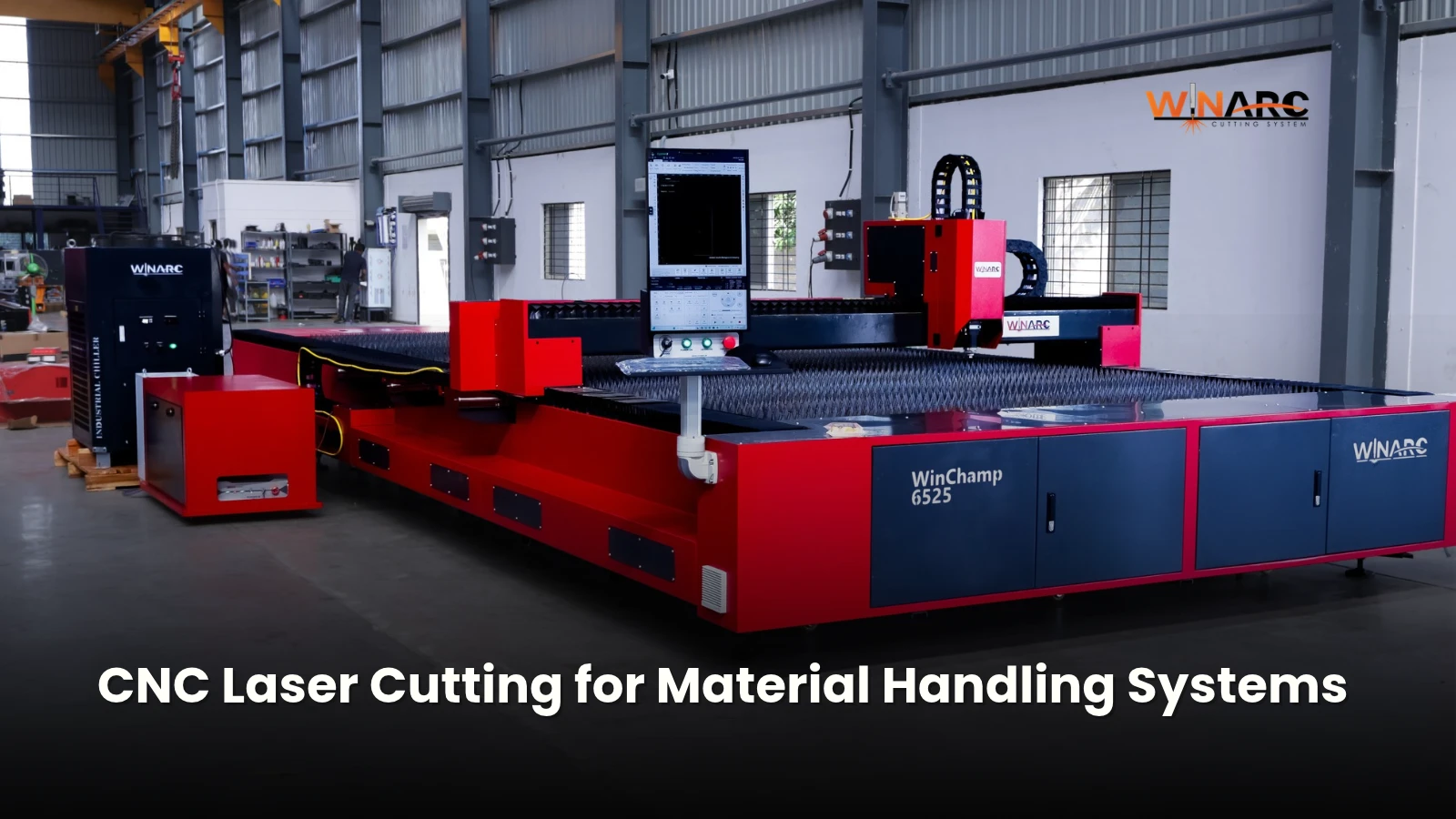
Every fabrication shop deals with the same core challenge at some point: sheet metal cutting that looks fine on paper but falls apart in production. Edges come out rough, tolerances drift across a batch, or a machine that used to run reliably starts producing scrap for no obvious reason. If any of that sounds familiar, you are not alone, and in most cases the root cause is more fixable than it first appears.
Common Problems in Sheet Metal Cutting
Before looking at solutions, it helps to know what is actually going wrong. These are the issues we see most often when shops reach out to us about cutting quality or output.
Inconsistent edge quality. Dross, burr, and rough edges usually point to a mismatch between cutting parameters, assist gas, and material thickness, or to worn consumables that have quietly degraded performance over time.
Poor tolerance control across a sheet. Parts that fit perfectly in one corner of the sheet but drift out of tolerance elsewhere often indicate mechanical issues, bed rigidity, axis alignment, or a machine that was never built with the precision the job demands.
Slow throughput on thicker gauge material. Many machines that handle thin sheet well start to struggle as thickness increases, with cutting speed dropping sharply and edge quality suffering along with it.
Material waste from poor nesting. Without proper nesting software, shops end up cutting fewer parts per sheet than the layout could actually support, which adds up fast on steel and stainless steel costs.
Downtime from unreliable components. Cheaper transmission systems, generic laser sources, and low grade electricals tend to fail more often, and every hour a machine is down is an hour of missed production.
Operator dependency. Machines with clunky software or poor process stability force shops to rely on a handful of experienced operators to get good results, which becomes a real problem when that person is out sick or moves on.
How Winarc’s Machines Solve These Problems
We built our fiber laser cutting machines around the idea that sheet metal cutting should not require constant babysitting or workarounds. Here is how that shows up in practice.
Precision that holds across the full sheet. Our machines are built on rigid, stress relieved MS structural beds with THK Japan linear guides, so positioning accuracy stays consistent from one corner of the sheet to the other, not just near the center.
Reliable, branded components throughout. Max Photonics laser sources, Schneider Electric panels, IGUS cables, and CKD or SMC pneumatics reduce the failure points that cause unplanned downtime, so shops spend less time troubleshooting and more time cutting.
Auto-focus cutting heads for consistent results. Real time sensors and auto-focus functionality reduce the dependency on manual operator adjustment, which means output quality stays consistent even as operators change across shifts.
Nesting software built in. Efficient part layout is handled through the machine’s software, cutting material waste without requiring a separate manual planning step.
Power and bed size matched to real production needs. Rather than a one-size-fits-all approach, our range covers different table sizes and power levels so shops can match the machine to their actual material mix instead of over- or under-buying capacity.
The Go-To Winarc Machine for Sheet Metal Cutting
For general purpose sheet metal cutting across mild steel, stainless steel, and aluminum, the WinMaster is the machine we recommend most often. It is built around a 4000mm by 2000mm bed with a 6kW Max Photonics fiber laser source, giving shops enough working area and power for the majority of sheet metal jobs without moving into large format territory.
A few reasons it holds up as the standard recommendation:
- Dual pallet automatic pallet changer, so one sheet can be loaded while the other is cutting, keeping the laser head running with minimal idle time
- Fscut 4000 EtherCAT controller for stable, high speed communication and precise real time synchronization
- Bochu BLT 421 auto-focus cutting head with collision protection, pressure sensing, and water cooling built in
- Positioning accuracy of ±0.03mm and re-positioning accuracy of ±0.02mm, which holds tolerance consistently across full sheets
- THK Japan linear guides and Schneider Electric, IGUS, and CKD or SMC components throughout for long term reliability
For shops running standard sheet metal production without needing the extended 6.5 meter bed of our large format WinChamp series, the WinMaster covers the range of thickness and material most fabrication work actually requires.
Tips for Better Sheet Metal Cutting Results
A few habits consistently separate shops that get clean, repeatable cuts from those that fight quality issues every week.
- Match cutting speed and gas pressure to the specific material and thickness rather than reusing a general purpose setting
- Replace nozzles and protective lenses on a fixed schedule instead of waiting for visible wear
- Calibrate focus position periodically, even on machines with auto-focus heads
- Keep chiller and cooling systems maintained, since laser source stability depends heavily on consistent temperature control
- Use nesting software properly rather than manually laying out parts, especially on larger production runs
Know more: How to choose CNC sheet metal cutting machine?
Common Mistakes to Avoid
- Running a machine well past its rated cutting thickness just to avoid buying a second machine, which shortens component life and hurts edge quality
- Ignoring small changes in cut quality, since a slight edge roughness today is often an early warning sign of a bigger mechanical or consumable issue
- Buying based on laser power alone without checking bed rigidity, controller quality, and component brands, since a high power source on a weak frame will not deliver consistent results
- Skipping operator training on the actual software and parameter library, which leads to inconsistent settings between shifts
- Underestimating gas purity and supply consistency, particularly for stainless steel work where impurities show up as visible discoloration
Get in Touch for More Details
If your shop is dealing with any of the problems above, or you are evaluating a new machine for sheet metal cutting, we are happy to walk through your material mix, thickness range, and production volume to recommend the right setup. Reach out to us at info@winarc.in, or visit www.winarc.in to learn more about the WinMaster and the rest of our fiber laser cutting range.
Cutting force is calculated using the formula: Cutting Force = Shear Strength of the material × Sheet Thickness × Length of the Cut. This applies mainly to mechanical processes like shearing and punching. Thermal processes such as laser and plasma cutting do not require force calculation since they cut by melting or vaporizing material rather than applying mechanical pressure.
Sheet metal cutting is the process of separating a metal sheet into a required shape or size using mechanical, thermal, or laser-based methods. Common processes include shearing, punching, plasma cutting, and laser cutting, where a blade, electrical arc, or focused laser beam removes material along a defined path.
Sheet metal costing is typically calculated as: Total Cost = Material Cost + Machine Cutting Time Cost + Labor and Finishing Cost. Material cost is based on sheet weight multiplied by price per kg, while cutting time cost depends on the machine’s hourly running rate and how long the cut takes, which is also affected by nesting efficiency.
CNC fiber laser cutting is widely considered the best method for sheet metal, since it delivers high precision, clean edges, minimal material waste, and works efficiently across mild steel, stainless steel, and aluminum.
For production scale work, a CNC fiber laser cutting machine is the best tool, offering higher precision, faster speeds, and cleaner edges than manual tools like tin snips or handheld shears, which are better suited to small, one-off jobs.
The best way to cut steel sheet metal at production scale is CNC fiber laser cutting, which combines high cutting speed, tight tolerances, and minimal heat distortion, particularly for mild steel and stainless steel.
Sheet metal is cut using tools ranging from hand tools like tin snips and shears for light work, to industrial equipment such as CNC fiber laser cutters, plasma cutters, and mechanical shearing machines for production scale cutting.