Walk into any steel fabrication workshop in India and you will find one conversation happening repeatedly: which cutting machine for steel fabrication should we invest in next?
It is a bigger question than it appears. A steel fabrication company’s cutting machine is not just equipment. It is the foundation of its production capacity, its quality output, its operating cost, and its ability to take on jobs that competitors cannot. Get this decision right and it transforms the business. Get it wrong and the consequences follow every shift for the next decade.
India’s structural steel fabrication market was valued at USD 8.31 billion in 2025 and is forecast to reach USD 12.03 billion by 2030, growing at a compound annual growth rate of 7.67%, according to market research by Mordor Intelligence. This growth is being driven by infrastructure development under the Bharatmala and PM Gati Shakti programs, rising demand from the automotive sector, expansion in pre-engineered buildings, and growing shipbuilding activity in Indian ports.
Every one of those sectors needs a cutting machine for steel fabrication. And every sector has different requirements.
According to the Credence Research India Metal Cutting Machine Market report, the India metal cutting machine market is growing at 6.61% CAGR from 2024 to 2032, with plasma cutting machines dominating heavy industries like construction and shipbuilding, and laser cutting machines leading in automotive and precision fabrication.
This guide gives steel fabrication companies a clear, honest framework for choosing the right cutting machine for steel fabrication, based on the actual requirements of their production, not on a supplier’s sales pitch.
Why Choosing the Right Cutting Machine for Steel Fabrication Matters
Steel fabrication is not a single activity. It covers structural steel work for buildings and bridges, heavy plate work for pressure vessels and shipbuilding, thin sheet work for automotive components and HVAC systems, and tube work for conveyors, machinery frames, and industrial structures.
Each of these applications has different material, thickness, volume, and edge quality requirements. The cutting machine for steel fabrication that is right for a structural steel contractor cutting 40 mm mild steel beams is not the same machine that is right for an automotive supplier cutting 2 mm stainless steel panels. And the machine right for a shipyard cutting 80 mm hull plates is different again.
The three primary categories of cutting machine for steel fabrication in India are fiber laser cutting, CNC plasma cutting, and CNC oxyfuel cutting. A fourth category, waterjet cutting, is used in specialist applications. Each has a distinct strength range. Understanding where each excels, and where it falls short, is the essential first step in making the right investment.
Category 1: Fiber Laser Cutting Machine for Steel Fabrication
Best suited to: Thin to medium steel sheets, 0.5 mm to 25 mm, where edge quality and precision are priorities.
Price range: Rs 12 lakh to Rs 80 lakh depending on laser power and bed size.
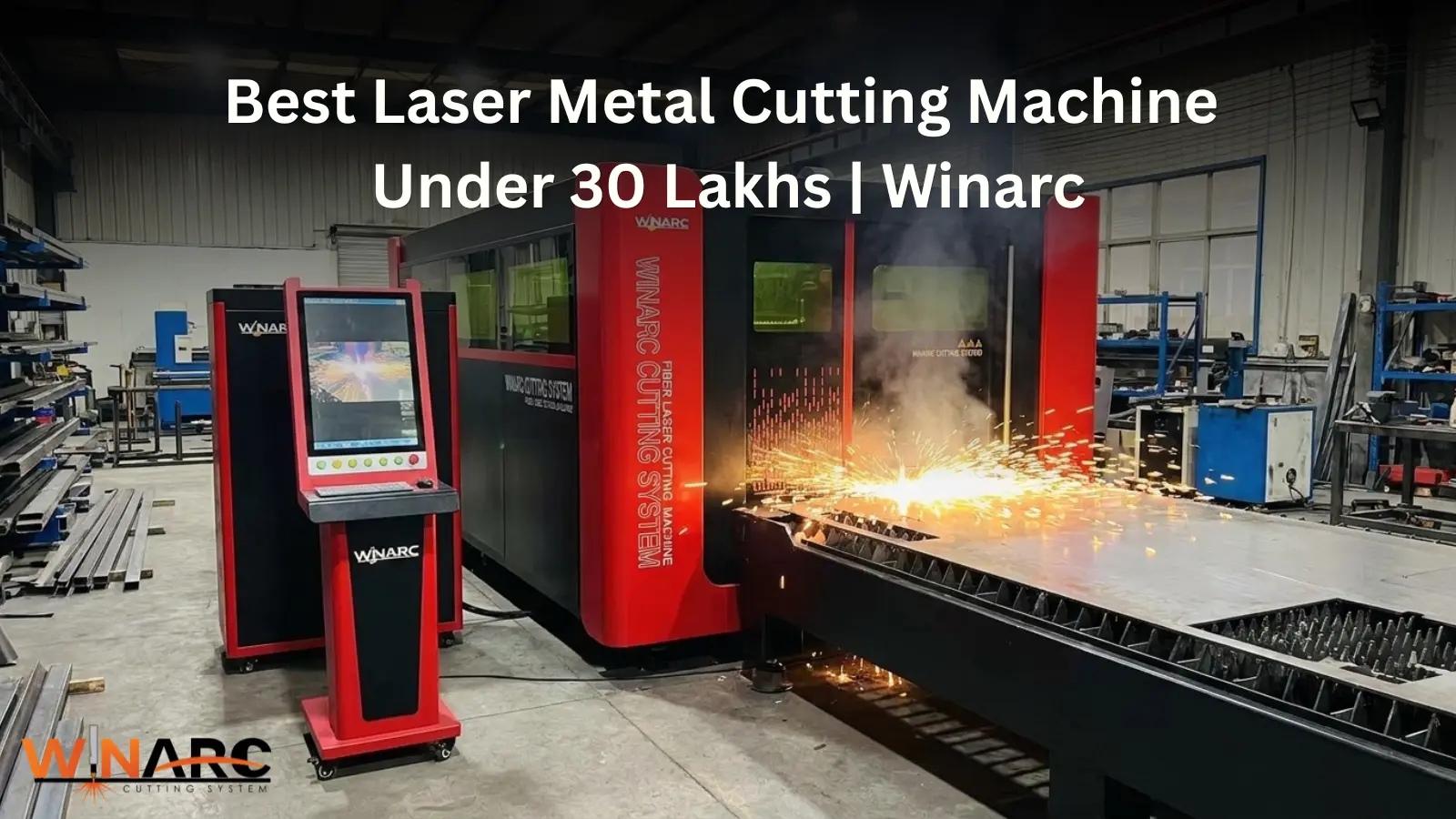
The fiber laser cutting machine is the fastest-growing category of cutting machine for steel fabrication in India. It uses a high-powered laser beam transmitted through a fiber-optic cable to cut metal with exceptional precision and speed, producing clean, burr-free edges with a heat-affected zone significantly smaller than any other thermal process.
According to market data, laser cutting machines account for approximately 45% of adoption in the automotive and precision engineering sectors, where their accuracy and efficiency in cutting steel, aluminium, and alloys make them the preferred choice. India’s automotive sector, which produced over 4.5 million vehicles in 2022 according to the Society of Indian Automobile Manufacturers, relies heavily on laser cutting for manufacturing precision components.
Why fabricators choose fiber laser for steel
The fiber laser cutting machine produces a kerf width of 0.2 to 0.5 mm, compared to 1 to 2 mm for plasma cutting. This narrow kerf means tighter nesting on every plate, which directly reduces material waste per job. For steel fabrication companies buying expensive stainless steel or aluminium, this waste reduction alone can justify the laser investment within months.
Cutting speed is the other major advantage. A 6 kW fiber laser cuts 3 mm mild steel at approximately 13 to 15 metres per minute. The same thickness on a standard plasma machine runs at 3 to 5 metres per minute. For thin sheet production, laser productivity is genuinely transformative.
Where fiber laser has limitations in steel fabrication
Above 25 mm mild steel thickness, operating cost rises sharply. The laser source works harder, assist gas consumption increases, and cutting speed drops. For steel fabrication companies whose primary work involves thick plate above 25 mm, the fiber laser operating cost per metre of cut becomes significantly less competitive than plasma or oxyfuel.
Fiber laser also requires clean, flat, consistently graded material. Painted, rusted, or heavily scaled mild steel plates degrade cut quality and increase the risk of optical damage. In a heavy fabrication environment where material condition is variable, plasma is more forgiving.
Winarc fiber laser range for steel fabrication
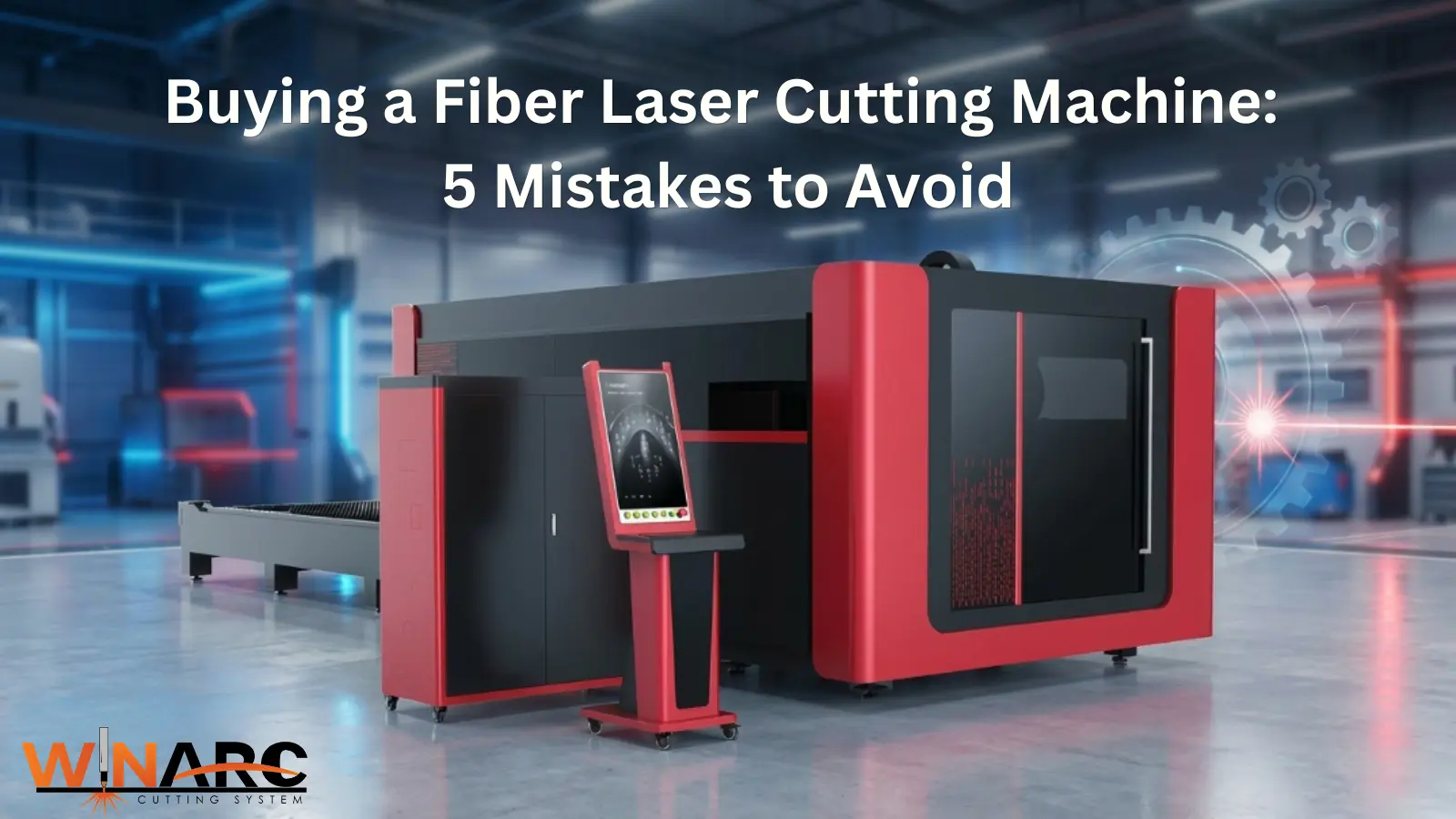
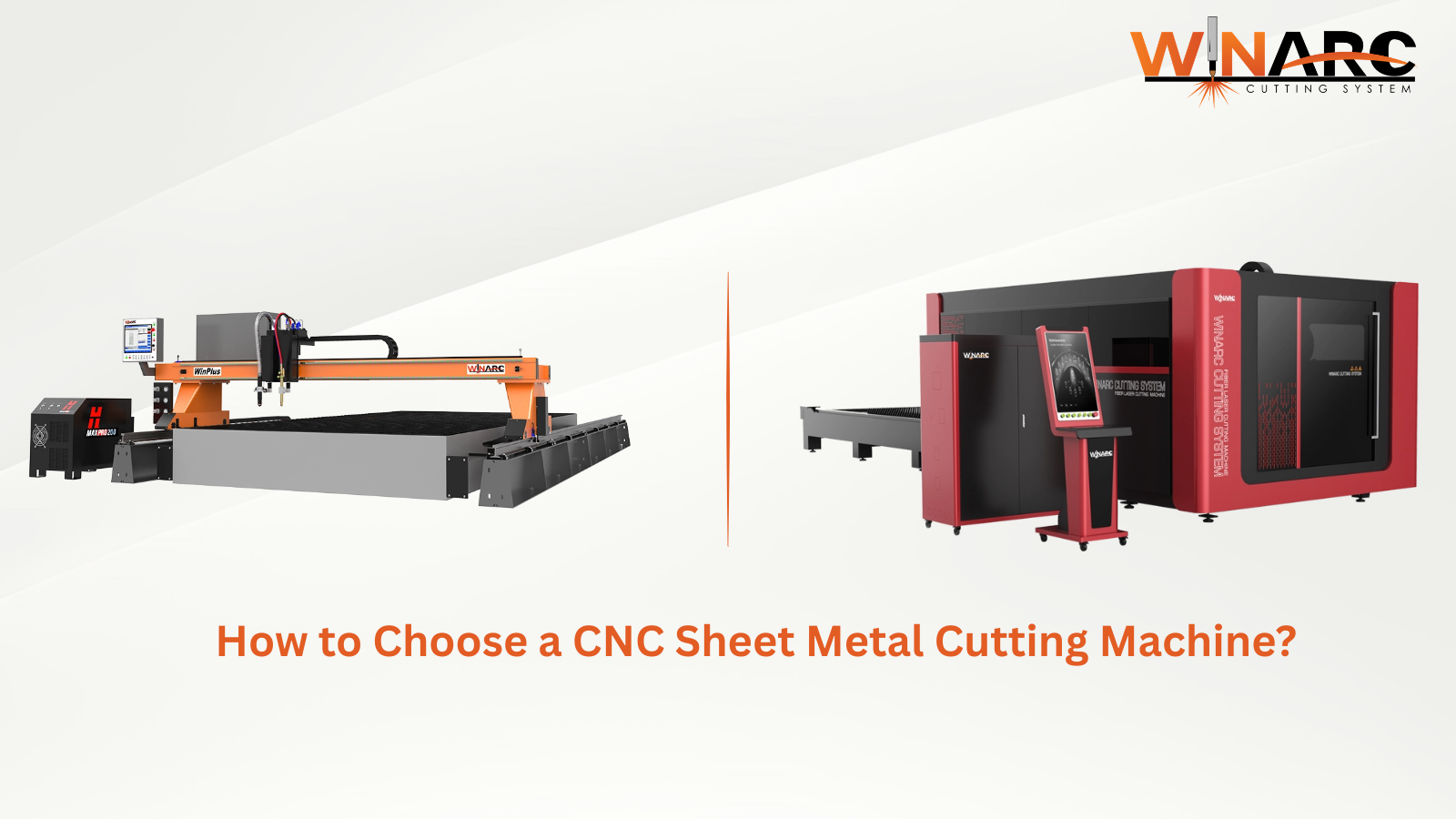
Winarc’s WinMaster fiber laser cutting machine is available in power configurations from 2 kW to 20 kW with a 4000 mm x 2000 mm working area, automatic dual pallet changer, EtherCAT servo drive system, and Fscut CypCutE controller with nesting software. The WinPro and WinChamp offer alternative configurations for large-format and high-volume production.
Best for: Automotive component suppliers, HVAC fabricators, electrical enclosure manufacturers, precision sheet metal shops, stainless steel and aluminium fabricators.
Category 2: CNC Plasma Cutting Machine for Steel Fabrication
Best suited to: Mild steel from 1 mm to 50 mm, at high production volumes where operating cost matters.
Price range: Rs 5 lakh to Rs 40 lakh depending on plasma source, bed size, and configuration.
The CNC plasma cutting machine is the most widely used cutting machine for steel fabrication across India, and for good reason. It handles the thickness range that represents the majority of Indian structural steel fabrication: mild steel from 10 mm to 50 mm, cutting faster and more economically than any other thermal process.
Plasma cutting uses a high-temperature ionised gas arc to melt and remove metal. The process is fast, tolerant of variable material condition, capable of multi-torch configurations for parallel cutting, and significantly lower in capital cost than equivalent laser systems. For steel fabrication companies building structural frames, bridges, industrial buildings, or heavy equipment, plasma is typically the right starting point.
Why fabricators choose plasma for structural steel
The multi-torch advantage is one of the most underappreciated capabilities of the CNC plasma cutting machine in Indian steel fabrication. A standard gantry machine can carry two, four, or six plasma torches simultaneously, cutting identical profiles from the same plate at the same time. This multiplies output without multiplying machine cost, making it the dominant choice for high-volume structural component production.
Plasma is also more tolerant of real-world material conditions. Mild steel plates arriving at a fabrication shop are often painted, coated, mildly corroded, or unevenly surfaced. A plasma cutting machine handles this without significant quality degradation. A fiber laser cutting machine performing the same task requires clean, flat, consistently graded material.
Where plasma has limitations in steel fabrication
Edge quality on plasma cutting is lower than laser. Standard plasma delivers tolerances of plus or minus 0.5 to 1 mm with a slightly bevelled edge that may need light grinding on parts going directly to precision assemblies. High-definition plasma systems reduce this gap significantly, approaching laser-quality edges on plates up to 25 mm.
Plasma cannot cut stainless steel and aluminium with the same edge quality that laser delivers, particularly on thin material. For fabrication companies working with mixed metals and thin gauges, this is a meaningful limitation.
Winarc plasma range for steel fabrication
Winarc’s WinFire is our highest-selling plasma cutting machine, compatible with all plasma sources from standard air plasma to high-definition configurations. The WinPlus is engineered for heavy-duty multi-shift production. The WinCombo carries both plasma and oxyfuel torches on the same gantry for fabricators cutting across the full mild steel thickness range.
Best for: Structural steel contractors, heavy engineering shops, construction equipment manufacturers, general fabrication shops primarily cutting mild steel.
Category 3: CNC Oxyfuel Cutting Machine for Steel Fabrication
Best suited to: Thick mild steel plates from 6 mm to 350 mm, where operating cost is the primary concern.
Price range: Rs 3 lakh to Rs 55 lakh depending on configuration and number of torches.
For steel fabrication companies cutting mild steel above 50 mm, the CNC oxyfuel cutting machine is not just the best option, it is the only cost-effective thermal cutting option. Plasma operating cost rises sharply above 50 mm. Laser becomes impractical above 30 mm. Oxyfuel cuts mild steel from 6 mm to 350 mm at a fraction of the operating cost of both.
Oxyfuel cutting works by preheating mild steel to its ignition temperature and then directing a high-pressure oxygen jet that oxidises the metal rapidly, cutting through sections that plasma and laser cannot economically address. The process is limited to mild steel and low-alloy carbon steels and does not work on stainless steel, aluminium, or non-ferrous metals.
Why fabricators choose oxyfuel for heavy steel
Shipbuilding, bridge fabrication, pressure vessel manufacturing, and heavy structural steel production are the core applications for the oxyfuel cutting machine for steel fabrication. These industries cut thick mild steel in high volumes, and the operating cost advantage of oxyfuel over plasma above 50 mm is decisive.
The multi-torch capability of oxyfuel machines is even more powerful than plasma in this thickness range. A heavy-duty oxyfuel gantry can carry four to eight torches simultaneously, cutting multiple identical profiles from a thick plate in a single pass. For shipyards and bridge fabricators cutting hundreds of identical structural components, this output multiplier is what makes production economics work.
Winarc oxyfuel machine for steel fabrication
Winarc’s WinOxy is our CNC oxyfuel cutting machine, built for heavy-duty steel fabrication with a silver-brazed twin inner tube torch rated for cutting up to 380 mm thick mild steel. The WinOxy supports multiple torch configurations and is designed for continuous industrial production in shipbuilding, bridge fabrication, and heavy structural steel environments.
Best for: Shipbuilding, bridge and infrastructure fabrication, pressure vessel manufacturers, heavy structural steel contractors, mining and earthmoving equipment fabricators.
How to Match the Cutting Machine to Your Steel Fabrication Application
Here is the decision framework I use when advising steel fabrication companies on their cutting machine investment.
Step 1: Define your primary material and thickness
This single question narrows the choice faster than anything else.
If you primarily cut mild steel above 50 mm: oxyfuel is your process. Full stop.
If you primarily cut mild steel between 25 mm and 50 mm: plasma delivers the best balance of speed, edge quality, and operating cost.
If you primarily cut mild steel, stainless steel, or aluminium under 25 mm: fiber laser delivers the best edge quality, fastest cutting speed, and lowest material waste.
If you cut a mix of thin sheet and thick plate: a combination machine such as plasma plus oxyfuel on the same gantry, or a plasma plus laser combination, gives you the most flexibility from a single investment.
Step 2: Assess your edge quality requirement
If your cut parts go directly to welding without grinding, standard plasma or oxyfuel is adequate for most structural applications. If your cut parts go to precision assembly, coating, or a customer without secondary finishing, fiber laser edge quality is non-negotiable.
Step 3: Calculate operating cost per metre of cut
This step is where most steel fabrication companies underprepare. The purchase price of a cutting machine for steel fabrication is visible. The operating cost accumulates invisibly across every shift.
At Rs 8 per unit of industrial electricity and a typical operating profile, the approximate operating cost per hour for each technology is:
- Fiber laser (6 kW): Rs 350 to Rs 600 per hour
- CNC plasma (200A): Rs 250 to Rs 500 per hour
- CNC oxyfuel (multi-torch): Rs 150 to Rs 350 per hour
Multiply these figures across your annual production volume and the total cost of ownership picture becomes clear. A steel fabrication company cutting 2,000 hours per year of 40 mm mild steel will save substantially more on operating cost with plasma than laser, even after accounting for the lower capital cost.
Step 4: Consider production volume and automation needs
High-volume production justifies automatic pallet changers, automatic torch height control, and multi-torch configurations. These features add capital cost but increase throughput per shift significantly. A cutting machine for steel fabrication running two shifts with an automatic pallet changer can produce 40 to 50% more output per day than the same machine with manual loading.
The Make in India initiative is driving steel fabrication companies across India to invest in automation as a competitive necessity, not just a productivity improvement. Steel fabricators supplying to global OEMs, infrastructure contractors, and defence manufacturers are increasingly required to demonstrate automated, consistent, documented production processes.
Steel Fabrication Applications and the Right Cutting Machine for Each
Structural steel and pre-engineered buildings
Pre-engineered buildings (PEB) represent one of the fastest-growing steel fabrication segments in India. PEB fabricators cut I-beams, C-channels, angles, and base plates in large volumes from mild steel. The cutting machine for steel fabrication in this application is almost always a CNC plasma machine for plate work, combined with a CNC tube laser machine for structural profile cutting.
Shipbuilding and offshore fabrication
India’s shipyards at Mumbai, Cochin, and Visakhapatnam cut hull plates from 20 mm to 100 mm thick mild steel in very high volumes. Plasma cutting machines account for approximately 50% of adoption in shipbuilding globally, with oxyfuel taking the balance for the heaviest sections. The Indian Machine Tool Manufacturers’ Association (IMTMA) recognises these as the core thermal cutting technologies for maritime fabrication.
Automotive and EV manufacturing
Automotive body panels, chassis components, seat frames, and battery enclosures are cut from thin to medium mild steel, stainless steel, and aluminium. The cutting machine for steel fabrication in this sector is predominantly fiber laser, which delivers the precision, speed, and mixed-metal capability that automotive production demands.
Pressure vessels and boilers
Pressure vessel fabricators cut thick mild steel shells, heads, and nozzle plates from 15 mm to 60 mm. Plasma cutting is the primary process for this thickness range, with oxyfuel used on the heaviest sections. Edge preparation quality is critical in this application, as cut surfaces go directly to weld seam preparation.
Heavy machinery and mining equipment
Bulldozer buckets, excavator arms, loader frames, and crane booms are fabricated from 20 mm to 80 mm thick mild steel. The cutting machine for steel fabrication in this sector is CNC plasma or CNC plasma plus oxyfuel combination, chosen for its ability to handle thick plate at high speed and low operating cost.
Winarc Cutting Machines for Steel Fabrication Companies
Winarc Cutting System manufactures a complete range of cutting machines for steel fabrication at our Peenya, Bangalore facility. Every machine in our range is manufactured in India, supported by our direct engineering team, and backed by a 12-month warranty from commissioning with domestically stocked spare parts.
For steel fabrication companies, we offer:
WinFire and WinPlus: CNC plasma cutting machines for general steel fabrication and structural steel production, compatible with all plasma sources from standard to high-definition.
WinOxy: CNC oxyfuel cutting machine for heavy plate steel fabrication, cutting mild steel from 6 mm to 350 mm with multi-torch capability.
WinCombo: CNC plasma plus oxyfuel combination machine for fabricators cutting across the full mild steel thickness range on a single gantry.
WinMaster, WinPro, WinChamp: CNC fiber laser cutting machines for precision sheet metal fabrication, automotive, HVAC, and enclosure manufacturing, with power options from 2 kW to 20 kW.
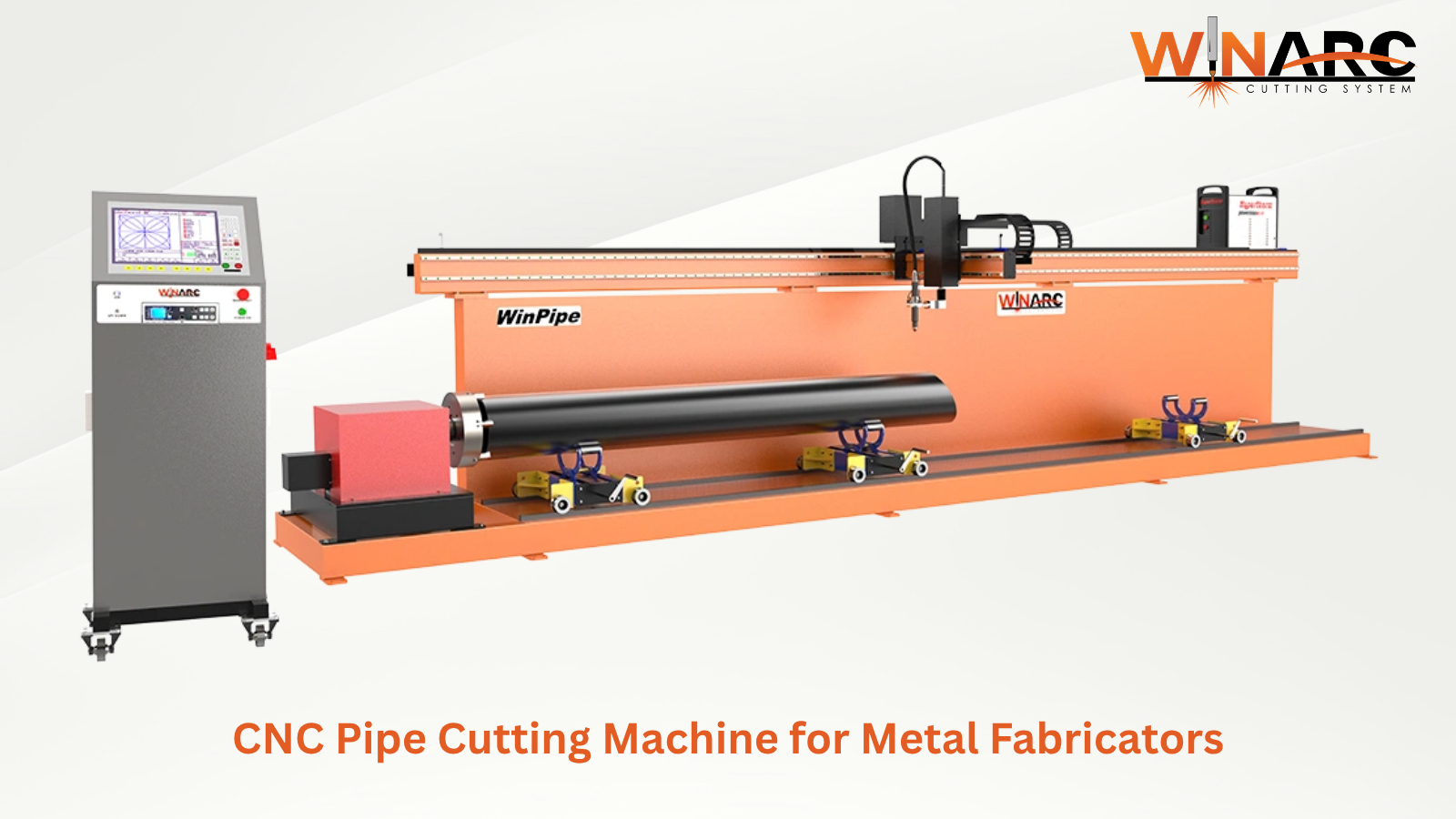
WinTube: CNC tube laser cutting machine for structural profiles including I-beams, C-channels, and round and square tubes used in PEB, automotive, and conveyor fabrication.
For more on selecting the right cutting machine for your steel fabrication requirement, read our complete guide to top metal sheet cutting machine manufacturers in India.
The three primary cutting machines used for steel fabrication in India are CNC fiber laser cutting machines (for thin to medium sheet, 0.5 mm to 25 mm), CNC plasma cutting machines (for mild steel 1 mm to 50 mm at high production volumes), and CNC oxyfuel cutting machines (for thick mild steel above 50 mm). Structural steel fabricators typically use plasma. Shipbuilders and heavy plate fabricators use plasma and oxyfuel. Automotive and precision sheet metal fabricators use fiber laser. The right cutting machine for steel fabrication depends on the specific material, thickness, volume, and edge quality requirements of each production environment.
For thin steel under 25 mm, particularly stainless steel and aluminium alongside mild steel, fiber laser delivers better edge quality, faster cutting speed, and lower material waste. For thick mild steel above 25 mm, plasma cutting is more economical in operating cost with adequate edge quality for structural applications. Many steel fabrication companies use both: laser for thin and medium precision work, plasma for thick structural plate. The choice is not about which technology is better overall, but which is right for the specific thickness and material in each job.
CNC plasma cutting machines for steel fabrication start from approximately Rs 5 lakh for standard configurations and range to Rs 40 lakh for large-bed high-definition systems. CNC fiber laser cutting machines range from Rs 12 lakh to Rs 80 lakh depending on laser power. CNC oxyfuel cutting machines start from Rs 3 lakh for portable configurations and reach Rs 55 lakh for heavy-duty multi-torch systems. The metal cutting machine price is only part of the investment; operating cost per hour should be calculated across your annual production volume to arrive at the true total cost of ownership.
Start by defining your primary material and thickness range. If you cut mainly mild steel above 50 mm, choose oxyfuel. For mild steel between 25 mm and 50 mm, choose plasma. For mixed metals and thicknesses under 25 mm, choose fiber laser. Then assess your edge quality requirement, calculate operating cost per hour across your production volume, and evaluate the manufacturer’s after-sales capability. Visit the factory, run a demonstration cut on your actual material, and ask for references from steel fabrication companies that have been running the machine for at least 12 months.
Final Word from Praveen Itagi
There is no single best cutting machine for steel fabrication. There is only the right machine for your specific production: your material, your thickness, your volume, your quality standard, and your budget.
At Winarc, we manufacture the full range: laser, plasma, oxyfuel, tube cutting, and combination machines. Our team will tell you honestly which one suits your production, even if that recommendation points you toward a machine you were not initially considering.
Because the steel fabrication companies that invest well in their cutting machines win the jobs that underprepared competitors cannot handle. And we want our customers to be in that category.