Steel manufacturing companies in India face a common challenge: selecting the right metal cutting machines for their specific production environment. The wrong choice leads to wasted budgets, production bottlenecks, poor cut quality, and after-sales headaches that outlast the initial excitement of a new machine.
I have been manufacturing CNC cutting machines since 2018. In that time, I have worked with steel fabricators, structural steel contractors, automotive tier-1 suppliers, shipyards, and heavy engineering companies across India. The question I am asked most often is: which type of metal cutting machine is right for my production?
The honest answer is that it depends. It depends on what metal you cut, how thick it is, what edge quality your product demands, what production volume you run, and what your budget looks like for both capital investment and ongoing operating cost.
This guide covers every major type of metal cutting machine used in steel manufacturing companies today, with an honest assessment of where each technology excels, where it falls short, and what it costs.
According to market research published by Credence Research, the India metal cutting machine market is projected to grow from USD 471.95 million in 2023 to USD 842.22 million by 2032, at a compound annual growth rate of 6.61%. This growth is driven by demand from automotive, infrastructure, defence, and heavy engineering sectors, all of which depend on reliable, high-performance metal cutting machines as their primary production equipment.
For steel manufacturing companies evaluating their equipment, understanding the landscape of available metal cutting machines is the essential first step.
Why the Right Metal Cutting Machine Matters for Steel Manufacturing
Steel manufacturing is not a forgiving environment for poor equipment decisions. Production lines run multiple shifts. Tolerances are tight. Delivery schedules are unforgiving. Secondary processes such as grinding, deburring, and rework add cost that erodes margins on every component.
The right metal cutting machine reduces all of these pressures simultaneously. It cuts faster, cuts more accurately, and produces an edge quality that minimises or eliminates secondary finishing. It is reliable enough to run two shifts without unplanned downtime. And it is matched to the materials, thicknesses, and volumes that your production actually requires.
The wrong machine creates the opposite conditions: a bottleneck that slows production, a quality problem that requires rework on every part, and an operating cost that was not visible in the original quotation.
This guide will help you avoid that outcome.
The Metal Cutting Manufacturing Process: How Each Technology Works
Before comparing specific machine types, it is important to understand the fundamental metal cutting manufacturing process behind each technology. All metal cutting machines belong to one of two broad categories: thermal cutting and mechanical cutting.
Thermal cutting uses heat to melt, vaporise, or oxidise metal along the cutting path. Fiber laser cutting, plasma cutting, and oxyfuel cutting are all thermal processes. They are fast, cost-effective on metals, and capable of cutting complex profiles from programmed drawings without tooling or fixturing.
Mechanical cutting uses physical force to shear, abrade, or erode metal. Waterjet cutting, bandsaw cutting, shearing, and punching are mechanical processes. They produce no heat-affected zone, which is critical for heat-sensitive materials and for achieving tight dimensional tolerances on components that go directly to precision assemblies.
Most steel manufacturing companies use a combination of both process types, selecting the right process for each application based on material, thickness, and quality requirements.

Type 1: CNC Fiber Laser Cutting Machine
Best for: Thin to medium sheet metal, 0.5 mm to 25 mm, across mixed metals including stainless steel, aluminium, copper, and brass.
Price range: Rs 12 lakh to Rs 80 lakh depending on laser power and bed size.
The CNC fiber laser cutting machine is the fastest-growing category of metal cutting machines in India and globally. It uses a high-powered laser beam transmitted through a fiber-optic cable to melt and vaporise metal with exceptional precision and speed.
Fiber laser metal cutting machines deliver the finest edge quality of any thermal process, with a kerf width of 0.2 to 0.5 mm, a minimal heat-affected zone, and burr-free edges that often go directly to assembly without secondary finishing. Positioning accuracy is typically plus or minus 0.03 mm, making fiber laser the preferred metal cutting machine for applications where tolerances are tight.
Key specifications to evaluate:
-
- Laser power: 1.5 kW for thin sheet, 3 kW to 6 kW for general fabrication, 10 kW to 20 kW for high-volume heavy production
-
- Working area: standard 1500 mm x 3000 mm to 4000 mm x 2000 mm and beyond
-
- Drive system: servo motors on all axes (insist on this, not stepper motors)
-
- Controller: Fscut EtherCAT or equivalent advanced CNC with nesting software
Operating cost per hour: Rs 300 to Rs 800 depending on laser power, assist gas (nitrogen for stainless, oxygen for mild steel), and consumable replacement intervals.
Automatic metal cutting machine capability: Fiber laser cutting machines are the most automation-ready category. Automatic pallet changers, robotic loading, and full lights-out operation are all available configurations.
Winarc’s WinMaster is our flagship fiber laser cutting machine, offering power from 2 kW to 20 kW with a 4000 mm x 2000 mm working area, automatic dual pallet changer, and EtherCAT servo drive system. For more on Winarc’s full range of metal cutting machines, read our guide to top metal sheet cutting machine manufacturers in India.
Pros: Best edge quality, highest precision, fastest on thin sheet, cuts all metals including copper and brass, minimal secondary finishing.
Cons: Higher capital cost, operating cost rises sharply above 25 mm thickness, requires controlled environment.
Best for: Automotive component manufacturers, HVAC fabricators, electrical enclosure manufacturers, precision sheet metal shops, export-quality fabrication.
Type 2: CNC Plasma Cutting Machine
Best for: Mild steel, stainless steel, and aluminium from 1 mm to 50 mm, at high production volumes.
Price range: Rs 5 lakh to Rs 40 lakh depending on plasma source, bed size, and configuration.
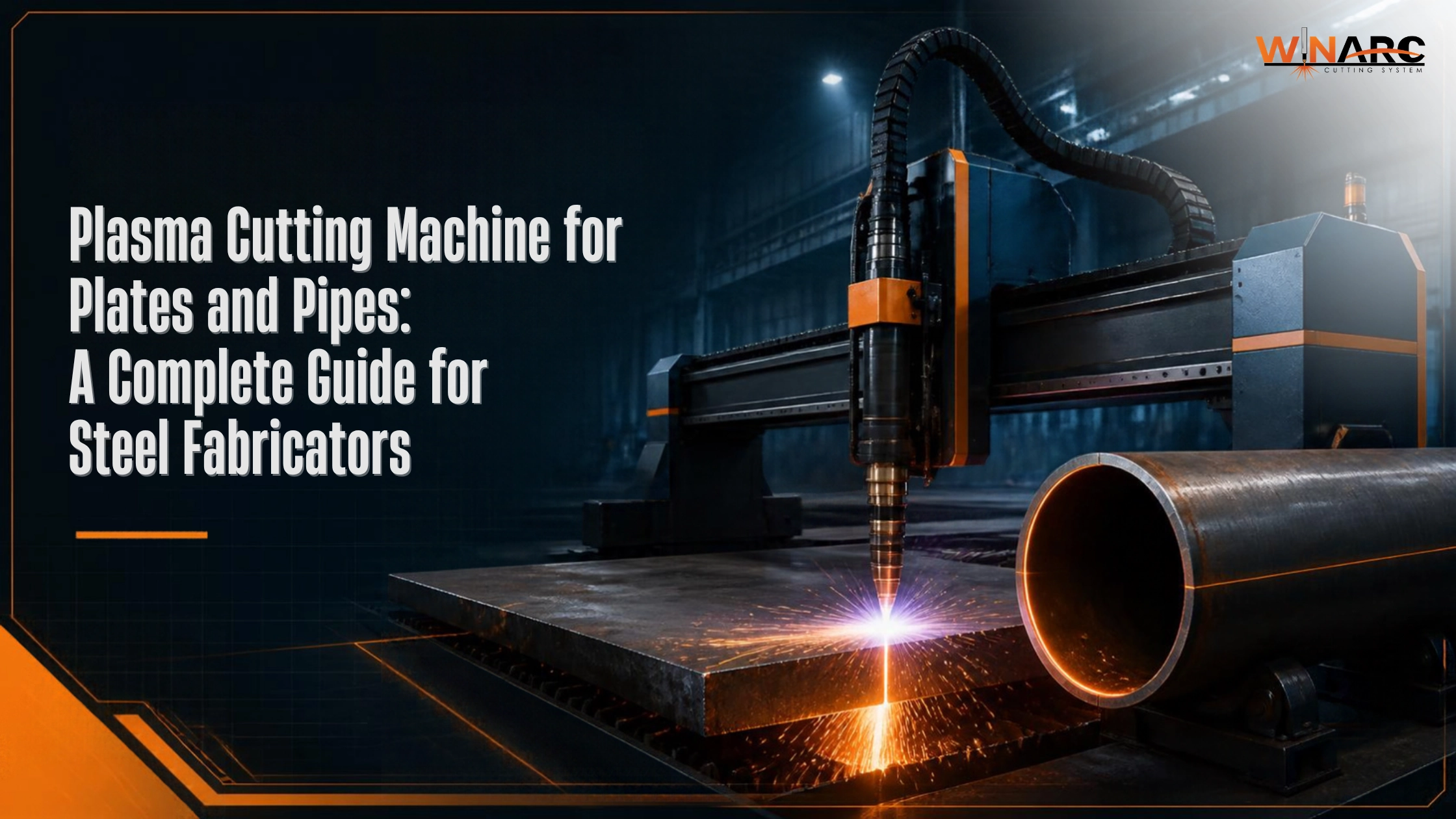
The CNC plasma cutting machine is the most widely used industrial metal cutting machine in India. It uses a high-temperature ionised gas arc to melt and remove metal along a programmed cutting path. Plasma metal cutting machines are faster than laser on thick mild steel, significantly cheaper in capital cost, and tolerant of material surface conditions including rust, paint, and scale.
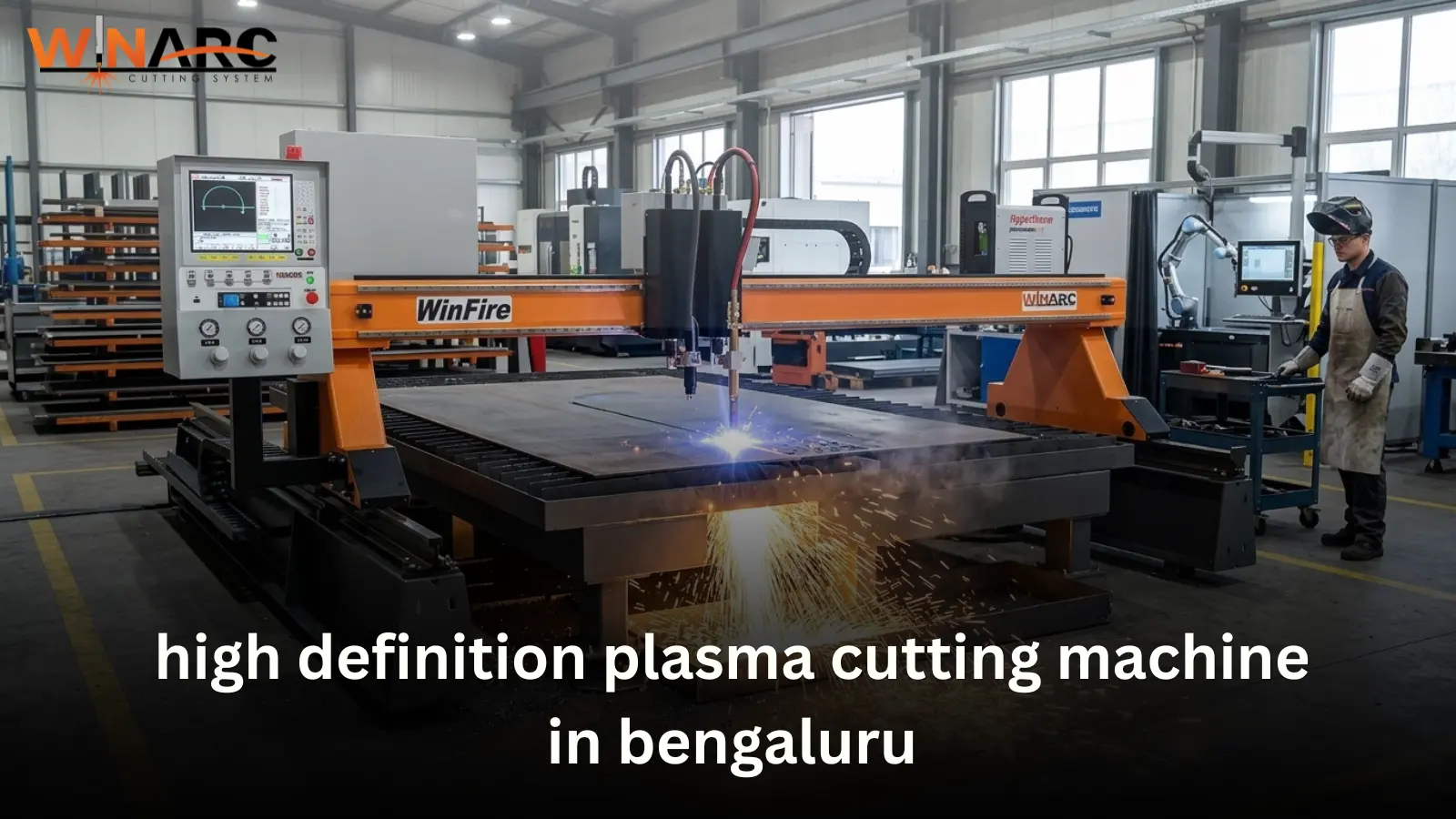
Standard plasma cutting delivers edge tolerances of plus or minus 0.5 to 1 mm, adequate for structural fabrication, general engineering, and heavy plate work. High-definition plasma systems close this gap significantly, approaching laser-quality edges on plates up to 25 mm, while maintaining the plasma process cost advantage on heavier sections.
Key specifications to evaluate:
-
- Plasma source: standard air plasma (80A to 200A) vs high-definition plasma sources (above 200A)
-
- Bed size: 1500 mm x 3000 mm standard to 3000 mm x 12000 mm for large structural work
-
- Multi-torch capability: gantry plasma machines can mount 2 to 8 torches for simultaneous cutting
-
- Drive system: dual servo motors on longitudinal axis as standard for production machines
Metal cutting machine price: A standard gantry plasma machine with air plasma starts from approximately Rs 5 lakh. High-definition plasma systems with larger beds range from Rs 15 lakh to Rs 40 lakh. Operating cost per metre of cut is significantly lower than laser on thick mild steel, making plasma more economical for heavy plate work.
Operating cost per hour: Rs 200 to Rs 600 depending on plasma source, gas type, and consumable replacement rate.
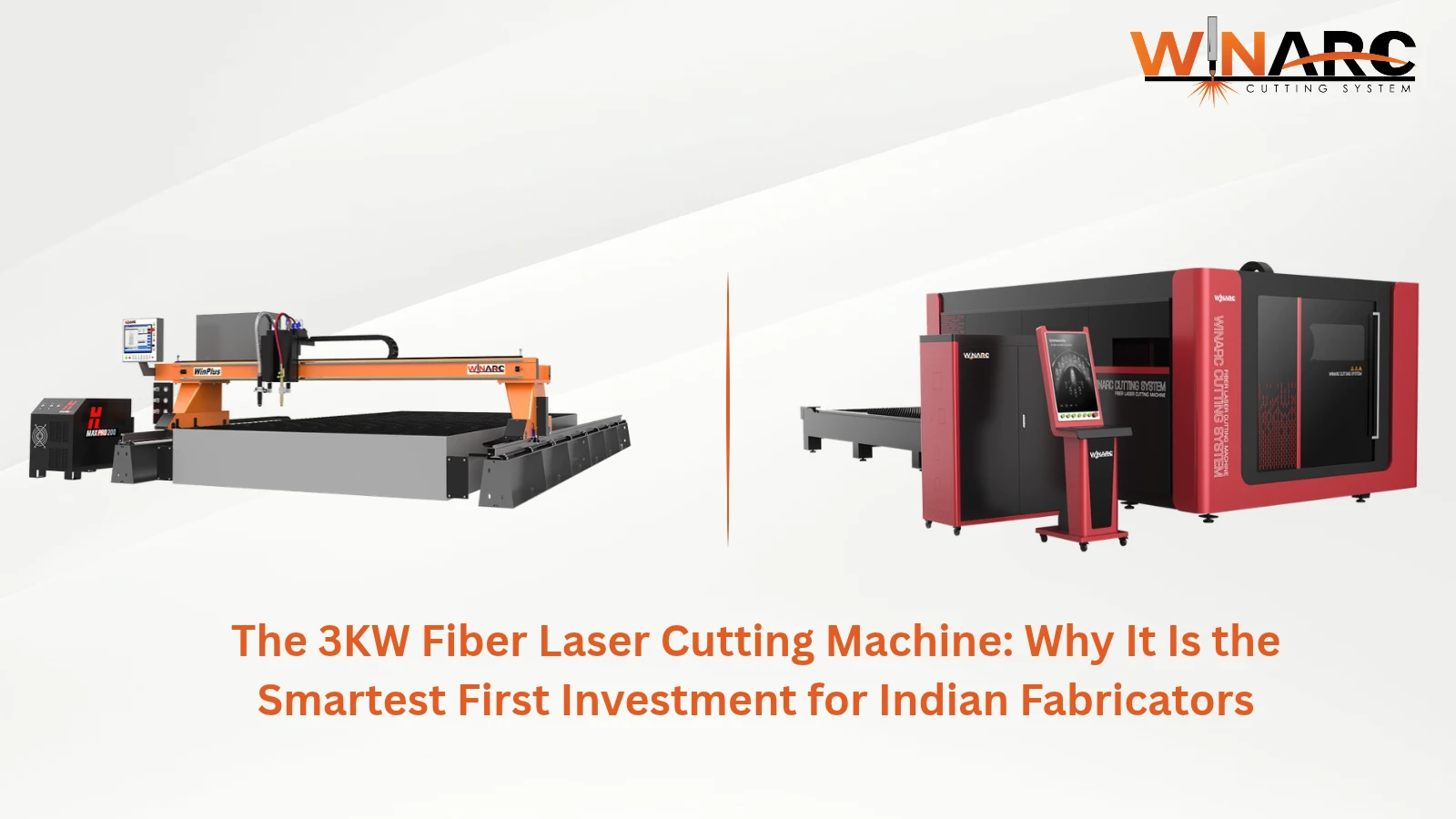
Winarc’s WinFire and WinPlus plasma metal cutting machines are our highest-selling configurations, used by fabrication shops and structural steel contractors across South India. The WinCombo offers plasma and oxyfuel on the same gantry for maximum versatility.
Pros: Low capital cost, wide thickness range, fastest on thick mild steel, multi-torch capability, tolerant of poor material condition.
Cons: Lower edge quality than laser on thin sheet, cannot cut non-conductive materials, heat-affected zone larger than laser.
Best for: Structural steel contractors, heavy engineering, shipbuilding, general fabrication shops cutting primarily mild steel.
Type 3: CNC Oxyfuel Cutting Machine
Best for: Thick mild steel plates from 6 mm to 350 mm, at low operating cost.
Price range: Rs 3 lakh to Rs 55 lakh depending on configuration and number of torches.
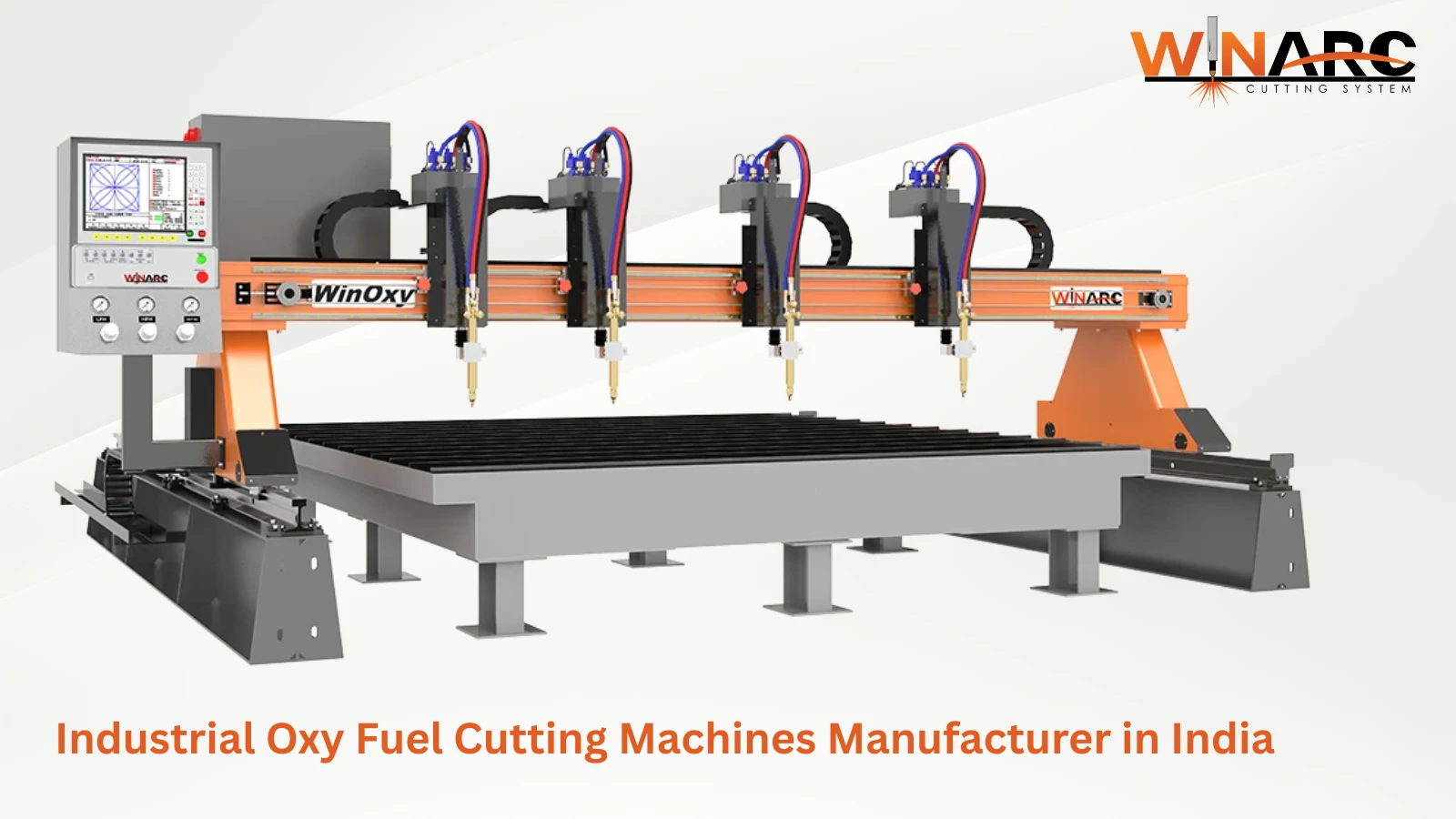
The CNC oxyfuel cutting machine is the dominant metal cutting machine for ultra-thick mild steel in India. It uses a combination of oxygen and fuel gas, typically LPG or acetylene, to preheat mild steel to its ignition temperature and then oxidise the metal with a high-pressure oxygen jet, cutting through sections that plasma and laser cannot economically address.
CNC oxyfuel metal cutting machines cut mild steel from 6 mm to 350 mm with consistent accuracy and very low operating cost compared to plasma at equivalent thicknesses. They are limited to mild steel and low-alloy carbon steels, as the oxidation reaction that drives the process does not work on stainless steel, aluminium, or non-ferrous metals.
Key specifications to evaluate:
-
- Torch type: silver-brazed twin inner tube construction for heavy-duty use
-
- Number of torches: 1 to 8 torches on a single gantry for simultaneous cutting
-
- Cutting thickness: rated maximum thickness at the torch specification
-
- Fuel gas: LPG (most economical in India), acetylene (faster preheat), or natural gas
Operating cost per hour: Among the lowest of all metal cutting machines for thick plate work. No expensive electrical consumables, long torch life, and low gas cost per metre of cut.
Winarc’s WinOxy is our CNC oxyfuel cutting machine, cutting mild steel from 6 mm to 350 mm with a silver-brazed twin inner tube torch rated to 380 mm.
Pros: Lowest operating cost on thick mild steel, widest thickness range, multi-torch for high output, low machine cost.
Cons: Limited to mild steel only, requires preheat time, slower than plasma on thin sheet, cannot cut stainless steel or aluminium.
Best for: Shipbuilding, bridge fabrication, pressure vessel manufacturing, heavy structural steel, mining and earthmoving equipment.
Type 4: Waterjet Cutting Machine
Best for: Materials requiring no heat-affected zone: titanium, composites, glass, stone, or heat-sensitive metals.
Price range: Rs 25 lakh to Rs 1 crore and above for industrial configurations.
Waterjet metal cutting machines use a high-pressure stream of water mixed with an abrasive material to erode metal along the cutting path. The process generates no heat, producing zero heat-affected zone and no metallurgical changes in the cut material. This makes waterjet the preferred metal cutting machine for heat-sensitive applications.
Waterjet is the most versatile metal cutting machine in terms of material range. It cuts steel, stainless steel, aluminium, titanium, hardened tool steel, carbon fibre, composites, glass, stone, and ceramics. However, it is slower than laser and plasma on standard steel, significantly more expensive in operating cost (abrasive consumption is the primary driver), and less common in general Indian fabrication environments.
Operating cost per hour: Rs 500 to Rs 1,500 depending on abrasive consumption, water pressure, and pump maintenance.
Pros: No heat-affected zone, cuts any material, excellent accuracy, no thermal distortion.
Cons: Slowest of all thermal and abrasive cutting processes on steel, high operating cost, not suitable for high-volume production.
Best for: Aerospace and defence components, titanium and hardened steel cutting, food industry equipment, architectural metalwork requiring zero heat distortion.
Type 5: CNC Tube and Pipe Laser Cutting Machine
Best for: Round tubes, square tubes, I-beams, C-channels, and structural profiles.
Price range: Rs 18 lakh to Rs 60 lakh depending on laser power and chuck size range.
CNC tube laser cutting machines are a specialised category of metal cutting machines designed to handle cylindrical and structural profiles rather than flat sheets. The machine rotates and indexes the tube against a fiber laser cutting head, automatically cutting complex saddle profiles, mitre joints, lateral intersections, and holes from a programmed drawing.
This category of metal cutting machine has grown rapidly in India as automotive, HVAC, furniture, and structural steel fabricators recognise the production time savings from replacing manual angle grinding and marking with a fully automated tube cutting process. A complex saddle cut that takes a skilled fabricator 30 minutes manually can be produced in under 2 minutes on a CNC tube laser cutting machine.
Key specifications to evaluate:
-
- Chuck size range: ø160 mm to ø500 mm covers most Indian production requirements
-
- Profile compatibility: confirm round, square, rectangular, I-beam, and C-channel capability
-
- Clamping system: electro-pneumatic chuck clamping as standard for consistent holding
-
- Fume extraction: multi-zone extraction for enclosed tube cutting
Winarc’s WinTube is our CNC tube laser cutting machine, handling round tubes, I-beams, and C-channels with electro-pneumatic chuck clamping and multi-zone fume extraction.
Pros: Automates complex tube profiles, eliminates manual marking and grinding, consistent accuracy on every piece.
Cons: Flat sheet cutting not possible, specialist application rather than general purpose.
Best for: Automotive chassis fabricators, HVAC contractors, furniture manufacturers, structural steel tube cutting.
Type 6: Automatic Metal Cutting Machine (Profile and Combination)
Best for: Mixed production environments requiring both plate and tube cutting, or plasma and laser on one machine.
Price range: Rs 12 lakh to Rs 50 lakh depending on configuration.
Automatic metal cutting machines in the combination category include plasma plus oxyfuel combination gantries, plate plus tube combination laser machines, and profile cutting systems handling I-beams, C-channels, and flat profiles on the same platform.
These automatic metal cutting machines are particularly valued in Indian fabrication shops where floor space is limited but production requirements are diverse. A single combination machine replaces two or three specialist machines, reducing capital investment, floor space requirements, and operator training needs.
Winarc’s WinHybrid handles both flat plate laser cutting and tube laser cutting from a single installation, switching between modes as required. The WinCombo handles plasma and oxyfuel cutting on a single gantry for fabricators cutting across both thin and thick mild steel.
Pros: Maximum production flexibility, space and cost efficient, single operator can handle both processes.
Cons: Compromise on optimum configuration for each individual process, more complex setup and programming.
Best for: Job shops, mixed production contract fabricators, shops serving diverse customer requirements.
How to Choose the Right Metal Cutting Machine for Your Steel Manufacturing Company
With six categories of metal cutting machines available, the selection framework comes down to five questions:
1. What material do you primarily cut? If you cut only mild steel, all six types can apply. If you cut stainless steel, aluminium, copper, or brass, fiber laser is the primary choice. If you cut titanium, composites, or heat-sensitive materials, waterjet is required.
2. What is your typical thickness range? Under 25 mm, fiber laser delivers the best speed and quality. Between 25 mm and 50 mm, plasma is more economical. Above 50 mm, oxyfuel is the only cost-effective thermal process.
3. What edge quality does your product require? Parts going directly to assembly without finishing need laser precision. Structural steel going to welding is well-served by plasma. Ultra-thick sections going to welded assemblies are well-served by oxyfuel.
4. What is your production volume? High volumes justify higher capital investment in faster, more automated metal cutting machines. Lower volumes may be better served by versatile combination machines that avoid the need for multiple specialist investments.
5. What is your total budget for capital and operating cost? Metal cutting machine price is only the beginning. Calculate the operating cost per hour for your typical production mix and multiply it across your annual production volume. The machine with the lowest total cost of ownership may not be the cheapest to buy.
Metal Cutting Machine Tools: Key Components That Determine Performance
Regardless of which type of metal cutting machine you purchase, these are the metal cutting machine tool components that determine real-world performance:
Drive system: Servo motors with precision-ground rack and pinion and linear guides deliver the accuracy and longevity that production environments demand. Stepper motor drives are cheaper but lose positioning accuracy under sustained load.
CNC controller: Advanced controllers with nesting software reduce material waste. The controller determines how complex a cutting program the machine can execute and how efficiently it uses material.
Cutting head or torch: The cutting head (on laser machines) or torch assembly (on plasma and oxyfuel machines) is the component that actually contacts the cutting zone. Quality components here determine edge quality, consumable life, and machine uptime.
Frame construction: A stress-relieved, precision-machined machine frame is the foundation of long-term accuracy. Frames that skip stress relief will show progressive accuracy deterioration under production loads.
Automation level: Automatic pallet changers, automatic torch height control, and automatic lubrication systems reduce downtime and operator dependence. The best industrial metal cutting machines combine all of these into a continuous production system.
Winarc Metal Cutting Machines for Steel Manufacturing Companies
Winarc Cutting System manufactures a full range of metal cutting machines at our Peenya, Bangalore facility, covering every major cutting technology used in Indian steel manufacturing.
| Machine | Type | Thickness Range | Best Application |
|---|---|---|---|
| WinMaster | Fiber laser | 0.5–25 mm | Sheet metal, automotive, HVAC |
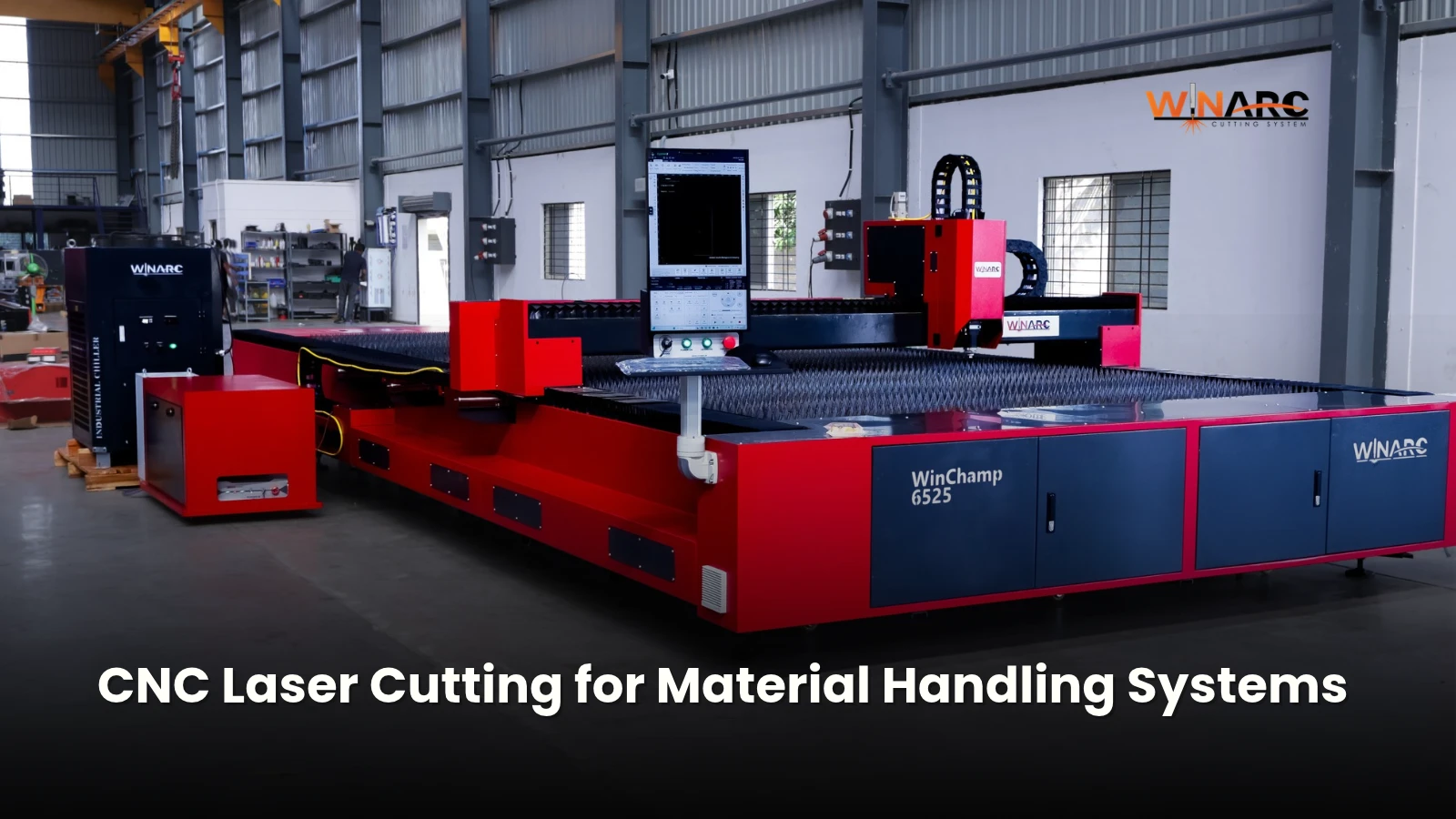
| WinChamp | Fiber laser | 0.5–25 mm | High-volume production |
| WinPro | Fiber laser | 0.5–25 mm | Precision, large format |
| WinHybrid | Fiber laser plate + tube | 0.5–25 mm | Mixed plate and tube production |
| WinTube | Fiber laser tube | Tubes ø160–ø500 mm | Tube and structural profile cutting |
| WinFire | CNC plasma | 1–50 mm | General fabrication, mild steel |
| WinPlus | CNC plasma | 1–50 mm | Heavy-duty plasma production |
| WinCombo | Plasma + oxyfuel | 1–350 mm | Mixed thin and thick plate |
| WinPipe | Plasma pipe | Pipes ø160–ø500 mm | Heavy-duty pipe cutting |
| WinOxy | CNC oxyfuel | 6–350 mm | Thick mild steel, shipbuilding |
All Winarc metal cutting machines are manufactured in India, serviced by our direct engineering team in Bangalore, and backed by a 12-month warranty from commissioning with domestically stocked spare parts.
For detailed specifications and a comparison of our metal sheet cutting machine range, read our complete guide to top metal sheet cutting machine manufacturers in India.
What are the main types of metal cutting machines used in steel manufacturing?
The main types of metal cutting machines used in steel manufacturing companies are CNC fiber laser cutting machines (for thin to medium sheet, 0.5 mm to 25 mm), CNC plasma cutting machines (for mild steel 1 mm to 50 mm), CNC oxyfuel cutting machines (for thick mild steel 6 mm to 350 mm), waterjet cutting machines (for heat-sensitive materials and non-metals), CNC tube laser cutting machines (for structural profiles and tubes), and combination machines that handle multiple processes on a single platform. The right choice depends on material type, thickness range, required edge quality, and production volume.
What is the price of a metal cutting machine in India?
Metal cutting machine prices in India vary significantly by technology and specification. CNC plasma cutting machines start from approximately Rs 5 lakh for standard configurations. CNC fiber laser cutting machines range from Rs 12 lakh to Rs 80 lakh depending on laser power. CNC oxyfuel cutting machines start from Rs 3 lakh for portable configurations and range up to Rs 55 lakh for heavy-duty multi-torch systems. Waterjet cutting machines typically start from Rs 25 lakh. The metal cutting machine price is only part of the total cost; operating cost per hour should be calculated alongside the purchase price.
What is an automatic metal cutting machine?
An automatic metal cutting machine is a CNC-controlled cutting system that executes cutting programs automatically from a loaded drawing, without requiring manual guidance of the cutting tool. All modern CNC laser, plasma, and oxyfuel cutting machines are automatic metal cutting machines in this sense. The term is also used specifically for machines with automatic material loading, pallet changing, and unloading capability, which allow continuous production with minimal operator intervention.
Which metal cutting machine is best for mild steel?
For mild steel under 25 mm, a CNC fiber laser cutting machine delivers the best edge quality and fastest cutting speed. For mild steel from 25 mm to 50 mm, a CNC plasma cutting machine offers better economy with acceptable edge quality. For mild steel above 50 mm, a CNC oxyfuel cutting machine is the most cost-effective choice. Many steel manufacturing companies run a combination of plasma and fiber laser metal cutting machines to cover the full thickness range at optimum cost.
What is the metal cutting manufacturing process?
The metal cutting manufacturing process refers to the sequence of operations used to convert raw metal stock into finished cut profiles. In modern steel manufacturing, this process begins with CAD drawing preparation, followed by nesting software to optimise material usage, then CNC program generation and loading, followed by automatic cutting on the chosen metal cutting machine. The cut profiles are then inspected, deburred if necessary, and passed to the next manufacturing stage such as welding, bending, or surface treatment. CNC metal cutting machines have dramatically reduced the manual skill and time required for each stage of this process.
Final Word
Choosing metal cutting machines for a steel manufacturing company is not a one-time decision made on price. It is a long-term commitment to a technology, a manufacturer, and a production philosophy.
The steel manufacturers who invest well in their metal cutting machines gain a sustainable competitive advantage: faster throughput, better quality, lower operating costs, and the ability to take on jobs that competitors with inferior equipment cannot. The ones who buy on price alone pay for that decision across every shift for the next ten years.