For this blog, the primary SEO focus will be CNC plasma cutting machine for boiler manufacturing. I’ll naturally incorporate all five secondary keywords while targeting boiler manufacturers, pressure vessel fabricators and industrial tank manufacturers.
The article will focus on practical manufacturing benefits—plate cutting, component accuracy, material handling, productivity and machine selection—without making unsupported claims about pressure-vessel code compliance or cutting capacity.:::writing{variant=”document” id=”58317″}
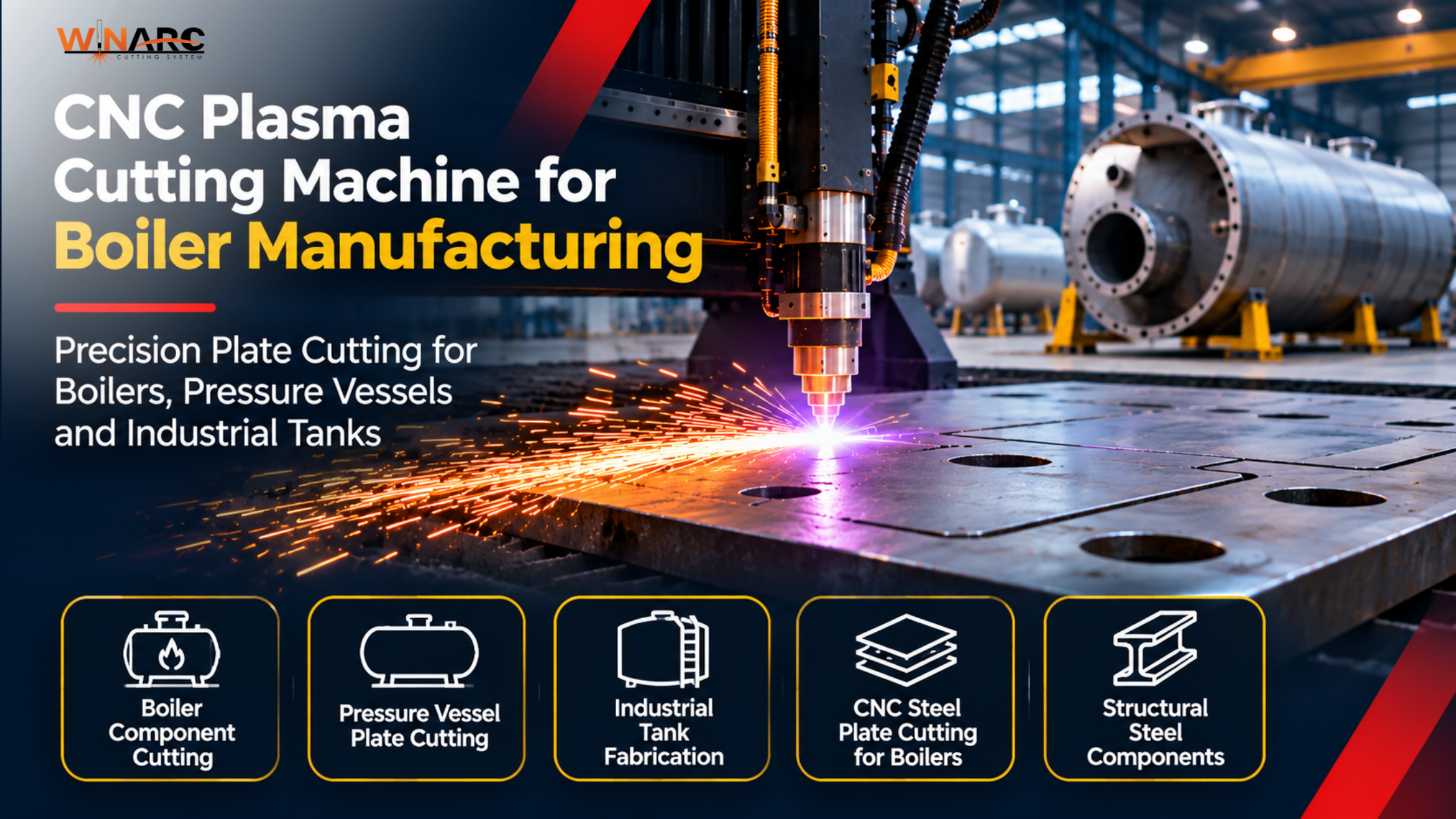
# CNC Plasma Cutting Machine for Boiler Manufacturing: A Complete Guide
Boiler manufacturing requires precision, consistency and dependable production processes. From cutting boiler shell components to preparing plates for industrial tanks and pressure vessels, manufacturers work with thick steel plates, complex shapes and demanding fabrication requirements.
A **CNC plasma cutting machine for boiler manufacturing** can help streamline these operations by automating steel plate cutting, improving repeatability and reducing manual cutting work.
For boiler and pressure vessel manufacturers, selecting the right cutting technology is an important step toward improving production efficiency, maintaining component quality and supporting long-term manufacturing growth.
In this guide, we explore how CNC plasma cutting machines support boiler manufacturing, their applications, important machine features and what manufacturers should consider before investing.
## What Is a CNC Plasma Cutting Machine?
A CNC plasma cutting machine uses a computer-controlled cutting torch to cut electrically conductive metals such as carbon steel, stainless steel and aluminium.
The machine follows a programmed cutting path generated from a CAD drawing or part design. A high-temperature plasma arc melts the metal, while a high-velocity gas stream removes the molten material from the cut.
Unlike manual cutting, CNC plasma cutting automates the movement of the torch across the plate. This allows manufacturers to cut multiple components with consistent shapes and repeatable dimensions.
For boiler manufacturing, CNC plasma cutting is particularly useful for producing plate components, support structures, brackets, stiffeners and other fabricated parts.
## Why Boiler Manufacturers Use CNC Plasma Cutting
Boiler manufacturing involves a wide range of steel components. Some parts require large plate profiles, while others involve holes, slots, openings and custom shapes.
A CNC plasma cutting machine can support these requirements through several practical advantages.
### 1. Consistent Plate Cutting
Manual cutting can result in variations between components, especially when manufacturing multiple parts from the same drawing.
CNC plasma cutting follows a programmed path, helping maintain consistency across production batches. This is useful when cutting repeated components for boiler assemblies, supports and structural frames.
### 2. Improved Production Productivity
Automated cutting reduces the need for repeated manual marking and torch movement.
Once the cutting program is prepared, the machine can process multiple parts from a plate with less operator intervention. This helps manufacturers improve workflow and plan production more efficiently.
### 3. Better Utilisation of Steel Plates
Boiler manufacturers often process large steel plates that can represent a significant portion of material cost.
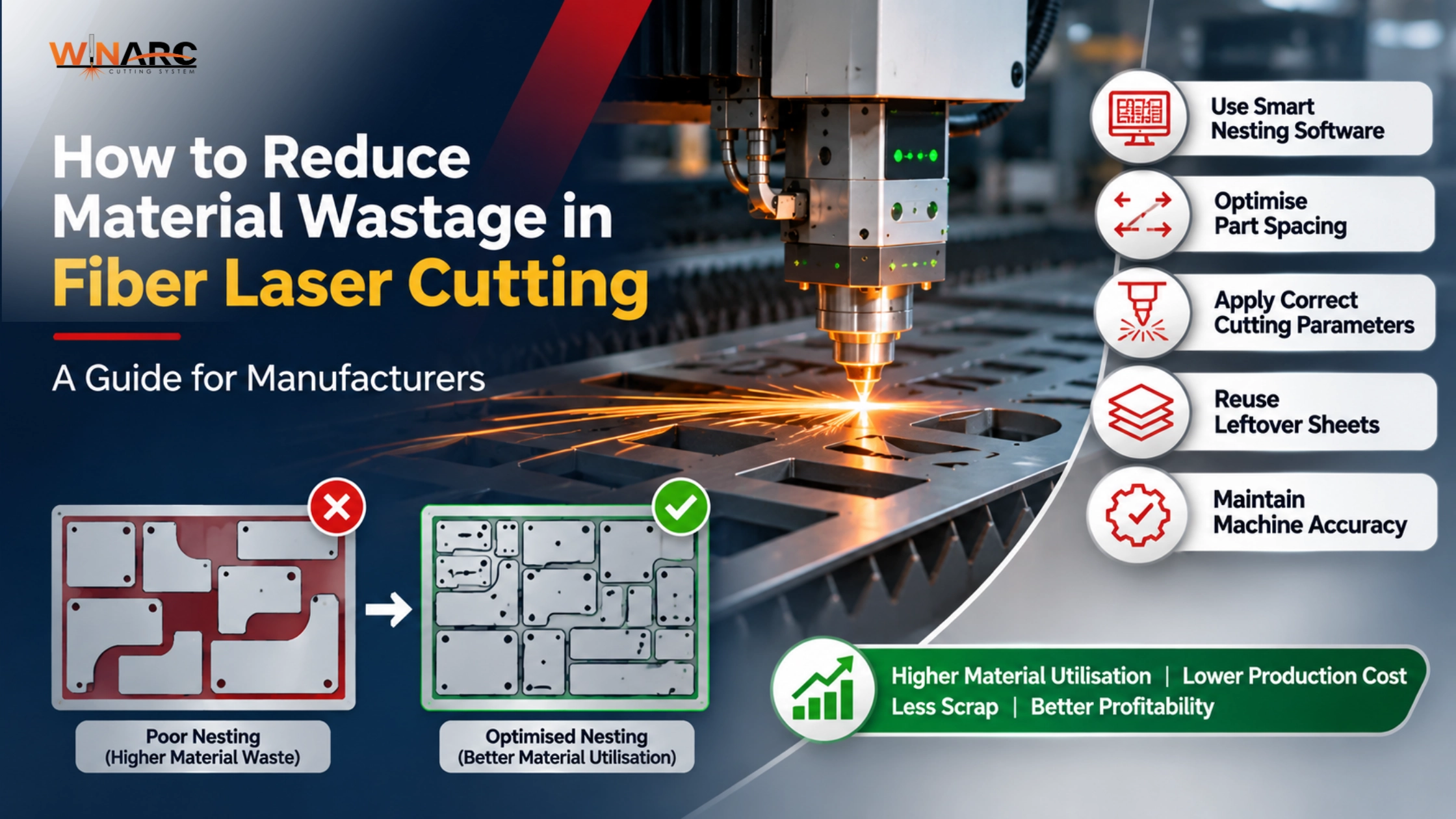
Nesting software can arrange multiple components within a plate to improve material utilisation. Efficient nesting helps reduce unused areas and manage leftover material for future jobs.
Actual material savings depend on component geometry, plate dimensions, cutting clearances and nesting efficiency.
### 4. Flexible Manufacturing
Boiler and tank fabrication may involve different component sizes and designs.
A CNC plasma cutting machine can be reprogrammed for different parts, making it suitable for manufacturers handling varied production requirements rather than only high-volume identical components.
## Applications of CNC Plasma Cutting in Boiler Manufacturing
A CNC plasma cutting machine for boiler manufacturing can be used across several fabrication operations, depending on the material, thickness, required edge quality and machine configuration.
### Boiler Shell and Plate Components
CNC plasma cutting can be used to cut selected plate profiles and flat components associated with boiler fabrication.
These may include:
– Plate sections and custom profiles
– Access openings and cut-outs
– Support plates and mounting components
– Reinforcement plates
– Brackets and stiffeners
For pressure-retaining components, the cutting process must be selected according to the applicable design requirements, material specifications and quality procedures.
### Pressure Vessel Fabrication
Pressure vessels require carefully prepared components that fit together according to approved engineering drawings.
A **pressure vessel plate cutting machine** can help produce plate profiles, openings and related components used during vessel fabrication.
CNC plasma cutting may be suitable for certain pressure vessel parts, particularly where plate thickness and edge-quality requirements match the capabilities of the selected system.
Manufacturers should evaluate whether additional machining, grinding or edge preparation is required before welding.
### Industrial Tank Manufacturing
Industrial tanks are used in sectors such as chemical processing, water treatment, energy and manufacturing.
An **industrial tank manufacturing cutting machine** can support the production of tank-related components such as:
– Base plates and support plates
– Tank reinforcement components
– Mounting brackets
– Structural frames
– Access and service openings
For large tank fabrication projects, a suitable CNC cutting table can help process a variety of plate sizes and component geometries.
### Boiler Frames and Structural Components
Boiler installations often include supporting structures, platforms, frames and mounting assemblies.
CNC plasma cutting can produce structural components such as gusset plates, connection plates, brackets and custom profiles.
These applications benefit from repeatable cutting paths and the ability to process multiple components from a single plate.
## CNC Steel Plate Cutting for Boilers: Important Considerations
Successful **CNC steel plate cutting for boilers** depends on more than the cutting machine alone. Manufacturers should consider the complete production process.
### Material Grade and Plate Thickness
Different steel grades respond differently to thermal cutting.
Before selecting a machine, identify the materials commonly processed, their thickness range and the required cutting quality.
The machine’s recommended cutting range should be evaluated against the actual plasma power source, torch, gas configuration and cutting parameters.
Maximum severance thickness should not be treated as the same as recommended production cutting thickness.
### Cutting Accuracy and Edge Quality
Boiler and pressure vessel components may require specific dimensional tolerances and edge conditions.
Manufacturers should assess the expected cut quality for their actual material thicknesses and component designs.
For critical components, trial cuts and dimensional inspection can help establish whether the process meets the required fabrication tolerances.
### Plate Size and Machine Table
The cutting table should accommodate the plate sizes commonly used in production.
A larger table may help process larger components and reduce the need for multiple setups. However, the table size should match the manufacturer’s actual material handling and factory space requirements.
### CNC Controller and Nesting Software
A reliable CNC controller helps execute cutting programs accurately and consistently.
Nesting software can also help manufacturers:
– Arrange parts efficiently on a plate
– Reduce unnecessary cutting movements
– Manage common-line cutting where suitable
– Improve production planning
– Track plate utilisation
Software capabilities and licensing may vary depending on the machine configuration.
## Plasma Cutting vs. Laser Cutting vs. Oxy-Fuel Cutting
Boiler and pressure vessel manufacturers may use different cutting technologies depending on their production requirements.
| Cutting technology | Common consideration |
|—|—|
| CNC Plasma Cutting | Suitable for many conductive metal plate applications where cutting speed, flexibility and plate thickness requirements align |
| Fiber Laser Cutting | Often selected for high precision, fine features and excellent edge quality on suitable material thicknesses |
| CNC Oxy-Fuel Cutting | Commonly considered for heavy carbon steel plate applications and thicker material ranges |
There is no single cutting technology that is ideal for every boiler manufacturing operation.
The right choice depends on material grade, plate thickness, required edge quality, production volume, operating cost and downstream fabrication requirements.
For manufacturers processing a broad range of steel plate components, CNC plasma cutting can offer a practical balance of flexibility and productivity.
## How to Choose a Plasma Cutting Machine for Tank Fabrication
A **plasma cutting machine for tank fabrication** should be selected based on the manufacturer’s current and future production needs.
Before purchasing, consider the following factors.
### 1. Define Your Cutting Requirements
List the plate materials and thicknesses used regularly in production.
Separate routine production thicknesses from occasional maximum-thickness requirements. This helps identify a machine that performs reliably during everyday manufacturing.
### 2. Evaluate the Plasma Power Source
The plasma power source has a direct influence on cutting capability and process performance.
Ask the supplier for recommended production cutting parameters for the materials and thicknesses you intend to process.
### 3. Check the Cutting Table Configuration
Consider table dimensions, plate loading methods, workpiece support and accessibility.
For larger tank and boiler components, a suitable table configuration can reduce handling challenges and improve workflow.
### 4. Review CNC and Software Features
Look for a user-friendly CNC controller and compatible CAD/CAM nesting software.
Features such as automatic nesting, cutting sequence optimisation and job management can help improve production efficiency.
### 5. Consider Service and Technical Support
Machine performance also depends on maintenance, consumables and technical assistance.
Evaluate the availability of service support, operator training, spare parts and assistance with cutting parameter optimisation.
## Safety and Quality in Boiler Plate Cutting
Boiler and pressure vessel manufacturing involves critical components, so cutting operations should follow established engineering and quality procedures.
Manufacturers should ensure that:
– Material identification and traceability are maintained
– Approved drawings and cutting programs are followed
– Cutting parameters are appropriate for the material
– Components are inspected against specified tolerances
– Required edge preparation is completed before welding
– Operators follow appropriate plasma cutting safety procedures
A CNC plasma cutting machine supports the cutting process, but it does not by itself establish pressure-vessel compliance or guarantee the quality of the finished vessel.
Applicable codes, design requirements, inspection procedures and welding qualifications must be addressed separately by the manufacturer.
## Improve Boiler Manufacturing with CNC Plasma Cutting
As boiler, pressure vessel and industrial tank manufacturers look to improve productivity, CNC plasma cutting offers a flexible solution for processing a wide range of steel plate components.
A well-selected CNC plasma cutting machine for boiler manufacturing can help automate cutting operations, improve component repeatability, support efficient plate utilisation and reduce dependence on manual cutting.
The key is to select a machine based on real production requirements—including material thickness, plate dimensions, edge quality, software capabilities and technical support.
At Winarc, manufacturers can explore CNC cutting solutions designed for industrial metal fabrication applications. Choosing the right machine configuration can help build a more efficient and dependable cutting workflow.
**Looking for a CNC plasma cutting solution for boiler, pressure vessel or tank fabrication?** Explore Winarc’s CNC cutting machine range and discuss your material, thickness and production requirements with the team.
[Explore Winarc CNC Cutting Machines](https://winarc.in/products/)
## Frequently Asked Questions
### Is a CNC plasma cutting machine suitable for boiler manufacturing?
Yes. CNC plasma cutting can be suitable for many boiler manufacturing applications, including plate profiles, support components, brackets, stiffeners and selected fabricated parts. Suitability depends on the material, thickness and required cut quality.
### Can CNC plasma cutting be used for pressure vessel plates?
It can be used for selected pressure vessel plate components when the cutting process meets the applicable material, dimensional and quality requirements. Additional edge preparation or machining may be necessary.
### What should I consider when buying a pressure vessel plate cutting machine?
Consider material grade, production cutting thickness, plate size, edge quality, CNC control, nesting software, table configuration and service support.
### Is plasma cutting suitable for industrial tank manufacturing?
CNC plasma cutting is commonly considered for industrial tank fabrication components such as support plates, brackets, reinforcement parts and custom steel profiles. The correct machine configuration depends on the tank design and production requirements.
### Which is better for boiler manufacturing: plasma or laser cutting?
The choice depends on plate thickness, required precision, edge quality, production volume and operating costs. Plasma may be suitable for a broad range of plate fabrication work, while laser cutting is often selected for finer features and higher precision on suitable materials.