In today’s competitive manufacturing landscape, reducing production waste is essential for improving profitability, maintaining product quality, and using resources efficiently. From metal fabrication and automotive components to furniture manufacturing and industrial equipment, manufacturers are constantly looking for ways to optimize material usage without compromising precision or productivity.
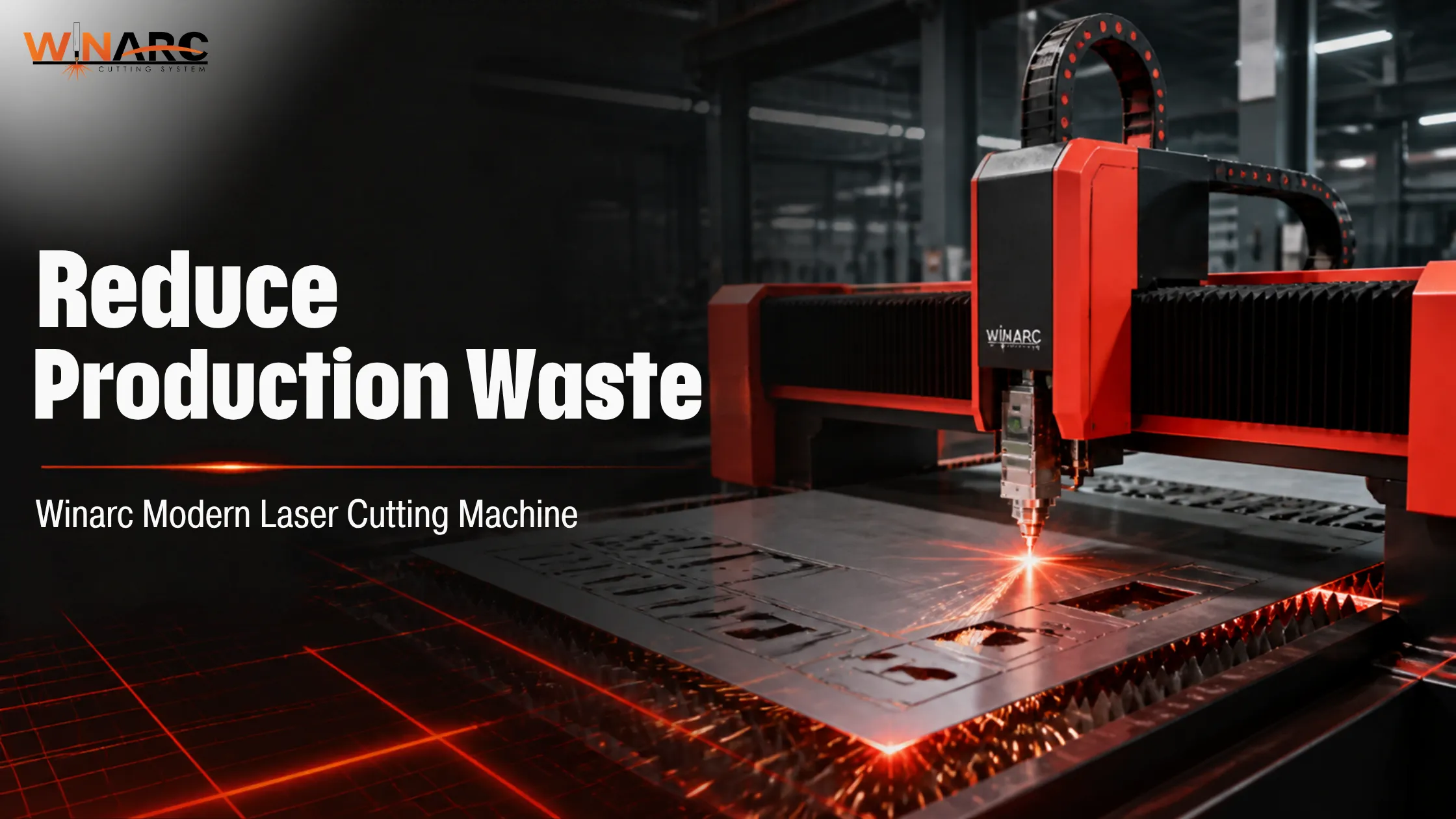
This is where modern laser cutting machines make a significant difference. By combining precision cutting, computer-controlled operations, and optimized cutting processes, advanced laser cutting technology helps manufacturers minimize material wastage, reduce rework, and improve overall production efficiency.
At Winarc, we understand that efficient manufacturing goes beyond cutting metal. It involves helping businesses make better use of raw materials, streamline operations, and achieve consistent results. In this blog, we explore how Winarc’s modern laser cutting machines can help manufacturers reduce waste and build more efficient production processes.
What Are Modern Laser Cutting Machines?
Modern laser cutting machines are advanced manufacturing systems that use a focused laser beam to cut materials according to programmed designs. In metal fabrication, fiber laser cutting technology is widely used to process sheet metal and other compatible metal workpieces with high precision.
Unlike conventional cutting methods that rely on mechanical tools, laser cutting uses concentrated energy to cut material along a defined path. When integrated with computer numerical control (CNC) systems, the machine follows digital cutting instructions to produce components according to the required design.
Modern laser cutting machines can help manufacturers achieve:
- Precise cutting based on digital design files.
- Consistent component dimensions across production batches.
- Efficient cutting of complex shapes and intricate profiles.
- Reduced dependence on manual cutting operations.
- Better material utilization through effective cutting layouts.
- Improved production planning and process consistency.
These capabilities make laser cutting technology a valuable investment for businesses looking to improve manufacturing efficiency while controlling material costs.
Why Is Material Waste a Challenge in Manufacturing?
Material waste can significantly affect manufacturing costs. Even a small amount of unnecessary scrap generated during every production cycle can accumulate into substantial losses over time.
Several factors contribute to material waste in conventional or poorly optimized cutting processes.
1. Inefficient Material Layouts
When components are arranged inefficiently on a metal sheet, unused spaces remain between cutting profiles. These leftover areas may not be large enough to accommodate other components, resulting in avoidable scrap.
2. Cutting Inaccuracies
Inconsistent cutting dimensions can lead to components that do not meet design specifications. Such parts may require additional processing or become unusable, increasing material consumption.
3. Rework and Rejected Components
Errors during production can result in defective parts. Reproducing these components requires additional raw material, machine time, and labor.
4. Excessive Setup and Trial Cuts
Manual adjustments and repeated test cuts can consume material before actual production begins. Frequent changes between jobs may also increase setup-related waste.
5. Inconsistent Production Quality
Variations between components can create difficulties during assembly and fabrication. Parts that fail to meet the required tolerances may need correction or replacement.
Manufacturers can address many of these challenges by combining suitable cutting technology with effective production planning and process control.
7 Ways Winarc’s Modern Laser Cutting Machines Help Reduce Production Waste
1. Precision Cutting Minimizes Material Loss
One of the most important advantages of modern laser cutting machines is their ability to follow programmed cutting paths with high precision.
In metal fabrication, accurate cutting helps manufacturers produce components that match the intended dimensions and design requirements. This reduces the likelihood of dimensional errors that can lead to rejected parts or unnecessary rework.
For manufacturers producing multiple components from a single sheet, precision also helps maintain consistent spacing and cutting paths.
How this helps reduce waste:
- Minimizes errors caused by inconsistent cutting.
- Reduces the likelihood of producing unusable components.
- Helps maintain dimensional consistency across production batches.
- Limits material consumption associated with avoidable rework.
With an appropriately configured Winarc laser cutting system and a well-optimized production process, manufacturers can improve cutting accuracy while making more effective use of their raw materials.
2. Optimized Nesting Improves Sheet Utilization
Material utilization depends not only on cutting accuracy but also on how components are arranged before cutting begins.
Nesting is the process of positioning multiple component designs within a sheet or plate to make the best possible use of the available material. Effective nesting reduces unnecessary gaps between parts while maintaining the spacing required for the cutting process.
For example, a manufacturer producing brackets, panels, mounting plates, and other metal components may be able to arrange several different shapes on the same sheet rather than cutting each component separately.
A suitable nesting solution can help manufacturers:
- Fit more components onto a single sheet.
- Reduce unused spaces between cutting profiles.
- Minimize leftover material that cannot be reused.
- Plan cutting jobs more efficiently.
- Improve raw material utilization across production batches.
Modern laser cutting machines can be integrated into workflows that use CAD/CAM software and nesting tools. Actual savings depend on part geometry, sheet dimensions, cutting constraints, and the quality of the nesting strategy.
For manufacturers processing large quantities of metal components, even incremental improvements in sheet utilization can make a meaningful difference to material costs.
3. Consistent Cutting Quality Reduces Rework
Every rejected component represents more than wasted material. It also consumes machine time, labor, energy, and production capacity.
Modern CNC laser cutting machines execute programmed designs consistently, helping manufacturers reduce variations associated with manual cutting operations.
When machine settings, material specifications, and cutting parameters are correctly configured, manufacturers can achieve more predictable results across repeated production runs.
This is particularly valuable for industries that require consistent dimensions and repeatable component quality, including:
- Automotive component manufacturing.
- Electrical enclosures and control panels.
- Industrial machinery and equipment.
- Metal furniture manufacturing.
- Sheet metal fabrication.
- General engineering applications.
By reducing avoidable cutting errors, manufacturers can lower the risk of rejected components and minimize the need to reproduce parts.
It is important to remember that consistent results also depend on material quality, machine maintenance, correct parameter selection, and operator expertise.
4. Reduced Rework Helps Control Production Costs
Material waste is not limited to scrap left on the shop floor. Rework is another source of hidden manufacturing costs.
When a component is cut incorrectly, manufacturers may need to repeat the operation, modify the part, or produce a replacement. Each of these activities consumes additional resources.
Modern laser cutting machines can help reduce rework by following digital designs and maintaining consistent cutting processes.
For manufacturers, this can mean:
- Fewer resources spent correcting avoidable cutting errors.
- Less raw material consumed in replacement components.
- Reduced disruption to production schedules.
- Better use of machine operating hours.
- Improved coordination between cutting and downstream processes.
Reducing rework also helps manufacturers maintain smoother workflows. Instead of spending time correcting defects, production teams can focus on completing planned orders efficiently.
5. Flexible Cutting Supports Better Production Planning
Manufacturers often need to produce components in different shapes, sizes, and quantities. Traditional tooling requirements can make frequent design changes more complicated, depending on the cutting method being used.
CNC laser cutting allows manufacturers to process different programmed profiles without requiring a dedicated physical cutting tool for every design.
This flexibility is useful when manufacturing custom components, changing product designs, or handling varied customer requirements.
For example, a metal furniture manufacturer may need to produce decorative panels, support brackets, mounting plates, and structural components. With suitable programming and production planning, different profiles can be incorporated into a cutting job.
This can help manufacturers:
- Reduce material consumed during design changes and trial production.
- Improve planning for small and medium-sized production batches.
- Respond more efficiently to customized orders.
- Reduce unnecessary intermediate operations where the process permits.
- Make better use of available sheet material.
The result is a more adaptable production process in which material usage can be considered during job planning rather than only after cutting is complete.
6. Less Manual Intervention Can Reduce Human Errors
Manual cutting and repeated handling can introduce inconsistencies, particularly when production involves complex shapes or repetitive components.
Modern CNC laser cutting machines use programmed instructions to control the cutting path. Once the job has been correctly programmed and set up, the machine can execute the cutting sequence with less dependence on continuous manual path control.
This can help reduce errors associated with manual cutting and improve repeatability.
However, automation does not eliminate the need for skilled operators. Material loading, job verification, correct machine settings, maintenance, and quality inspection remain important parts of an efficient cutting process.
When these activities are managed properly, manufacturers can establish a more consistent workflow and reduce avoidable losses caused by production errors.
7. Better Process Control Supports Resource Efficiency
Reducing waste requires manufacturers to understand how materials move through the production process, from raw sheet loading to finished component inspection.
Modern laser cutting systems support a more structured, digitally controlled cutting workflow. When combined with appropriate software, production planning, and quality checks, this can help manufacturers identify opportunities to improve efficiency.
For example, production teams can review:
- Material consumption per job.
- Scrap generated during cutting.
- Component rejection and rework rates.
- Cutting time and machine utilization.
- Differences between planned and actual material usage.
Tracking these indicators helps manufacturers identify recurring problems and make informed decisions about process improvements.
Winarc’s modern laser cutting machines can form part of this broader approach to manufacturing efficiency, helping businesses align cutting operations with their material utilization and production goals.
How Reduced Material Waste Improves Manufacturing Profitability
The benefits of reducing waste extend beyond saving raw materials. Better material utilization can influence several aspects of a manufacturing business.
Lower Raw Material Costs
When more usable components can be produced from a sheet, the material cost allocated to each component may decrease.
This is particularly relevant for manufacturers working with expensive metals or processing large quantities of sheet material.
Improved Production Efficiency
Reducing rework and rejected components allows production resources to be used more effectively. Teams can spend less time correcting errors and more time completing planned work.
More Predictable Manufacturing Costs
Monitoring material consumption and scrap generation helps businesses estimate job costs more accurately and identify where improvements are needed.
Better Use of Production Capacity
When avoidable rework decreases, machines and operators may have more time available for productive manufacturing activities.
Support for Responsible Manufacturing
Efficient material utilization helps reduce unnecessary consumption of raw materials. Where scrap is generated, appropriate segregation and recycling practices can further support responsible resource management.
The financial benefit varies by application, material type, production volume, and operating conditions. Manufacturers should evaluate waste reduction alongside machine operating costs, maintenance, consumables, and overall productivity.
Which Industries Can Benefit from Waste Reduction Through Laser Cutting?
Modern laser cutting machines are suitable for a wide range of manufacturing applications, depending on the machine configuration, material, thickness, and production requirements.
Metal Fabrication
Fabrication businesses can use laser cutting to produce brackets, plates, panels, profiles, and custom metal components. Accurate cutting and optimized nesting can help improve material utilization across varied jobs.
Automotive Manufacturing
Automotive suppliers often produce multiple metal components that require consistent dimensions. Precision cutting can help reduce avoidable defects and improve the repeatability of component production.
Furniture Manufacturing
Metal furniture manufacturers can process frames, brackets, decorative panels, supports, and other components. Efficient nesting can help make better use of sheets when producing multiple designs.
Electrical and Control Panel Manufacturing
Enclosures, mounting plates, panels, and related components can benefit from accurately programmed cutting processes and consistent dimensions.
Industrial Machinery Manufacturing
Manufacturers producing machine guards, structural components, covers, and mounting parts can use laser cutting to process designs with varied geometries.
General Engineering
Engineering businesses handling custom jobs and short production runs can benefit from the flexibility of CNC-based cutting, especially when frequent design changes are part of their workflow.
To explore how laser cutting technology serves different manufacturing applications, read Winarc’s related article: Laser Cutting Machine Manufacturers in India for Diverse Industries.
How to Choose the Right Modern Laser Cutting Machine for Waste Reduction
Selecting a laser cutting machine involves more than comparing machine specifications or laser power. Manufacturers should evaluate how well the equipment fits their materials, production requirements, and long-term operating goals.
Consider the following factors before making a decision.
1. Material Type and Thickness
Identify the metals you process regularly and the thickness range required for your applications. These factors influence the suitable machine configuration and cutting parameters.
2. Production Volume
Consider your daily cutting requirements, batch sizes, and expected future demand. The right machine should support your production needs without creating unnecessary operational costs.
3. Cutting Accuracy and Repeatability
Evaluate whether the machine can meet your component tolerances and quality requirements under your intended operating conditions.
4. Software and Nesting Compatibility
Check whether the proposed workflow supports suitable CAD/CAM tools and nesting capabilities. Efficient programming and material layout are essential to reducing sheet waste.
5. Operating and Maintenance Requirements
Consider consumables, maintenance schedules, operator training, energy use, and other recurring expenses. These costs affect the overall economics of the cutting process.
6. Technical Support and Service
Reliable installation, operator training, maintenance support, and troubleshooting assistance can help manufacturers maintain consistent production and minimize avoidable downtime.
7. Total Cost of Ownership
Compare the total expected cost of operating the machine with the benefits it can deliver in material utilization, production efficiency, quality, and output.
A suitable machine is one that meets your application requirements and supports measurable improvements in your overall manufacturing process.
How to Measure Waste Reduction After Installing a Laser Cutting Machine
To understand whether a new cutting system is delivering results, manufacturers should establish a baseline before implementation and measure performance after the process has stabilized.
The following indicators can help.
| Metric | What it measures |
|---|---|
| Material utilization rate | The proportion of input material converted into usable components |
| Scrap rate | The proportion of material discarded during production |
| Rejection rate | The percentage of finished components that fail quality requirements |
| Rework rate | The frequency of components requiring correction or additional processing |
| Material cost per component | The raw material cost allocated to each usable part |
| Production cycle time | The time required to complete a defined production job |
For example, a manufacturer can compare how many usable components were produced from the same sheet dimensions before and after optimizing its laser cutting workflow.
A simple material utilization calculation is:
Material Utilization (%) = (Area of Usable Parts ÷ Total Input Sheet Area) × 100
This calculation provides a useful starting point, although manufacturers should define how they account for kerf, reusable remnants, unusable edge material, and other scrap when comparing results.
By reviewing these metrics regularly, businesses can identify improvements, uncover recurring inefficiencies, and make better decisions about production planning.
Why Consider Winarc for Modern Laser Cutting Machines?
Choosing the right laser cutting technology is an important step toward building a more efficient manufacturing operation.
Winarc provides laser cutting machine solutions for industrial manufacturing applications. For businesses looking to reduce waste, improve cutting consistency, and optimize production, the right machine configuration should be selected according to material specifications, component geometry, required output, and operating conditions.
When evaluating Winarc’s modern laser cutting machines, manufacturers should consider how the proposed solution fits into their complete production workflow, including design preparation, nesting, cutting parameters, quality inspection, and scrap management.
A well-planned laser cutting process can help businesses focus on three important objectives:
- Precision: Produce components according to the required design and dimensional specifications.
- Efficiency: Improve material utilization and reduce avoidable rework through appropriate programming and process control.
- Consistency: Establish repeatable cutting workflows that support reliable production quality.
The most effective results come from combining suitable equipment with optimized cutting layouts, trained operators, preventive maintenance, and continuous performance monitoring.
Manufacturers can explore Winarc’s laser cutting solutions and identify the configuration best suited to their production requirements.
Conclusion: Reduce Waste and Improve Production Efficiency with Winarc
Material waste affects more than the cost of raw materials. It can also increase rework, consume production capacity, disrupt schedules, and reduce overall manufacturing profitability.
Modern laser cutting machines help manufacturers address these challenges through precision cutting, CNC-controlled operations, flexible programming, and integration with material optimization workflows.
When combined with effective nesting, suitable machine settings, quality control, and regular performance measurement, laser cutting technology can help businesses make better use of raw materials and establish more efficient production processes.
For manufacturers seeking to improve material utilization and production consistency, Winarc’s laser cutting solutions are worth evaluating against their specific application requirements.
Ready to optimize your cutting process? Visit Winarc to explore laser cutting machine solutions for your manufacturing needs and discuss the right configuration for your production goals.
Frequently Asked Questions (FAQs)
1. What are modern laser cutting machines used for?
Modern laser cutting machines are used to cut metal sheets, plates, and compatible materials into components with programmed shapes and dimensions. Applications include metal fabrication, automotive components, furniture, electrical enclosures, and industrial machinery.
2. How do modern laser cutting machines reduce material waste?
They can help reduce waste through accurate cutting paths, repeatable CNC operations, and integration with nesting software that arranges components efficiently on a sheet. The results depend on part geometry, material, cutting parameters, and production planning.
3. Does laser cutting eliminate material waste completely?
No. Laser cutting still generates kerf, edge remnants, and other scrap. However, suitable machine configuration, optimized nesting, and effective scrap management can help reduce avoidable waste.
4. What is nesting in laser cutting?
Nesting is the process of arranging component designs on a sheet or plate to maximize material utilization while maintaining the spacing and cutting requirements needed for production.
5. Can laser cutting machines reduce production costs?
They can help lower costs by improving material utilization, reducing avoidable rework, and supporting consistent production. Actual savings depend on the application, machine operating costs, material prices, and production volume.
6. Which industries benefit from modern laser cutting machines?
Industries such as metal fabrication, automotive manufacturing, furniture production, electrical equipment manufacturing, industrial machinery, and general engineering can benefit from laser cutting, depending on their application requirements.
7. How can manufacturers measure material waste reduction?
Manufacturers can track material utilization, scrap rate, rejection rate, rework rate, and material cost per usable component. Comparing these indicators before and after process improvements helps quantify the results.