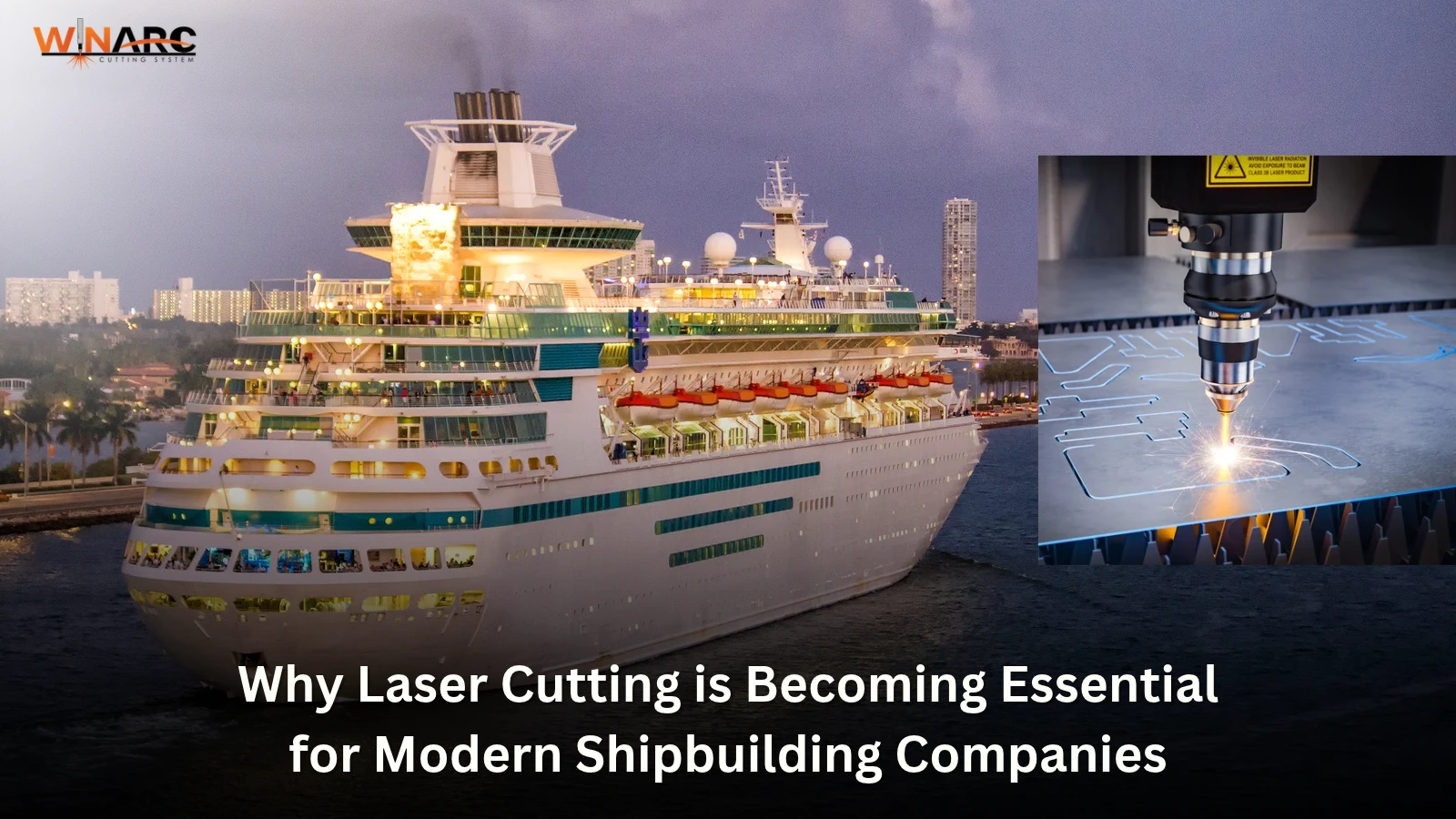
Shipbuilding is in the middle of one of its strongest cycles in years. Global new ship orders climbed sharply through 2024, with particularly strong demand for large container ships, LNG carriers, and greener, next generation vessels, according to shipping market data from Clarksons Research. In response, major shipbuilders across China, South Korea, and Japan have been expanding yard capacity and investing heavily in production line upgrades to keep pace with the order book.
That demand surge is putting real pressure on how shipyards cut and fabricate steel. Hull sections, deck plates, bulkheads, and structural members all start with accurate metal cutting, and the yards that are scaling fastest are the ones rethinking how that first step gets done. This is exactly where laser cutting in shipbuilding companies has moved from a nice-to-have to a production necessity.
The Cutting Bottleneck Shipyards Are Facing
Traditional cutting methods, plasma without automation, manual oxyfuel, and older CNC systems, were built for a slower order cadence. As shipbuilders take on more container ships, LNG carriers, and specialized vessels at once, the cutting stage becomes the constraint that determines how fast a hull can move to fabrication and assembly.
A few pressures are converging at once:
- Order backlogs across major shipbuilding nations are longer than they have been in years
- Vessel designs increasingly call for higher grade steel and thicker plate sections
- Environmental regulations are pushing yards toward more complex hull geometries for fuel efficient and alternative fuel vessels
- Labor availability for manual cutting and fitting work remains tight across the industry
Laser cutting addresses each of these pressures directly, which is why it is becoming a standard part of modern shipyard planning rather than a specialty process reserved for smaller components.
Precision That Reduces Rework on Hull Sections
Ship hull fabrication does not tolerate loose tolerances well. Misaligned plate edges create fit-up problems downstream during welding and assembly, and those problems compound across a hull built from hundreds of individual sections. CNC fiber laser cutting holds tight positioning accuracy consistently across a full sheet, which means plate sections arrive at the welding stage ready to fit, not needing manual grinding or re-cutting to correct edge errors.
This matters even more as vessel designs grow more complex, with curved sections, cutouts for piping and cabling, and non-standard structural members that would be slow and error prone to cut manually.
Handling the Thick Steel Shipbuilding Demands
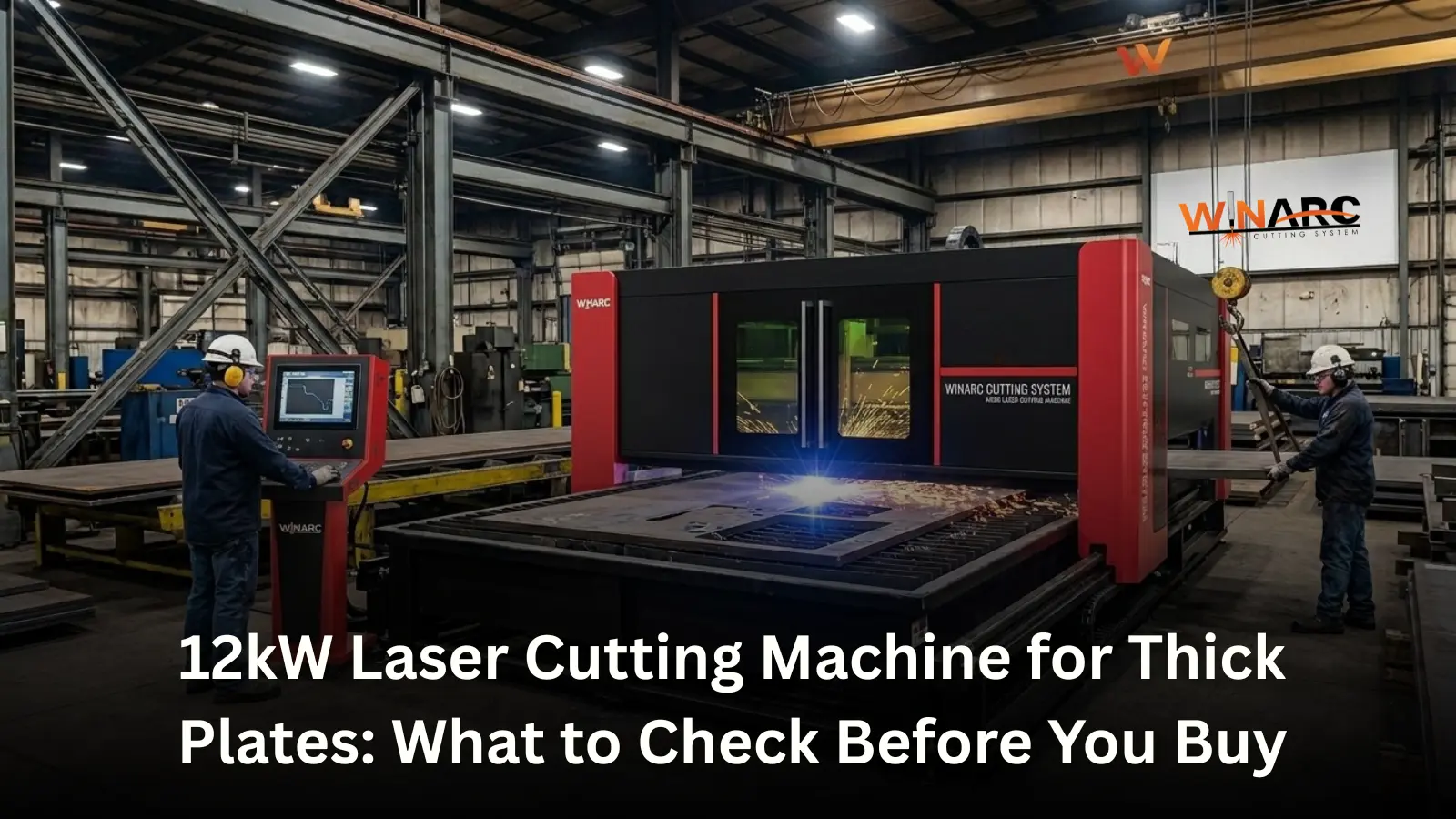
Hull plate, deck plate, and structural steel used in shipbuilding regularly run into the thicker end of what cutting equipment needs to handle, often well beyond what smaller job shop machines are built for. This is one of the clearest differences between a general purpose laser cutter and a machine actually specified for shipyard work.
High power fiber laser systems built for large format, thick plate cutting can process mild steel sections at the thicknesses shipbuilding structural work demands, without the slower cut speeds or edge quality drop-off that lower power machines run into. If you want a closer look at how machine selection changes as plate thickness increases, we cover this in detail in our guide on <a href=”https://winarc.in/blogs/laser-cutting-machine-for-thick-metal-plate-processing/” target=”_blank” rel=”noopener”>laser cutting machines for thick metal plate processing</a>.
Throughput That Matches Capacity Expansion Plans
When a shipyard is expanding capacity to absorb a growing order book, cutting throughput has to scale alongside welding and assembly capacity, or it becomes the new bottleneck. Fiber laser systems with large working areas and high idle and cutting speeds let yards process more plate per shift without adding proportional headcount on the cutting floor.
Large format machines with automatic pallet changers add another layer of throughput, allowing one pallet to be loaded or unloaded while the other is actively cutting, keeping the laser head running with minimal downtime between sheets.
Material Versatility Across Vessel Types
A modern shipyard is rarely working with a single steel grade. Mild steel, stainless steel, and aluminum all show up across different vessel types and different sections of the same hull, from structural steel to interior fit-out components on passenger and specialty vessels. Fiber laser systems handle this range without requiring separate machines or extensive retooling between material changes, which matters when a yard is running multiple vessel programs in parallel.
Nesting Software That Cuts Steel Waste
Steel is one of the largest input costs in shipbuilding, and material waste at the cutting stage compounds fast across a project the size of a vessel hull. Nesting software paired with CNC laser systems arranges part layouts across a sheet to minimize scrap, which has a direct and measurable effect on material cost across a build that consumes hundreds of tons of steel.
Why Yards Are Investing Now, Not Later
The capacity expansion happening across Chinese, South Korean, and Japanese shipyards right now is not a short term response to a single strong order year. It reflects a structural shift toward larger vessels, greener propulsion systems, and tighter delivery timelines, all of which demand faster and more precise fabrication from the first cut onward. Shipbuilders that upgrade cutting capability now are positioning themselves to take on the next wave of orders without hitting a production ceiling later.
Where Winarc Fits In
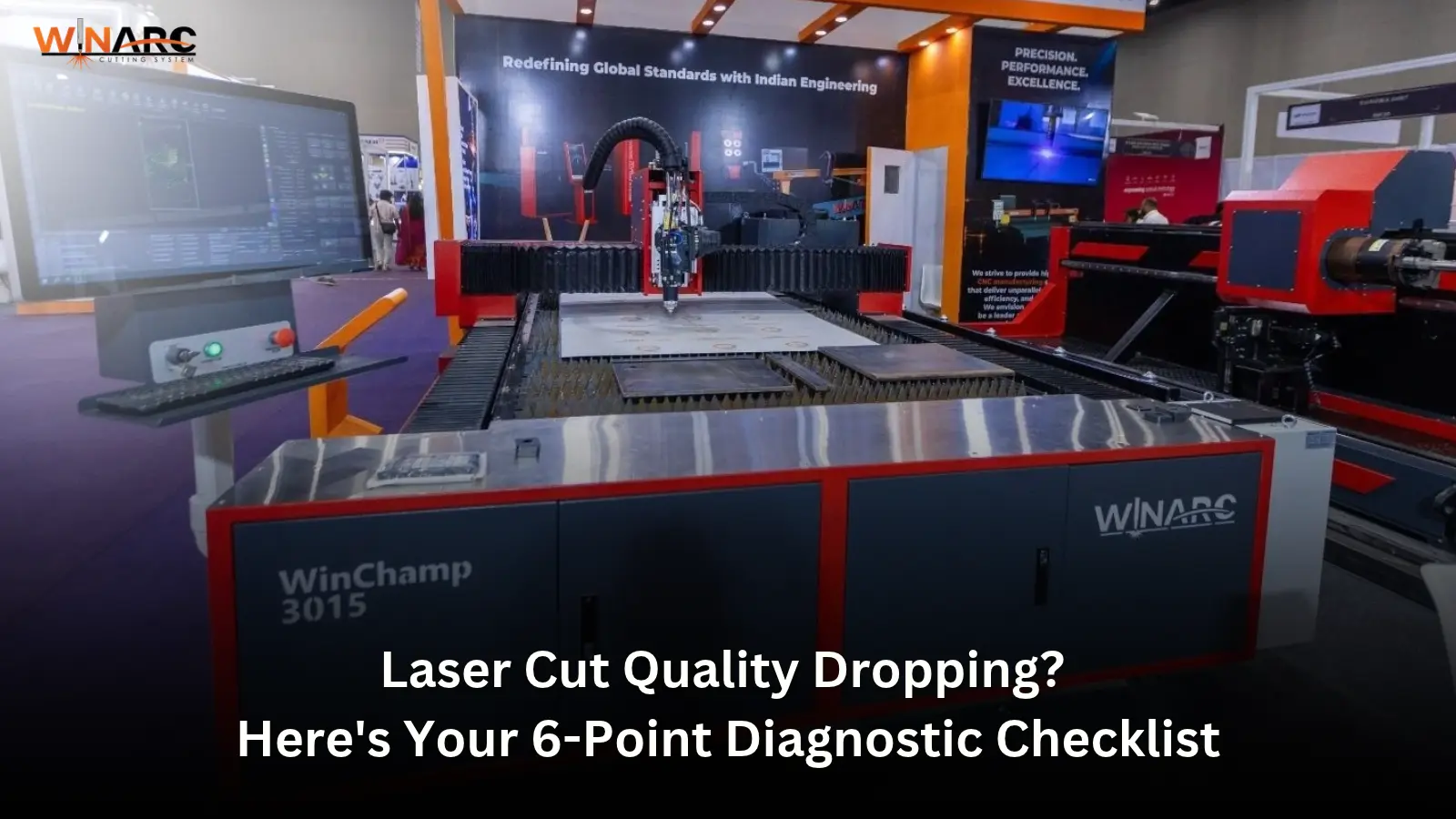
At Winarc Cutting System, our large format fiber laser machines, including the WinChamp series built for extended cutting areas up to 6.5 meters, and the WinMaster range with 6kW Max Photonics laser sources, are engineered for exactly this kind of high volume, thick plate structural cutting. Combined with automatic pallet changers, nesting software, and consistent positioning accuracy, these systems are built to support fabrication at the pace modern shipbuilding demands.
If your yard is evaluating cutting capacity as part of an expansion plan, we are happy to walk through machine specifications against your current plate thickness and throughput requirements.
Traditional methods struggle to match the precision, speed, and consistency that modern order volumes and complex hull designs demand, particularly on thick structural steel where edge quality directly affects welding fit-up.
Yes, high power fiber laser systems designed for large format, thick plate work can process mild steel at the thicknesses common in hull and structural fabrication, though machine selection matters significantly at these thicknesses.
Yes. Nesting software paired with CNC laser cutting optimizes part layout across each sheet, reducing scrap on a project scale where steel is one of the largest cost inputs.