Introduction: Is Your Cutting Process Limiting Your Fabrication Business?
For steel fabricators, cutting is more than just the first step in production. It directly affects material utilization, fabrication quality, production schedules, labour requirements, and overall profitability.
As customer expectations increase and projects become more demanding, conventional cutting methods can make it difficult to maintain consistent output. Manual marking, repetitive measurements, material handling, and time-consuming cutting operations can slow down production and limit the number of orders a fabrication business can handle.
This is where investing in a plasma cutting machine for plates and pipes can become an important step towards modernizing your fabrication operations.
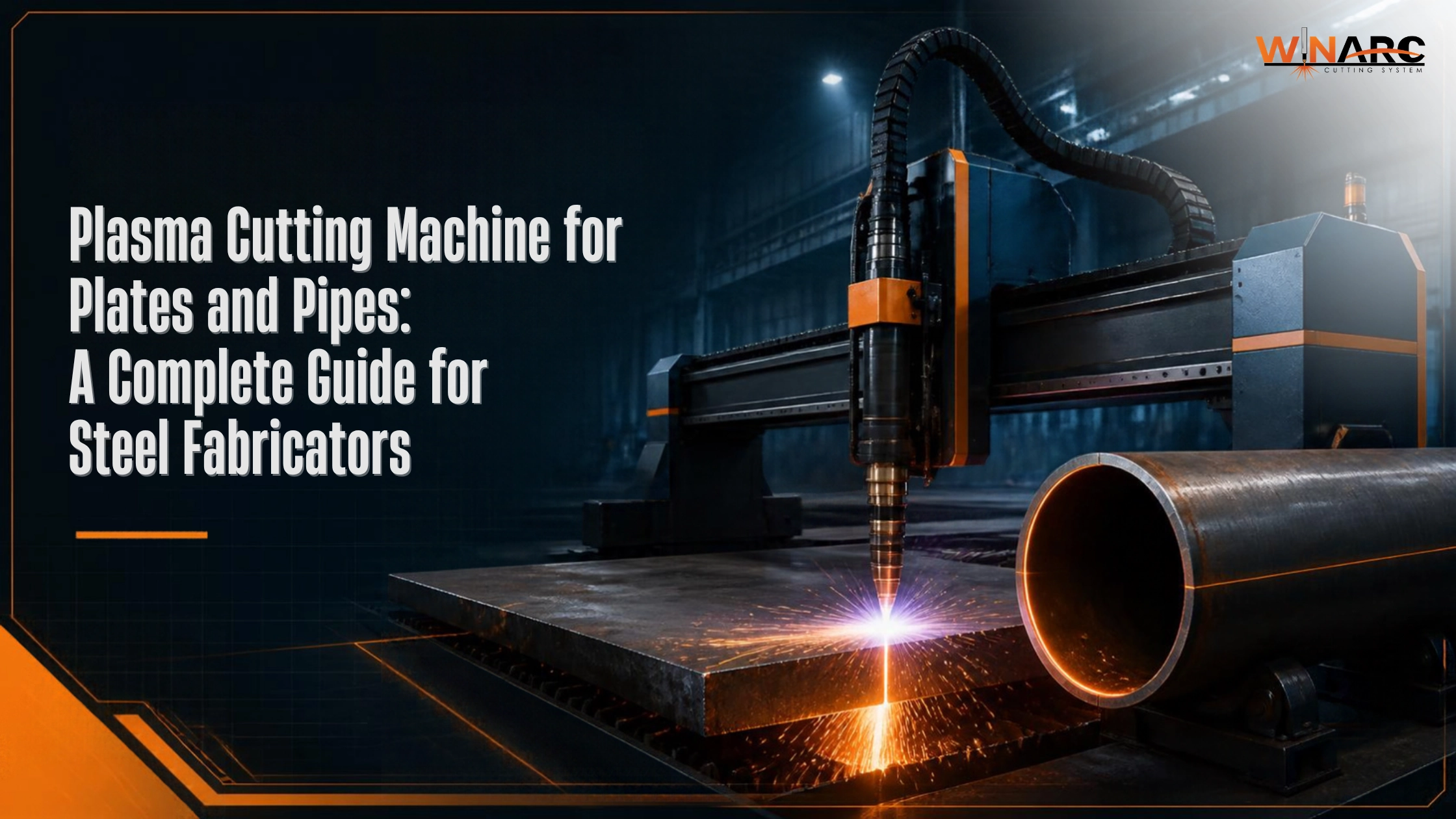
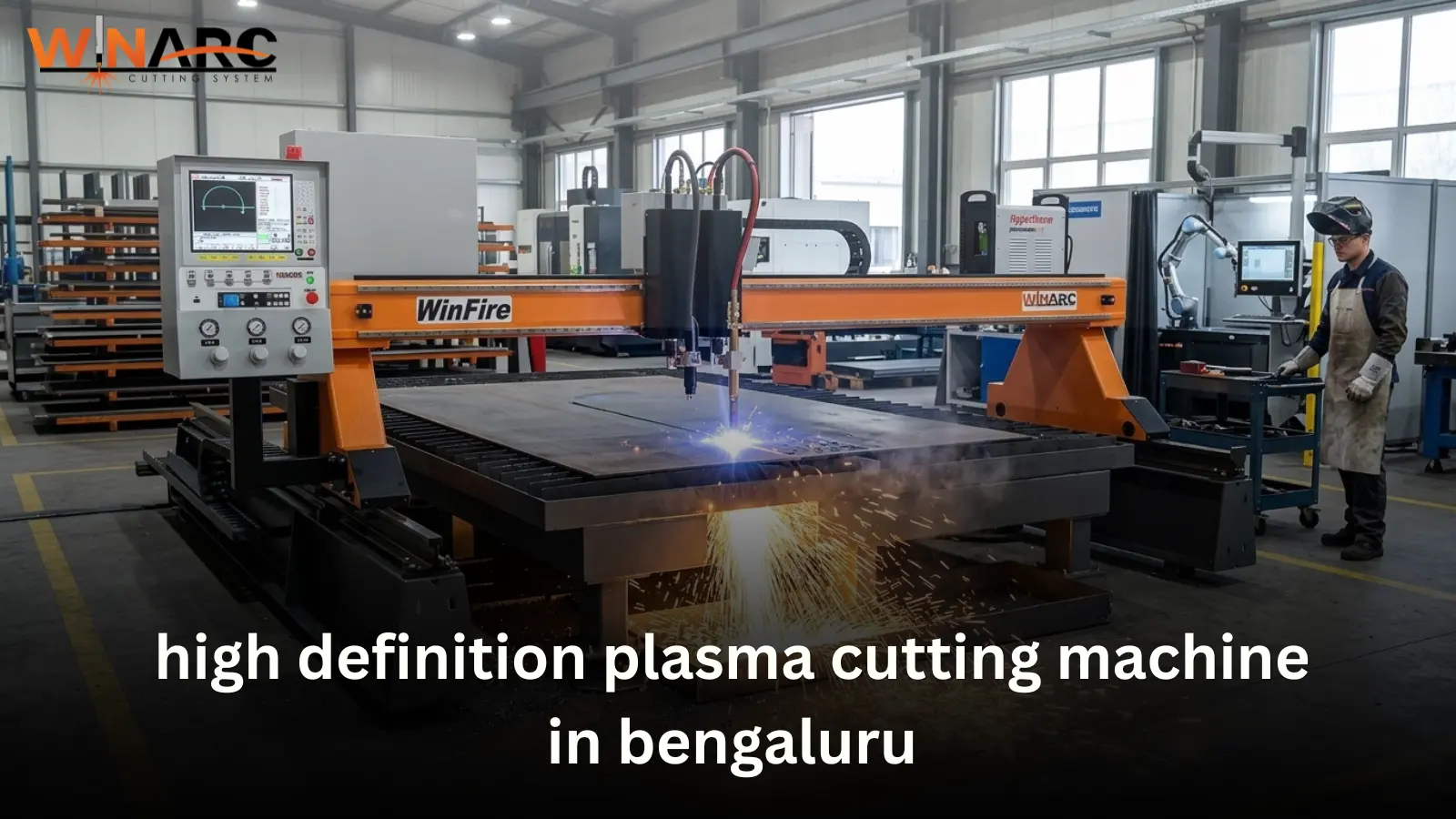
WINARC’s WinFire CNC Plasma & Oxyfuel Cutting Machine is designed for industrial profile-cutting applications. Equipped with a Hypertherm MAXPRO200 plasma source, CNC motion control, and nesting software, the WinFire combines automated cutting with the flexibility of plasma and oxyfuel processes.
For steel fabricators working with structural components, industrial equipment, heavy steel sections, and custom metal profiles, this combination can help create a more organized, productive, and scalable manufacturing process.
In this guide, we’ll explore the machine’s key features, technical specifications, benefits for steel fabricators, and how CNC cutting technology can help transform your business.
What Is a CNC Plasma Cutting Machine?
A CNC plasma cutting machine uses a computer numerical control system to guide a plasma torch along a programmed cutting path. The plasma arc melts electrically conductive metal, while the gas stream removes the molten material to create the cut.
Unlike manual cutting, CNC plasma cutting follows programmed dimensions and shapes. This makes it suitable for producing repeatable profiles, intricate shapes, slots, openings, and other components required in steel fabrication.
Plasma cutting is commonly used for conductive metals such as mild steel, stainless steel, and aluminium, subject to the machine configuration and material thickness.
When integrated with CAD/CAM nesting software, a CNC plasma cutting machine can also help fabricators plan how components are arranged on a plate before cutting begins.
For businesses handling large steel plates and recurring fabrication orders, this can improve production planning and help make better use of available material.
WINARC WinFire: CNC Plasma and Oxyfuel Cutting in One Machine
WINARC’s WinFire CNC Plasma & Oxyfuel Cutting Machine combines two cutting processes on a single profile-cutting platform.
Plasma cutting is suited to applications involving conductive metals and a range of plate thicknesses, while oxyfuel cutting is specified for mild steel thicknesses from 6 mm to 250 mm in the supplied configuration.
This combination allows fabricators to select the appropriate process for different jobs rather than relying on a single cutting method for every application.
The WinFire configuration described in WINARC’s quotation includes a Hypertherm MAXPRO200 plasma power source, four Harris oxyfuel machine torches, a CNC motion system, and ProNest nesting software.
The machine is designed for industrial cutting applications where handling larger workpieces, producing programmed profiles, and managing varied cutting requirements are important.
Key Features of WINARC’s Plasma Cutting Machine
1. Hypertherm MAXPRO200 Plasma Power Source
At the heart of the quoted WinFire configuration is the Hypertherm MAXPRO200 plasma power source.
The machine specifications identify mild steel, stainless steel, and aluminium as supported plasma-cutting materials.
For steel fabricators, this provides flexibility when working on different types of conductive-metal components. Depending on the application and validated cutting parameters, plasma cutting can support work such as equipment frames, brackets, structural profiles, base plates, and fabricated assemblies.
The appropriate cutting process, consumables, and operating parameters should be selected according to the material grade, thickness, and required cut quality.
2. Oxyfuel Cutting for Heavy Mild Steel
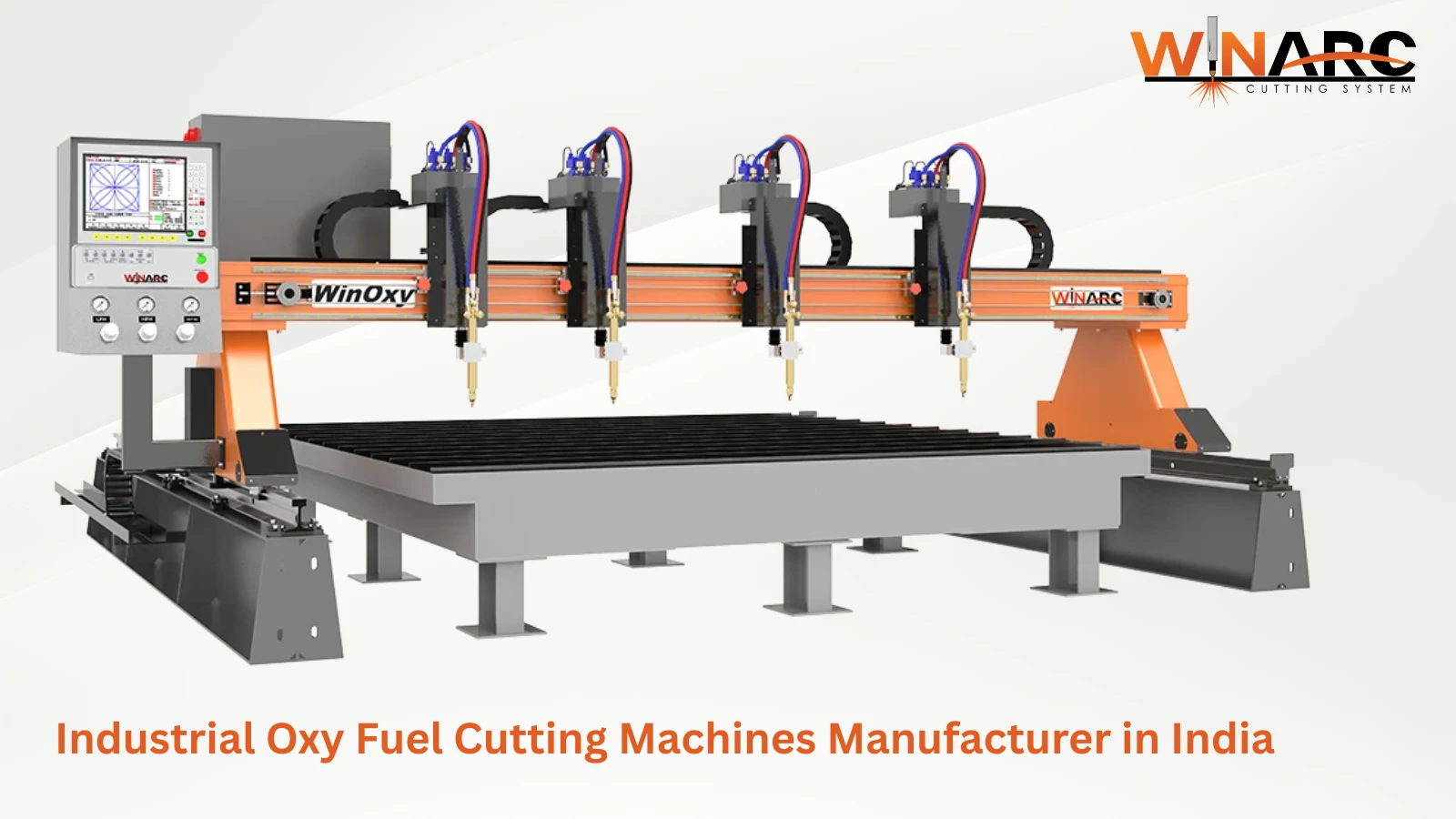
The WinFire configuration also includes four Harris oxyfuel machine torches.
WINARC’s technical documentation specifies oxyfuel cutting for mild steel thicknesses from 6 mm to 250 mm.
This is particularly relevant for heavy fabrication businesses that regularly process thick mild-steel plates.
Instead of approaching every job with the same cutting process, fabricators can use the machine’s plasma and oxyfuel capabilities according to the material and job requirements.
The actual cutting process and performance should be confirmed for each application before production planning.
3. Large-Format Machine Configuration
The quoted WinFire machine has the following dimensions:
- Track width: 3,100 mm
- Track length: 26,500 mm
- Overall machine size: 4,000 mm × 28,000 mm
A large-format configuration can support fabrication operations involving long workpieces and extensive cutting layouts, subject to the cutting table and installation arrangement.
For companies processing structural components or large plate profiles, the available working envelope is an important consideration when evaluating production capacity.
Before purchasing, fabricators should confirm the usable cutting area, material-loading arrangement, foundation requirements, and compatibility with their existing workflow.
4. CNC Motion Control and Positioning Accuracy
The quoted machine specifications state:
- Rapid positioning speed: 0–18,000 mm/min
- Longitudinal guiding accuracy: ±0.3 mm per 3 metres
- Repeatability accuracy: ±0.3 mm per 3 metres
These specifications are important for fabricators who need to produce components repeatedly according to programmed dimensions.
CNC-guided motion helps reduce dependence on repeated manual marking and positioning. Once a suitable cutting program is prepared and validated, the same profile can be reproduced across multiple parts.
Actual finished-part accuracy also depends on material condition, cutting parameters, torch height, consumable condition, machine setup, and the geometry of the component.
5. ProNest CAD/CAM Nesting Software
Material utilization has a direct impact on the profitability of steel fabrication.
WINARC’s quoted configuration includes ProNest nesting software, which supports the planning and arrangement of parts for mechanized plasma and oxyfuel cutting.
Nesting software helps arrange multiple components within available plate material to reduce unnecessary gaps and offcuts.
For a fabrication business processing plates every day, even small improvements in material utilization can become meaningful over time.
Better nesting can also support more organized production planning by helping operators prepare cutting layouts before a job reaches the machine.
Actual material savings will depend on component geometry, plate dimensions, nesting strategy, kerf allowances, and the proportion of reusable remnants.
6. Torch Height Control
The machine documentation lists an F1629 plasma torch height controller.
The controller detects changes in plasma arc voltage to regulate the distance between the torch and the workpiece.
Maintaining an appropriate torch height is important for consistent cutting performance, particularly when working with plate surfaces that may not be perfectly uniform.
The system is intended to help manage torch height during cutting, subject to proper setup and operating conditions.
7. Torch Breakaway Protection
WINARC’s documentation describes a plasma torch breakaway system designed to protect the torch when it comes into contact with a cut part or an obstruction.
When contact occurs, the system stops the machine to help prevent torch damage.
For fabrication businesses, protecting critical machine components can help reduce avoidable damage and maintenance interruptions.
Operators must still follow the recommended operating procedures, inspect the cutting area, and ensure that cut parts and offcuts do not obstruct machine movement.
8. Industrial Motion Components
The quoted technical specification lists several motion-system components, including:
- Neugart PLE080 series gearbox
- Panasonic MINAS A6 series servo motors and drives
- Hiwin X-axis linear motion guide
- SAIL/RDSO-approved IRS 42 kg Y-axis rail
- Igus or Helu cables
These components form part of the machine’s motion and guidance system.
For fabricators investing in industrial cutting equipment, the motion system is an important consideration because it influences machine movement, positioning, and repeatability.
The complete system must be correctly installed, maintained, and operated to achieve the intended performance.
WINARC WinFire Technical Specifications
The following specifications are taken from the WinFire configuration described in WINARC’s quotation.
| Parameter | Specification |
| Machine model | WinFire |
| Cutting processes | CNC plasma and oxyfuel |
| Track width | 3,100 mm |
| Track length | 26,500 mm |
| Overall machine dimensions | 4,000 mm × 28,000 mm |
| Rapid positioning speed | 0–18,000 mm/min |
| Longitudinal guiding accuracy | ±0.3 mm / 3 m |
| Repeatability accuracy | ±0.3 mm / 3 m |
| CNC controller | Hypertherm EDGE Connect CNC, as listed in the technical specification |
| Plasma power source | Hypertherm MAXPRO200 |
| Plasma rated power | 35 kW |
| Plasma supply | AC 415 V, three-phase |
| Plasma cutting materials | Mild steel, stainless steel, aluminium |
| Mild-steel plasma cutting specification | 32 mm piercing; 50 mm edge cutting |
| Stainless-steel plasma cutting specification | 25 mm piercing |
| Aluminium plasma cutting specification | 25 mm piercing |
| Oxyfuel cutting material | Mild steel |
| Oxyfuel cutting thickness | 6–250 mm |
| Oxyfuel torches | Four Harris machine torches |
| Plasma torch height controller | F1629 |
| Nesting software | ProNest |
Important: The plasma thickness figures above distinguish piercing from edge cutting as stated in the quotation. They should not be interpreted as equivalent performance ratings. Maximum capability, production speed, cut quality, and achievable thickness should be validated against the material and application.
The quotation’s product overview also lists an F2500 controller, while its technical specification names Hypertherm EDGE Connect CNC. Confirm the exact controller supplied with the selected configuration before ordering.
The quotation describes a large-format plate/profile-cutting machine. A dedicated pipe-cutting attachment, rotary axis, and pipe-diameter capacity are not specified. If your business requires automated pipe cutting, ask WINARC to confirm a suitable pipe-cutting configuration.
How Can a Plasma Cutting Machine Help Steel Fabricators?
The value of CNC plasma cutting goes beyond replacing a manual cutting tool. It can change how fabrication jobs are planned, executed, and delivered.
1. Reduce Dependence on Manual Marking
Manual marking and repeated measurements consume time before cutting even begins.
With CNC cutting, components can be prepared as digital profiles and executed through programmed cutting paths.
This can help reduce repetitive layout work and make the production process more consistent, particularly when the same component must be manufactured in multiple quantities.
Business impact: Less time spent on repetitive preparation and a more standardized approach to component production.
2. Improve Material Utilization
Steel is often one of the largest direct material costs in fabrication.
Poor cutting layouts, unnecessary gaps, and avoidable offcuts can increase the amount of steel required for every finished component.
Nesting software helps fabricators organize parts on available plates before cutting.
For businesses processing a high volume of steel, improved material utilization can help reduce waste and support better cost control.
Business impact: Better visibility into material consumption and an opportunity to improve margins through more efficient plate utilization.
3. Handle Diverse Fabrication Requirements
Fabricators often serve multiple industries and encounter different materials, shapes, and thickness requirements.
The WinFire configuration combines plasma cutting for mild steel, stainless steel, and aluminium with oxyfuel cutting for thick mild steel.
This gives businesses flexibility when planning a range of profile-cutting jobs.
Business impact: A more adaptable cutting operation for varied fabrication requirements, subject to the machine’s validated process limits.
4. Improve Repeatability Across Production Runs
When a customer orders the same brackets, base plates, supports, or profiles repeatedly, consistent dimensions become important.
CNC cutting allows operators to reuse validated cutting programs instead of relying entirely on repeated manual measurements.
This can make repeat orders easier to standardize and help establish a more predictable manufacturing process.
Business impact: More consistent production workflows and fewer opportunities for manual layout variation.
5. Support Better Production Planning
Large fabrication orders can involve hundreds of individual components.
A combination of digital part preparation, nesting, and CNC cutting allows businesses to organize cutting jobs more systematically.
Instead of treating each component as an isolated task, production teams can plan cutting layouts and group compatible jobs.
Business impact: Better coordination between cutting, fit-up, welding, and downstream fabrication activities.
6. Take on More Complex Profile-Cutting Jobs
A business’s growth can be limited when its cutting process cannot efficiently handle new designs or recurring quantities.
CNC plasma and oxyfuel cutting can support programmed profiles and a variety of industrial component shapes within the machine’s capabilities.
For fabricators looking to expand their customer base, this can create opportunities to evaluate more demanding jobs without depending entirely on manual cutting methods.
Business impact: A stronger technical foundation for expanding the range of profile-cutting work the business can undertake.
How Can WINARC’s Plasma Cutting Machine Transform Your Fabrication Business?
Imagine a steel fabrication company handling structural components, industrial equipment parts, machine bases, and custom steel profiles.
Orders arrive with different drawings, dimensions, quantities, and deadlines. Operators must prepare the material, mark components, cut them, check dimensions, and send the parts to welding or assembly.
When cutting is heavily dependent on manual preparation, production can become difficult to standardize as order volumes increase.
A CNC cutting workflow offers a different approach.
Step 1: Move from Manual Layout to Digital Preparation
Prepare component profiles digitally and establish the cutting program before production.
This creates a more structured starting point for repeat orders and helps reduce reliance on repeated manual marking.
Step 2: Plan Material Before Cutting
Use nesting software to arrange the required components on available plate material.
Review the layout for material utilization, part orientation, cutting sequence, and practical handling requirements.
This makes material planning part of the production process rather than an afterthought.
Step 3: Select the Appropriate Cutting Process
Use plasma or oxyfuel according to material type, thickness, component geometry, and required cut quality.
For the WinFire configuration, plasma cutting covers specified conductive-metal applications, while oxyfuel is specified for mild steel from 6 mm to 250 mm.
Validate the process parameters for each job.
Step 4: Standardize Repeat Orders
Store and reuse validated cutting programs for recurring components.
This can make production planning easier and reduce the need to recreate layouts for every repeat order.
Step 5: Measure Production Performance
Track metrics such as:
- Cutting time per component
- Material utilization percentage
- Offcut and scrap quantities
- Rework attributable to cutting
- On-time completion of cutting jobs
- Machine utilization
- Cost per accepted component
These measurements help management identify where the machine is creating value and where additional process improvements are needed.
Step 6: Use the Capacity to Pursue Growth
Once the cutting process becomes more predictable, evaluate whether the business can take on additional orders, shorten internal lead times, or offer new profile-cutting services.
The objective is not simply to operate a more advanced machine. It is to build a fabrication operation that can plan work better, control costs more effectively, and respond to customers with greater confidence.
Actual improvements will depend on the company’s existing workflow, order volume, staffing, machine utilization, and production management.
What Do Steel Fabricators Gain by Choosing WINARC?
Choosing a CNC cutting machine should involve more than comparing the purchase price of different models.
Fabricators should evaluate the complete production system, including cutting capability, software, motion components, installation requirements, operator training, and ongoing support.
WINARC’s WinFire offering brings several of these considerations together.
An Integrated Cutting Platform
The quoted configuration combines CNC plasma and oxyfuel cutting on one platform, allowing fabricators to plan different cutting processes according to job requirements.
A Recognized Plasma Source
The configuration specifies a Hypertherm MAXPRO200 plasma source, supported by a CNC motion system and plasma torch height control.
This provides a defined technical foundation for industrial plasma-cutting applications.
Nesting Software for Material Planning
ProNest supports the preparation of cutting layouts for plasma and oxyfuel applications.
For fabricators focused on managing material costs, nesting is an important part of improving cutting efficiency.
Heavy-Fabrication Capability
The quoted oxyfuel configuration is specified for mild-steel thicknesses up to 250 mm.
This can be relevant to businesses working with thick mild-steel sections, provided the intended application is validated with WINARC.
Installation, Training, and Technical Support
WINARC’s quotation describes after-sales services that include technical assistance, maintenance guidance, staff training, and access to genuine replacement parts.
These services matter because the long-term value of industrial machinery depends on more than its specifications. Operators need to understand how to use and maintain the equipment, and production teams need a defined route for technical support.
The quotation specifies a 12-month warranty from commissioning or 14 months from dispatch, whichever occurs earlier, subject to its stated terms and conditions.
Before purchasing, review the final commercial offer, warranty exclusions, installation responsibilities, utility requirements, and service arrangements.
Is a CNC Plasma Cutting Machine a Good Investment for Your Business?
The answer depends on your existing cutting process, the type of jobs you receive, and the amount of material you process.
A CNC plasma cutting machine may be worth evaluating if your fabrication business:
- Processes steel plates and profiles regularly.
- Spends considerable time on manual marking and cutting.
- Needs to produce repeat components more consistently.
- Wants to improve plate utilization through nesting.
- Handles a mix of plasma- and oxyfuel-suitable applications.
- Plans to increase production capacity or expand its profile-cutting services.
However, a purchase decision should be based on measured operational needs rather than the machine’s maximum specifications alone.
Before investing, calculate your current cutting cost per component, including material, labour, consumables, energy, rework, and machine downtime.
Then compare it with the expected cost under the proposed CNC workflow.
Consider the machine’s effective production rate for your actual parts, required floor space, electrical infrastructure, compressor capacity, operator training, and maintenance needs.
A realistic investment analysis will help you understand whether the machine can deliver the productivity and cost improvements your business requires.
Frequently Asked Questions
1. What is a plasma cutting machine used for in steel fabrication?
A plasma cutting machine is used to cut electrically conductive metals into programmed shapes and profiles. In steel fabrication, typical applications include brackets, plates, structural components, equipment parts, and custom profiles, subject to material thickness and cutting requirements.
2. Can WINARC’s WinFire cut both plates and pipes?
The supplied WinFire quotation specifies CNC plasma and oxyfuel profile cutting, including large-format machine dimensions and supported metal materials. It does not confirm a dedicated pipe-cutting attachment, rotary axis, or pipe-diameter range. If pipe cutting is a requirement, contact WINARC to confirm the appropriate machine configuration.
3. What is the maximum cutting thickness of WINARC’s WinFire?
The quotation specifies oxyfuel cutting of mild steel from 6 mm to 250 mm. For plasma cutting, it lists 32 mm mild-steel piercing and 50 mm edge cutting, along with 25 mm piercing specifications for stainless steel and aluminium. These are different operating conditions and should not be treated as equivalent production-cutting ratings.
4. Which materials can the WinFire plasma system cut?
The quoted plasma configuration specifies mild steel, stainless steel, and aluminium. Suitable cutting parameters depend on the material grade, thickness, consumables, and required finish.
5. How does nesting software help steel fabricators?
Nesting software arranges components within available plate material to help reduce unnecessary gaps and offcuts. It can support better material utilization, more structured job preparation, and improved production planning.
6. Can CNC plasma cutting improve production efficiency?
CNC cutting can reduce dependence on repetitive manual marking, support reusable cutting programs, and make component production more standardized. The actual improvement depends on part geometry, cutting speed, material handling, programming, and how effectively the machine is integrated into production.
7. What should I check before purchasing a CNC plasma cutting machine?
Review the effective cutting area, material and thickness requirements, piercing and edge-cutting capability, positioning accuracy, nesting software, electrical supply, compressed-air requirements, installation space, operator training, maintenance, warranty, and after-sales support. If pipe cutting is required, verify that the proposed machine includes the necessary pipe-cutting configuration.
Conclusion: Build a More Productive Steel Fabrication Business with WINARC
In a competitive fabrication market, the ability to control costs, maintain consistent quality, and meet delivery commitments can make a meaningful difference to business growth.
A CNC plasma cutting machine can help steel fabricators move towards a more structured production process through programmed cutting, digital nesting, repeatable profiles, and better coordination of cutting operations.
WINARC’s WinFire CNC Plasma & Oxyfuel Cutting Machine combines a Hypertherm MAXPRO200 plasma source, four oxyfuel torches in the quoted configuration, CNC motion control, torch height control, and ProNest nesting software.
For fabricators handling large plates, industrial profiles, and thick mild-steel components, this combination provides a platform to evaluate improvements in material utilization, production planning, and cutting capability.
The next step is to assess your actual components, materials, production volumes, and quality requirements against the machine’s specifications.
Ready to upgrade your steel fabrication capabilities?
Contact WINARC Cutting System to discuss your cutting requirements, evaluate a suitable machine configuration, and explore how CNC plasma and oxyfuel cutting can support your production goals.